
 View Charts



Coin Die Wear Explained: How It Affects Strike Quality
Two Uncirculated Coins Can Look Surprisingly Different
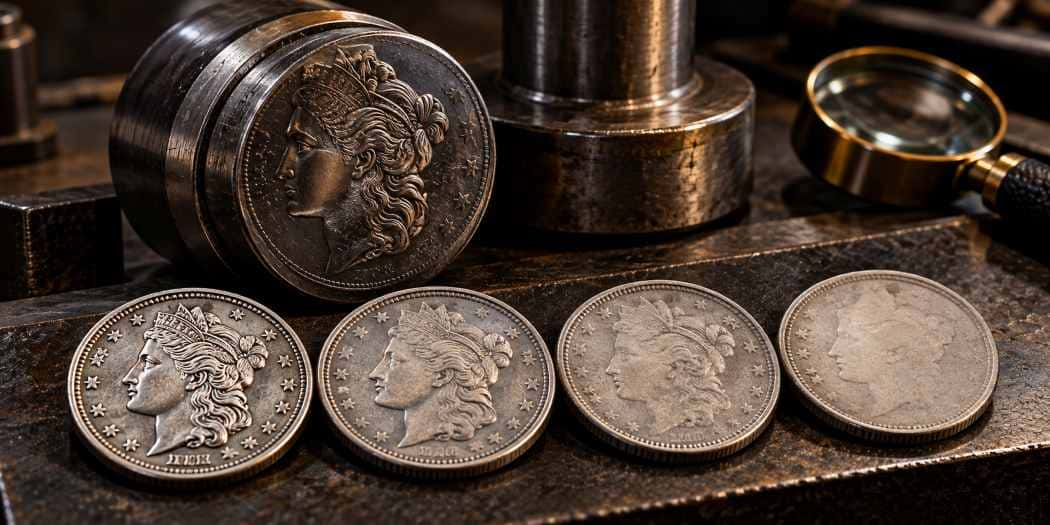
Two coins struck in the same year, at the same mint, and from the same design can display noticeably different levels of detail. One may have crisp lettering and sharply defined hair, feathers, or clothing folds. The other may look softer, even though neither has circulated. The difference can originate in the steel dies used to manufacture them.
Coin dies are hardened tools that transfer a design onto metal blanks under considerable pressure. They withstand thousands of repeated strikes, but their surfaces gradually change. Fine details deteriorate, cracks develop, and maintenance can alter the finished coins. These changes help explain why strike quality varies within an issue and why a coin's sharpness cannot be judged independently of its production history.
For collectors, the distinction is particularly important when evaluating high-grade coins. Missing detail may reflect a worn die, an incomplete strike, or actual circulation wear. Those conditions can look similar, yet they have different implications for grading and collectability.
What Happens to a Die During Production?
A coin die contains a recessed, reversed impression of the finished design. During striking, pressure forces metal into those recesses, creating the raised devices visible on the coin. Repeated contact subjects the die to substantial mechanical stress, gradually affecting its ability to reproduce the original engraving.
The finest details are especially vulnerable. As a die wears, the boundaries between design elements can become less distinct, and shallow recesses may lose definition. Coins produced later in its working life can show softer lettering, blurred design features, or less distinct separation between adjacent elements.
The metal being struck also matters. Harder alloys generally place greater demands on striking equipment, although die preparation, press settings, and design geometry influence the outcome. PCGS discusses these factors in its examination of weak strikes and circulation wear, noting that worn dies are a frequent cause of incomplete detail.
Not every change involves gradual abrasion. Dies may develop cracks under repeated stress, suffer damage from contact with opposing dies, or undergo polishing to remove unwanted marks. Mint workers can sometimes extend a die's useful life through maintenance, but such work may also remove fine design features. Eventually, continued deterioration makes replacement necessary.
The resulting differences are not necessarily defects in the individual coin blanks. They reflect the condition of the manufacturing tools at the moment each piece was struck.
Die States Preserve a Manufacturing Sequence
A die's changing condition creates what numismatists call die states. These describe recognizable stages in the life of a particular die, from relatively fresh impressions through progressive deterioration and, sometimes, major cracking or breakage.
Early die-state coins may show fine details that disappear from later examples. A developing crack can appear as a thin raised line on coins because metal flows into the fracture during striking. As the crack grows, subsequent coins may display a longer or more prominent line. A substantial break near the rim can create a raised area known as a cud.
Researchers compare these characteristics across surviving specimens to reconstruct the order in which they were struck. The progression can be especially useful for early American coins, whose dies were often prepared, maintained, and reused under manufacturing conditions very different from those of modern mints.
The distinction between a die variety and a die state is important. A variety identifies a particular die or die pairing through its distinguishing features. A die state describes how that die changed during use. PCGS explores this relationship in its discussion of die-state attribution, including how progressive cracks and other markers help establish production sequences.
Not every visible line indicates a valuable variety. Many cracks and polishing marks are ordinary evidence of die use, and their collector significance depends on the issue, attribution, and surviving population.
Die Wear and Weak Strikes Are Related, but Different
A worn die can produce a weakly detailed coin, but not every weak strike results from die deterioration. Insufficient striking pressure, improper die spacing, planchet characteristics, and the placement of design elements can also prevent metal from filling the die completely.
This distinction becomes clearer when comparing coins from the same series. Buffalo nickels are well known for variations in strike sharpness, particularly around the bison's horn and other high points. Some examples lack complete detail despite retaining original mint luster and showing no circulation wear.
Walking Liberty half dollars provide another illustration. Certain dates and mint marks frequently display weakness in Liberty's hand or the central portions of her clothing. A poorly defined hand does not automatically mean that the coin circulated; the missing detail may have been present from the moment it left the press.
Strike quality therefore requires comparison with other examples of the same issue. A coin that appears weak beside a sharply struck specimen from another year may be typical for its own date and mint. Experienced graders account for these manufacturing characteristics when assessing condition.
Collectors examining certified coin grading standards should distinguish the quality of the original strike from subsequent surface preservation. The two are related in grading, but they are not interchangeable.
How to Tell Die Wear From Circulation Wear
The most useful evidence often comes from a coin's surface rather than the amount of visible design detail. A weakly struck, uncirculated coin can retain uninterrupted mint luster across areas where the design appears flat or incomplete. Circulation wear, by contrast, typically alters the surface texture and reduces luster on exposed high points.
Under a suitable light, an uncirculated coin may display a rotating cartwheel effect as it is tilted. This appearance comes from microscopic surface characteristics created during striking. Areas affected by circulation friction often reflect light differently, making them appear duller or smoother than surrounding protected surfaces.
A worn die complicates the examination because its deteriorated surface can affect the appearance of mint luster itself. Die erosion may produce radial patterns or a roughened texture, while polishing can introduce fine raised lines. These manufacturing characteristics should not be confused with scratches or cleaning marks acquired after striking.
PCGS explains the relationship between die erosion, flow lines, and altered surfaces in its discussion of coin surface examination. The practical lesson is that no single feature establishes whether a coin has circulated. Collectors should evaluate luster, texture, contact marks, and strike characteristics together.
Comparison is particularly valuable. Examining several authenticated examples of the same date and mint can reveal whether a weak area is characteristic of the issue or unusual for that specimen. Magnification helps confirm details, but consistent lighting and an understanding of normal production characteristics are equally important.
When Die Deterioration Matters to Collectors
Die deterioration can influence a coin's appearance, attribution, and desirability, but it does not automatically create a premium. Routine die wear is common, particularly on issues produced in large quantities. A soft strike may actually make a coin less desirable when sharply struck examples are available.
Recognized die states can have a different appeal. Specialists sometimes collect progressive die cracks, dramatic breaks, or distinctive late-stage impressions because they document the history of a particular striking tool. Their significance depends on rarity, visual prominence, and established collector demand.
The distinction also matters when evaluating mint errors. A die crack is produced by damage to the striking tool and may appear on multiple coins. An off-center strike, by comparison, results from a problem during the striking operation. Bullion Exchanges' earlier article on recognizing coin die clashes examines another type of die damage, in which opposing dies collide and transfer unintended design details.
For buyers, a sound assessment begins with identifying the coin correctly, then evaluating its strike against comparable examples. A dramatic die break may justify further research, but ordinary softness should not be mistaken for rarity.
Understanding die wear changes how collectors interpret a coin's surface. Details that appear missing may never have been fully struck, while raised lines or unusual textures can preserve evidence of the manufacturing process. The most revealing question is often not how much detail a coin has lost, but when and how that detail changed.
FAQs
How many coins can a single coin die produce?
The number of coins a die can produce varies according to the metal being struck, die preparation, press settings, design complexity, and manufacturing technology. Some dies produce tens of thousands of coins, while others remain usable for substantially longer. Modern production methods generally improve durability compared with historical practices. There is no universal lifespan, and mints replace dies when deterioration or damage prevents them from meeting acceptable production standards.
Does a die crack make a coin valuable?
A die crack does not automatically make a coin valuable. Small cracks are relatively common and may add little or no premium. More dramatic examples, especially those associated with recognized varieties or scarce die states, can attract specialist interest. Value depends on the particular coin, prominence of the feature, rarity, condition, and collector demand. Comparing authenticated examples and completed sales provides a more reliable basis for evaluating a suspected premium.
Can an uncirculated coin have missing design details?
Yes. An uncirculated coin can lack design details because of a weak strike or deterioration of the dies used to produce it. Mint State describes a coin without circulation wear, not necessarily one with perfectly formed details. Some dates and mint marks are known for consistently weak strikes. Collectors should examine original luster and surface texture alongside design sharpness to determine whether missing detail reflects manufacturing conditions or later wear.
What is the difference between a die crack and a scratch?
A die crack generally appears as a raised line on a coin because metal flowed into a fracture in the striking die. A scratch usually cuts into the coin's surface after production, leaving an incuse mark. Lighting and magnification can help distinguish them, although complicated surface damage may require professional examination. Matching raised features on multiple specimens can further support a die-origin attribution, particularly when their positions and shapes correspond closely.
Can polishing a coin die change the appearance of coins?
Yes. Mint workers may polish dies to remove unwanted marks, reduce evidence of clashes, or restore their working surfaces. Polishing can leave fine lines that appear raised on subsequently struck coins. Repeated polishing may also reduce shallow design details, producing visible differences between earlier and later die states. These features originate during manufacture and should be distinguished from cleaning marks or abrasions caused by altering a finished coin.
Are early die-state coins always more desirable?
No. Early die-state coins often display sharper details and more complete design features, which can improve their visual appeal. However, later die states may interest specialists when they show distinctive cracks, breaks, or other recognized characteristics. Desirability depends on the issue, surviving population, condition, and collecting preferences. A sharply struck early-state example may command a premium in one series, while a dramatic late-state variety attracts greater attention in another.
How should collectors examine a coin for die wear?
Collectors should examine the coin under consistent lighting, beginning with its overall design sharpness and surface appearance. Compare it with authenticated examples of the same date and mint, paying attention to known areas of weakness. Moderate magnification can reveal die cracks, polishing lines, and other diagnostic features. Avoid cleaning or rubbing the coin during inspection. For potentially valuable varieties, professional attribution can help establish whether unusual characteristics originated in the dies.
Related reading you may find interesting:
What Makes a Coin Variety Different From a Mint Error?