View Charts
A Guide To Coin Grading
 3
3Coin grading is an essential aspect of numismatics, the study or collection of coins, tokens, and related objects. It helps collectors and investors determine a coin's condition, which in turn affects its value. In this article, we will explore the basics of coin grading, the Sheldon Coin Grading Scale, the differences between various grading terms, and the top coin grading companies. We will also discuss the average cost and time it takes to get a coin graded.
What are the Basics of Coin Grading? (Main Components)
Coin grading is based on several key components:
- Strike: The sharpness and detail of a coin's design, impacted by the minting process.
- Surface preservation: The level of wear or damage on a coin's surface, including scratches, marks, or other imperfections.
- Luster: The natural shine or reflectivity of a coin's surface, indicative of how well it has been preserved.
- Toning: The natural coloration or patina that forms on a coin's surface over time due to environmental factors.
- Eye appeal: The overall aesthetic appeal of a coin, which can be subjective but plays a role in grading.
- Rarity: Rarity is an important factor in determining the value of a coin. Rare coins are worth more than common coins, and coins with fewer surviving specimens will be worth more than those with more surviving specimens.
- Market Demand: The market demand for a coin is the amount of interest in it from collectors and investors. Coins with high market demand will be worth more than coins with low market demand.
How Do You Know If a Coin is Worth Grading?
Coins that are potentially valuable or rare, possess historical significance, or have unique features may be worth grading. Factors to consider include the coin's age, rarity, condition, and demand among collectors or investors. Grading can help verify authenticity, protect the coin, and establish a more accurate market value.
The Sheldon Coin Grading Scale
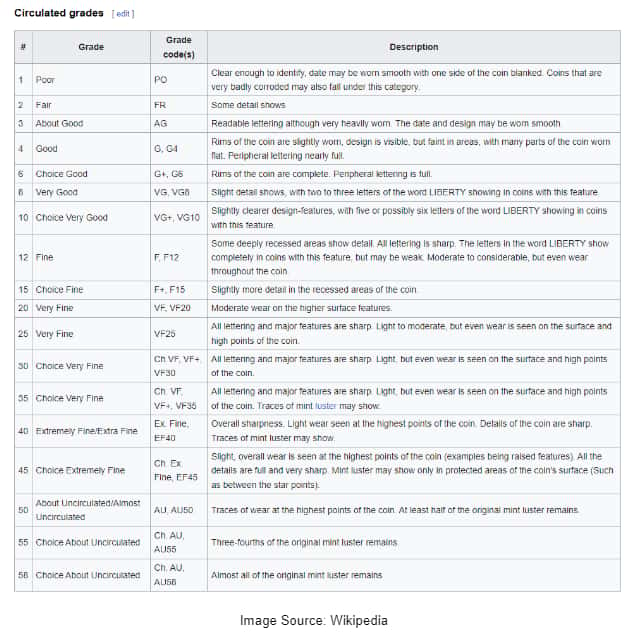
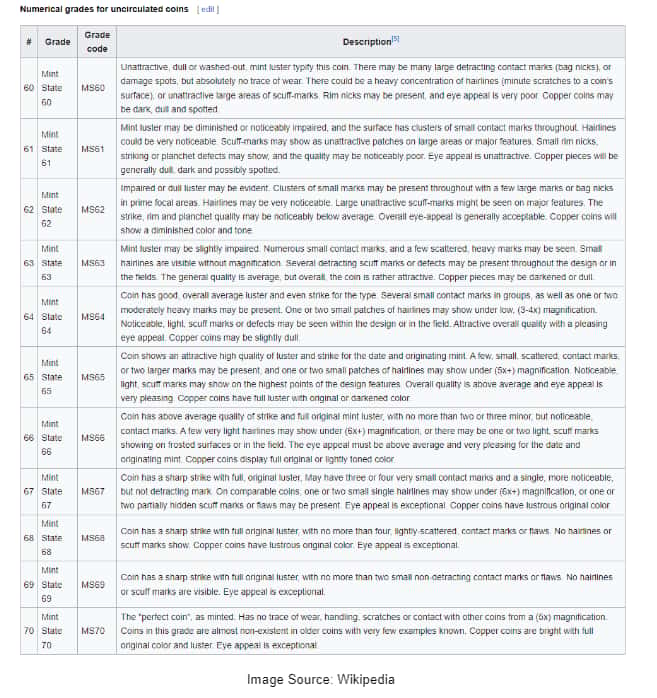
Developed by Dr. William Sheldon in 1949, the Sheldon Coin Grading Scale is a 70-point numerical scale used to grade coins. It ranges from 1 (Poor) to 70 (Mint State or Proof), with higher numbers indicating better condition. The scale has been adapted and expanded over time, becoming the industry standard for coin grading. Below is the full list of coin grades according to the Sheldon Grading Scale:
What is the Difference Between MS 69 and MS 70?
On the Sheldon Coin Grading Scale, MS (Mint State) refers to uncirculated coins. MS 69 is a near-perfect grade, indicating a coin with minimal, barely noticeable imperfections. MS 70 represents a flawless coin with no visible imperfections under 5x magnification, the highest possible grade for a Mint State coin.
What is The Difference Between MS and PF?
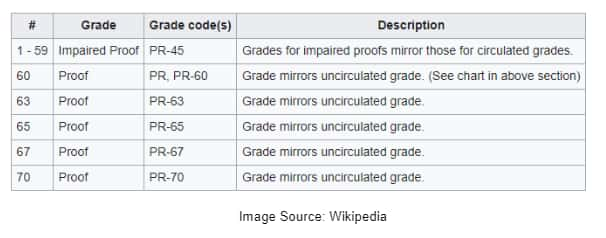
MS (Mint State) refers to uncirculated coins, while PF (Proof) denotes specially made coins for collectors, featuring a high-quality finish. Proof coins are struck using polished dies and often polished or specially treated planchets, resulting in a distinct, mirror-like appearance and frosted devices.
Top Coin Grading Companies (Who are the most reputable coin graders?)
Coin grading is an important process used by collectors and investors to determine the grade and condition of a coin. Established coin grading companies have years of experience and offer professional services to accurately assess coins. This helps to determine the true value of a coin, allowing collectors to make informed decisions when investing in coins. The most reputable coin-grading companies have a proven track record of accuracy and reliability and are well-known in the coin-collecting community. These companies offer a variety of services, including grading, authentication, and encapsulation, to ensure the protection of coins.
- Professional Coin Grading Service (PCGS): Professional Coin Grading Service (PCGS) is an independent coin grading company founded in 1985. PCGS sets the standard for third-party certification of rare coins, tokens, and other numismatic items. It provides a range of services including authentication, grading, encapsulation, and auction representation. PCGS is widely considered the industry leader in coin authentication and grading, and its experts have decades of experience in the field. Its services are used by collectors, dealers, and investors all over the world.
- Numismatic Guaranty Corporation (NGC): Numismatic Guaranty Corporation (NGC) is a leading third-party coin grading and authentication service. Established in 1987, they have become the industry standard in coin certification, offering a range of services from coin grading and encapsulation to authentication and restoration. With over 40 million coins graded, NGC has a global network of over 400 coin dealers and collectors, as well as a team of expert numismatists and graders who use their unparalleled experience and knowledge to certify coins for authenticity and grade coins for quality.
- ANACS (American Numismatic Association Certification Service): The American Numismatic Association Certification Service (ANACS) is a leading coin authentication and grading service in the United States. The ANACS Certification Service is a trusted source for numismatic professionals and collectors to verify the authenticity and quality of coins.
NGC Vs. PCGS
NGC and PCGS are two of the world's most prestigious coin grading services, offering similar services and guarantees. Both services have been around for over 30 years and are known for their reliable, consistent, and accurate grading standards.
While PCGS is known for its strict grading standards, especially for high-grade coins, NGC is praised for its consistency and presentation. Ultimately, the choice between the two may come down to personal preference or the specific coin in question.
Mint Error Coin Grades And Their Meanings
Mint error coins are those that have been produced with mistakes or imperfections during the minting process. These errors can range from minor to significant and may result in increased value or collectability. Some of the most common mint error coin grades are:
- Planchet errors: These errors occur when the blank metal disk (planchet) used to make a coin has defects, such as improper alloy mixtures, cracks, or clipped edges. Planchet errors can also occur when the metal is too thin or too thick, or when the metal is not properly distributed during the minting process. Such errors can make a coin highly desirable to collectors and can dramatically increase the value of the coin.
- Die errors: Die errors happen when the engraved metal piece (die) used to strike a coin has defects, such as doubling, cracks, or cuds (raised areas where the die has broken away). Die errors can be found on all types of coins, from ancient coins to modern ones, and can sometimes be worth a great deal of money due to their rarity.
- Striking errors: Striking errors occur during the minting process when the coin is struck by the die. Some of the most common striking errors include off-centers, doubled dies, brockages, and clips. Off-center coins are coins that were not properly struck in the center of the die, resulting in a coin with a portion of the design missing. Doubled dies are coins that were struck twice, resulting in a doubled impression. Brockages are coins that are struck with an already-struck coin still in the die, resulting in a mirrored image of the design. Clips are coins that have a portion of their circumference missing due to the metal being clipped off during the striking process.
- Overmintmarks and overdates: These errors involve a coin being struck with a die that has been modified, such as an overdate (where a new date is stamped over an older one) or an overmintmark (where a new mintmark is stamped over a previous one).
What is the Average Cost to Grade a Coin?
The cost to grade a coin can vary depending on the grading service, the type of coin, and any additional services required. On average, the base fee for grading a coin ranges from $20 to $50. Additional services, such as conservation, attribution, or imaging, can increase the cost. Shipping costs and insurance costs should also be factored into the final price. Bulk submissions or membership discounts may be available to lower grading fees.
How Long Does It Take To Get A Coin Graded?
The time it takes to get a coin graded depends on the grading service and the specific submission type. Standard grading service turnaround times can range from a few days to several weeks. Expedited services are available for an additional fee, which can reduce turnaround time to as little as one business day.
It is essential to factor in shipping time and any potential delays when considering the overall timeframe for coin grading. Additionally, certain times of the year, such as around major coin shows or holidays, may result in longer wait times due to increased submission volume.
Conclusion
Understanding the coin grading process is essential for numismatists and precious metal investors. By familiarizing yourself with the costs and timeframes associated with grading, you can make informed decisions when submitting coins for grading and building your collection or investment portfolio.
3 Comments