
 View Charts



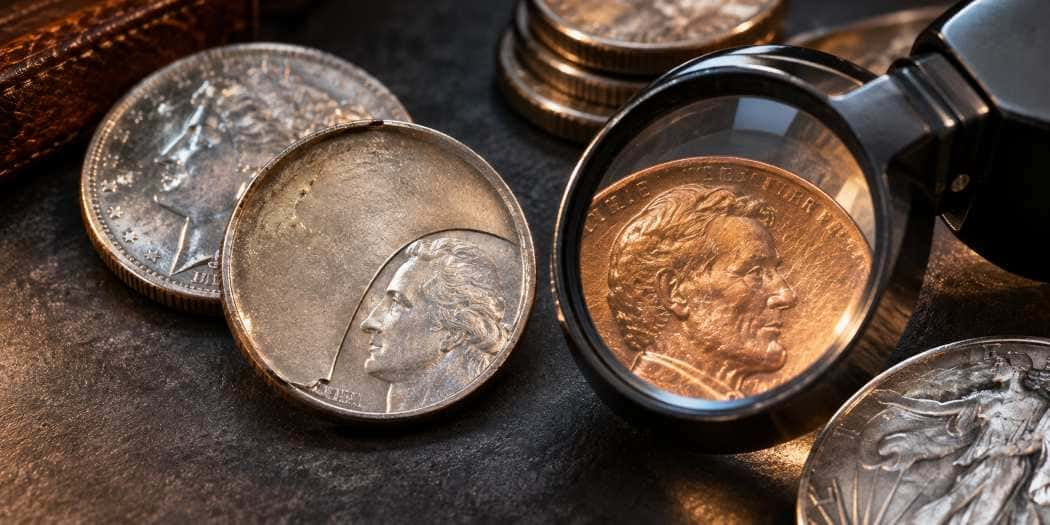
What Makes a Coin Variety Different From a Mint Error?
Understanding the Difference Between Coin Varieties and Mint Errors
An unusual coin can be an exciting discovery, but not every abnormality has the same origin. A Lincoln cent with doubled lettering and another struck off-center may both attract collectors, yet they represent different types of manufacturing characteristics. One may be a recognized die variety, while the other is a mint error. Understanding the distinction helps collectors identify unusual coins more accurately and avoid mistaking ordinary damage for something valuable.
A coin variety generally reflects distinctive characteristics of the dies used to strike coins, allowing similar features to appear on multiple specimens. A mint error results from a problem during planchet preparation, striking, or another production stage. Some abnormalities overlap these categories, making the manufacturing process an important starting point for identification.
What Is a Coin Variety?
A coin variety is a recognizable difference in a coin's design or die characteristics. Because one die can strike thousands of coins, its distinguishing features may appear repeatedly, allowing collectors to identify specimens produced from the same die. These characteristics can include doubled design elements, differences in lettering or dates, and distinctive die combinations. However, not every minor difference qualifies as a recognized collectible variety.
Doubled dies are among the most familiar examples. They occur when duplicated design details become incorporated into a working die during manufacture, causing coins struck from that die to reproduce the same doubling. The famous 1955 Doubled Die Obverse Lincoln cent illustrates this phenomenon, with pronounced doubling visible in the date and inscriptions. Unlike an individual coin that receives multiple strikes, a doubled-die variety originates in the die itself.
Many early American coins also have extensively documented varieties because their dies required greater manual preparation. Specialists use established attribution references to distinguish meaningful varieties from ordinary manufacturing differences, particularly when identifying classic copper and silver coins.
What Is a Mint Error?
A mint error occurs when something goes wrong during coin production. Unlike die varieties, which can repeat across many coins, individual striking errors often reflect unique circumstances involving a planchet or the operation of a coin press. The type of error depends on when the problem occurred and how it affected the finished coin.
Some errors originate before striking. A clipped planchet occurs when a blank is improperly cut from a metal strip, while a wrong-planchet error involves dies striking a blank intended for another coin. Other errors develop during striking, such as an off-center strike that leaves part of the design missing because the planchet was incorrectly positioned. A broadstrike occurs when the retaining collar fails to contain the metal, allowing the coin to expand beyond its normal diameter. Multiple strikes can also produce overlapping impressions when a coin is not properly ejected.
Each type provides clues about the manufacturing failure involved. The NGC Mint Error Guide offers additional examples of production abnormalities and their identifying characteristics. Understanding these processes helps collectors distinguish genuine errors from unusual appearances caused by wear or damage.
Doubled Dies vs. Machine Doubling
One of the most common identification mistakes involves confusing doubled dies with machine doubling. Although both can produce duplicated-looking lettering or numbers, their causes are different. A doubled die contains duplicated design details that repeat on coins struck from the affected die, while machine doubling develops during striking when mechanical movement creates a secondary impression.
Machine doubling often appears as flattened, shelf-like outlines rather than distinct, rounded design elements. It is generally not considered a collectible doubled-die variety, even when the effect is noticeable. Collectors should examine the shape, position, and consistency of suspected doubling, comparing multiple design elements with documented examples. Magnification can help reveal details, but lighting, surface wear, and digital image sharpening may distort appearances, making reliable attribution references especially important.
Die Cracks and Other Overlapping Categories
Some abnormalities blur the distinction between varieties and errors because they originate in damaged dies but can appear on multiple coins. Die cracks form when a striking die fractures, creating raised lines on subsequent coins. Larger breaks may produce a raised, featureless area near the rim called a cud. As damage progresses, collectors can sometimes identify different die states through changing crack patterns, although minor cracks are common and do not necessarily increase a coin's value.
Die clashes are another example. They occur when opposing dies collide without a planchet between them, potentially transferring portions of one design onto the other die. These unintended details may appear repeatedly on later coins, but they are not automatically recognized as major collectible varieties. Because classification conventions vary, understanding the origin and significance of a feature is more useful than relying on its label alone.
How to Identify a Variety, Error, or Post-Mint Damage
Identifying an unusual coin begins with comparing it to a normal example of the same date, denomination, and mint. Examine the lettering, design elements, rim, shape, and any unusual features under appropriate lighting. For a suspected variety, look for repeatable characteristics matching established attribution references. A genuine doubled die should display the documented doubling in the expected locations, rather than an isolated irregularity that merely resembles doubling.
For mint errors, consider whether the abnormality is consistent with a plausible manufacturing problem. Weight, diameter, and composition may be particularly important when examining suspected wrong-planchet or missing-clad-layer errors. Post-mint damage is another possibility, since scratches, corrosion, grinding, heat, and deliberate alterations can imitate genuine production abnormalities. A damaged coin may look unusual without having experienced any manufacturing defect.
Never clean, polish, reshape, or attempt to repair a questionable coin. Altering its surface can destroy diagnostic evidence and reduce its collector value. If the feature appears significant, preserve the coin in an appropriate holder and consider professional authentication before making assumptions about its rarity.
Are Coin Varieties and Mint Errors Valuable?
Both varieties and errors can carry premiums, but an unusual appearance does not automatically establish rarity. Value depends on scarcity, condition, collector demand, visual appeal, and whether the identification is recognized. Popular doubled-die varieties may attract strong demand because their characteristics are well documented, while mint errors are often evaluated according to their type, severity, denomination, and overall appearance.
Professional grading and attribution from services such as PCGS or NGC can help establish authenticity, although certification costs may not be justified for common examples. Collectors should compare authenticated coins and completed sales rather than relying exclusively on advertised asking prices. This provides a more realistic assessment of potential value and helps distinguish genuinely desirable pieces from ordinary manufacturing abnormalities.
A Better Approach to Coin Identification
The most useful question when examining an unusual coin is not whether it is rare, but how its distinguishing feature originated. Die varieties, mint errors, and post-mint damage can produce similar appearances while having very different explanations. Learning to recognize those differences makes it easier to evaluate coins without relying on speculation.
By understanding the manufacturing process, comparing established diagnostics, and preserving questionable coins without alteration, collectors can make more informed identifications. These habits provide a stronger foundation for collecting than assuming every unusual mark represents a valuable discovery.
FAQs
What is the main difference between a coin variety and a mint error?
A coin variety generally results from a distinctive characteristic of the dies used to manufacture coins, allowing the same identifying features to appear on multiple specimens. A mint error occurs when something goes wrong during planchet preparation, striking or another production stage. Although most striking errors are individually distinctive, some die-related abnormalities can be classified as both errors and varieties. Accepted terminology depends on the manufacturing cause and numismatic attribution conventions.
Is a doubled die considered a mint error or a variety?
A doubled die is generally classified as a die variety because the doubling exists on the striking die and repeats on coins produced from it. The famous 1955 Doubled Die Obverse Lincoln cent is a recognized example. The abnormality originates during die manufacture, not from striking each coin twice. Collectors identify doubled dies by comparing specific design features with established attribution references, since ordinary machine doubling can produce superficially similar appearances.
Can a coin have both a mint error and a die variety?
Yes. A coin can exhibit characteristics associated with both categories, either because it has multiple distinct abnormalities or because a particular die-related defect overlaps the definitions. Die breaks and dramatic die clashes can produce repeated features on multiple specimens while also representing manufacturing failures. Some specialists document these characteristics through progressive die states. Classification depends on the nature of the defect, its significance and the conventions used by recognized numismatic authorities.
How can you tell whether a coin was damaged after leaving the Mint?
Post-mint damage often produces scratches, gouges, corrosion, flattened details or other changes inconsistent with normal coin manufacturing. Genuine mint errors usually display physical characteristics that can be explained by the production process, including unusual metal flow or incomplete striking. Examination of the affected surfaces, rims and design elements can help distinguish the two. When uncertainty remains, collectors should compare authenticated examples and seek professional evaluation before assigning a premium.
Are coins with die cracks valuable?
Some die-crack coins carry collector premiums, but many minor cracks are common and have little additional value. Larger breaks, distinctive patterns and recognized die states may attract greater interest, particularly when they are associated with popular coin series. Condition, scarcity and collector demand also influence prices. A dramatic appearance alone does not establish rarity. Comparing authenticated specimens and completed sales provides a more reliable basis for evaluating a particular example.
What is the difference between machine doubling and a doubled die?
Machine doubling develops during the striking process when mechanical movement creates a secondary impression, often producing flattened or shelf-like details. A doubled die originates during die manufacture, leaving doubled design elements on the die that repeat on subsequent coins. Their appearances can overlap, especially in photographs. Collectors examine the shape, position and consistency of the doubled features and compare them with documented varieties before concluding that a coin has a collectible doubled die.
Should you have an unusual coin professionally graded?
Professional grading may be worthwhile when an unusual coin appears authentic, has a potentially significant premium or requires specialist attribution. Before submitting it, compare the suspected feature with established references and review the grading service's accepted variety and error categories. Submission fees and authentication costs should be considered against realistic market value. Minor abnormalities and common varieties may not justify certification, particularly when the cost approaches or exceeds the coin's potential premium.
Related reading you may find interesting:
What Does a Coin Auction Estimate Really Mean?