
 View Charts



Why Do Some Pennies Have No Mint Mark?
A Missing Letter Can Say More Than a Mint Mark
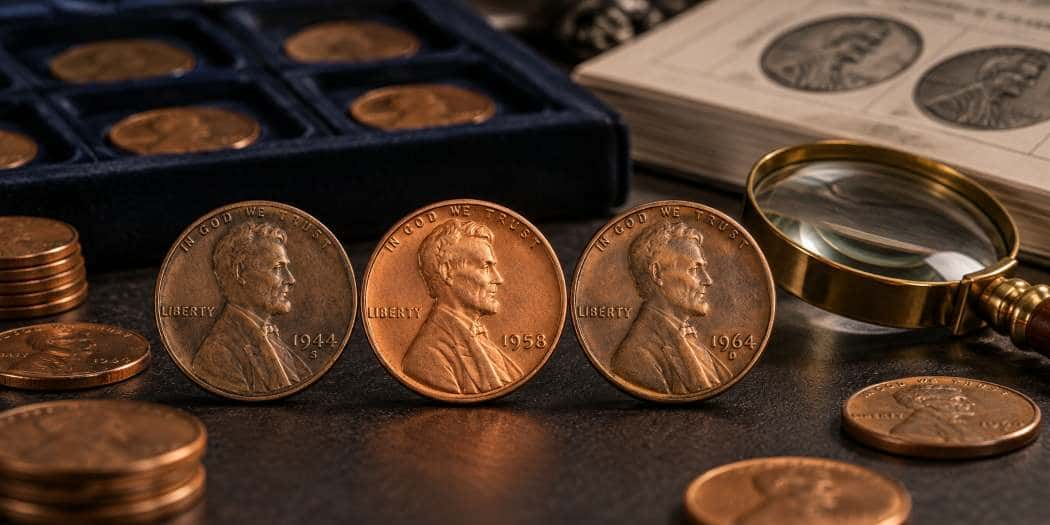
Turn over a handful of Lincoln cents and one detail quickly stands out: many have a “D” beneath the date, some older issues show an “S,” and millions have no mint mark at all. To a new collector, that blank space can look like an omission. Most of the time, however, it is intentional. On the cent, the absence of a mint mark traditionally identifies Philadelphia, the original federal Mint, which produced coins long before there were branch facilities to distinguish from one another.
That simple rule explains most unmarked pennies, but not all of them. Congress temporarily suppressed mint marks on circulating coins during the 1960s. West Point and San Francisco later struck some cents without identifying their facilities. Philadelphia finally used a “P” on the circulating cent in 2017, but only for a single year. At the other end of the spectrum are genuinely unusual coins such as the 1922 No D and 1990 No S Proof cent, where a missing mint mark is important precisely because a mark should have been present.
The better question for collectors is therefore not simply whether a penny lacks a mint mark. It is whether that particular date, type, and method of production were supposed to have one.
Why Philadelphia Cents Traditionally Have No Mint Mark
The convention reaches back to the beginning of federal coinage. Philadelphia was the only U.S. Mint facility when federal coins entered production in the 1790s, so identifying the place of manufacture would have served little purpose. Once branch mints opened in Charlotte, Dahlonega, and New Orleans in 1838, mint marks became useful identifiers for those facilities, while Philadelphia continued operating without one. The American Numismatic Association's guide to mint marks traces that system and the letters eventually associated with different production facilities.
For Lincoln cents, that distinction became deeply embedded in the series. Denver cents normally carry a “D,” while San Francisco used an “S” during periods when it produced circulating cents or special collector issues. Philadelphia, by contrast, generally remained unmarked even after the “P” began appearing on many other denominations. Collectors can therefore read an ordinary no-mint-mark Lincoln cent as a Philadelphia issue in most years, provided there is no historical exception affecting that date.
This is also why the absence of a mint mark should never be treated as an error by itself. A missing letter becomes numismatically meaningful only when it conflicts with the way that coin was supposed to be produced. The broader difference between production identifiers is covered in Bullion Exchanges’ guide to privy marks and mint marks, but cents offer some of the clearest examples of why the date must always be considered alongside the mark.
The 1960s and Later Production Complicate the Philadelphia Rule
The neat Philadelphia-versus-branch-mint system broke down during the nationwide coin shortage of the 1960s. As the Mint tried to maximize output, mint marks disappeared from circulating U.S. coinage dated 1965 through 1967. The policy made the absence of a letter meaningless as a Philadelphia identifier during those years because the lack of a mint mark applied across facilities rather than to Philadelphia alone.
Mint marks returned in 1968, but later production introduced another complication. The U.S. Mint notes that West Point struck circulating cents from 1973 through 1986, while San Francisco also participated in cent production during portions of the period. Some of those coins were intentionally left unmarked, making them visually indistinguishable by mint of origin from Philadelphia cents. A collector holding one of those pieces cannot reliably identify its production facility from the finished coin alone.
Those episodes reveal why mint marks should be treated as historical evidence rather than a perfectly complete manufacturing record. The letter beneath the date can tell a collector where a coin originated, but only when Mint policy allowed the letter to perform that job. During periods when production needs took priority over facility identification, the blank space no longer carried its usual meaning.
Philadelphia itself supplied the most conspicuous exception in 2017. To mark the U.S. Mint’s 225th anniversary, circulating cents struck in Philadelphia received a “P” for the first time. The change lasted only one year; 2018 cents returned to the familiar unmarked format. The 2017-P is therefore interesting less because of scarcity than because it temporarily reversed a convention that had defined Philadelphia cents for generations. Two years later, special 2019 cents carrying a “W” added another chapter when West Point struck collectible versions for inclusion in Mint products.
When a Missing Mint Mark Becomes a Collectible Variety
The distinction becomes much more consequential when a coin was expected to have a mint mark and does not. The 1922 No D Lincoln cent is the classic example. Denver was the only U.S. Mint facility striking cents dated 1922, so every 1922 Lincoln cent originated there. Yet some surviving examples show no visible “D,” the result of die-related circumstances during production rather than a deliberate Philadelphia-style omission.
That historical context is what gives the 1922 No D its importance. An ordinary Philadelphia cent lacks a letter because that was the intended format; the 1922 variety attracts attention because the identifying “D” expected from the only producing mint is absent. Authentication becomes especially important because worn or altered 1922-D cents can resemble genuine No D examples. Collectors considering a potentially significant piece should compare recognized diagnostics rather than judging the coin solely by whether a letter can be seen.
The 1990 No S Proof Lincoln cent presents a different mechanism with the same underlying logic. Proof cents that year were produced at San Francisco and were supposed to display an “S,” but a small number were struck from a proof die lacking the mint mark. Those coins entered proof sets before the error was discovered. Unlike millions of ordinary unmarked Philadelphia cents, the missing “S” contradicts the expected production format and therefore defines the variety.
Both coins demonstrate why “no mint mark” is not a category of rarity. The collector has to know what should have appeared on that specific coin before deciding whether the blank space means anything at all. For high-value candidates, third-party authentication can also help distinguish legitimate varieties from damage, wear, or alteration; Bullion Exchanges’ overview of NGC and PCGS graded coins explains how professional certification fits into that process.
How to Read a No-Mint-Mark Penny Correctly
A useful way to examine an unmarked cent is to begin with the date rather than the empty space. If the year normally corresponds to Philadelphia production without a “P,” there is usually nothing unusual about the coin. If the date falls within a period when mint marks were suppressed or when multiple facilities produced unmarked cents, the blank area may not identify a single Mint at all. Only when the date and production method call for a mark that is absent does the coin warrant closer examination.
That approach also prevents one of the most common mistakes in modern coin collecting: treating every apparent anomaly as an error. Wear, grease-filled dies, weak strikes, damage, and post-Mint alteration can all obscure small design details. A valuable missing-mint-mark variety requires more than an invisible letter; it requires the correct date, production circumstances, and diagnostic characteristics.
The cent’s long production history makes these distinctions especially useful. Philadelphia’s blank mint-mark area became so normal that it functioned almost like an identifier of its own, yet periods of national coin shortages, undisclosed branch-mint production, anniversary issues, and genuine errors repeatedly complicated that convention. What looks like empty space beneath Lincoln’s date can therefore represent several completely different stories.
For collectors, that is the real value of learning mint marks. A letter—or the lack of one—only becomes meaningful when it is placed back into the production history of the coin. Most pennies without mint marks are ordinary Philadelphia issues. A few are products of unusual Mint policy. Rarer still are the coins where the missing letter signals that something happened during production that was never supposed to happen. Those exceptions are why experienced collectors look at the date first and the blank space second.
FAQs
Does a penny with no mint mark come from Philadelphia?
Usually, yes. Most Lincoln cents without a mint mark were struck at the Philadelphia Mint, which historically used no letter on cents. There are exceptions, however. From 1965 through 1967, circulating coins carried no mint marks regardless of facility, and other mints also produced some unmarked cents in later decades. The date and production history should therefore be checked before assigning an unmarked cent to Philadelphia.
Why did Philadelphia pennies normally have no P mint mark?
Philadelphia was the original federal Mint and initially had no competing branch facilities, so its coins did not need a letter identifying where they were made. When branch mints opened, those facilities received mint marks while Philadelphia generally continued without one. That convention remained particularly strong on the cent, even after many other Philadelphia denominations began carrying a P. For most Lincoln cents, the absence of a mark effectively identifies Philadelphia.
Why does the 2017 penny have a P mint mark?
The 2017 Philadelphia cent carries a P because the U.S. Mint used the mark for one year to celebrate its 225th anniversary. It was the first circulating cent struck in Philadelphia to display the P mint mark. The change was temporary rather than permanent, and Philadelphia cents returned to the traditional no-mint-mark format in 2018. The 2017-P is therefore notable chiefly as a historic exception to a longstanding Mint convention.
Are pennies with no mint mark valuable?
Most pennies without a mint mark are not valuable simply because the letter is absent. On ordinary Philadelphia cents, no mint mark is the intended design. Value instead depends on date, condition, variety, errors, and rarity. Important exceptions include the 1922 No D Lincoln cent and 1990 No S Proof cent, where the missing mark is significant because the coins were produced under circumstances in which a mint mark should have appeared.
What is the 1922 No D Lincoln cent?
The 1922 No D is a famous Lincoln cent variety produced at the Denver Mint without a clearly visible D mint mark. Denver was the only Mint facility striking cents dated 1922, making the missing mark especially significant. Die-related production circumstances created the variety, and genuine examples are considerably scarcer than ordinary 1922-D cents. Collectors rely on additional diagnostics because wear or alteration can make normal Denver cents appear to lack the D.
What is the 1990 No S Proof penny?
The 1990 No S Proof Lincoln cent is a rare proof variety struck without the San Francisco S mint mark that should have appeared on the coin. A proof die lacking the mark was used during production, and a small number of affected cents entered proof sets before the mistake was discovered. Its significance comes from the contradiction between the expected San Francisco proof format and the missing letter, rather than from simply having no mint mark.