
 View Charts



Why Do Gold Coins Contain Different Amounts of Pure Gold?
Two One-Ounce Coins, Two Different Weights
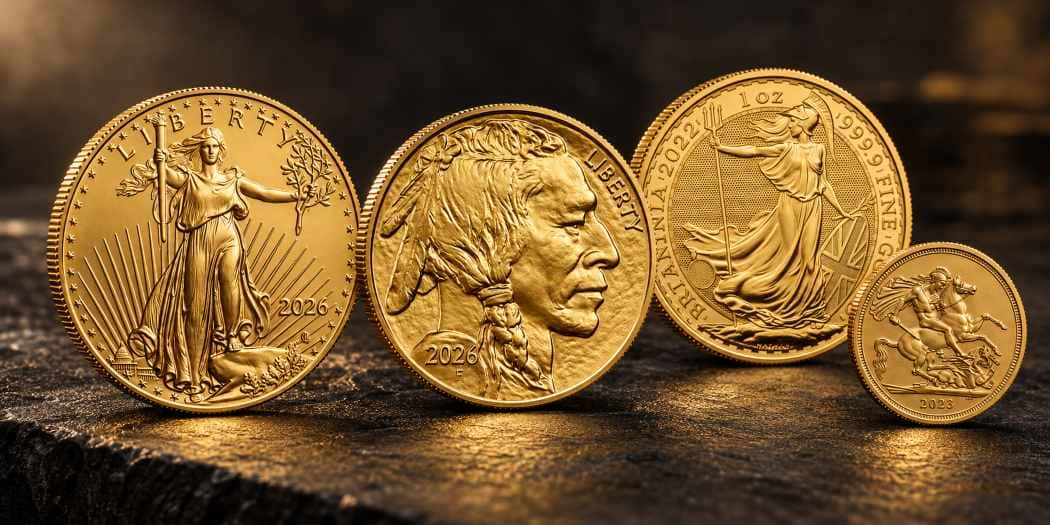
Place a one-ounce American Gold Eagle beside a one-ounce American Gold Buffalo and a scale will report different weights. The Eagle weighs approximately 33.93 grams; the Buffalo weighs about 31.10 grams. Yet both contain one troy ounce of gold. Neither mint has shortchanged the buyer. The discrepancy comes from how much non-gold metal each coin contains, a distinction that matters when comparing modern bullion, older circulating gold, and unfamiliar world coins.
A coin's total weight and the quantity of gold inside it answer separate questions. Modern investment programs often make the gold content explicit, but historical denominations followed monetary standards developed for circulation rather than today's bullion shopping conventions. Understanding those competing purposes explains why two coins with identical advertised gold content can feel different in the hand—and why similarly sized coins can contain considerably different amounts of gold.
How an American Gold Eagle Can Weigh More Than an Ounce
The American Gold Eagle is made from a 22-karat alloy containing 91.67% gold, 3% silver, and the remainder copper. The U.S. Mint's official specifications list approximately 33.931 grams of total weight for its one-ounce version. Multiplying that gross weight by its gold proportion produces approximately 31.103 grams of pure gold, or one troy ounce. The additional weight represents metals included in the coin's composition. The Mint guarantees the Eagle's stated gold content and purity, so its lower fineness does not mean the purchaser receives less than an ounce of gold.
Compare that with the American Gold Buffalo, introduced in 2006 and struck in .9999 fine, 24-karat gold. The Mint lists its one-ounce coin at approximately 31.103 grams overall. With almost no alloy metal, the Buffalo's gross weight sits much closer to its stated fine-gold weight. Buyers comparing these popular one-ounce gold bullion coins are therefore looking at different metal compositions, not different gold allocations. A higher purity figure does not automatically mean a greater quantity of gold when the gross weights differ as well.
This also explains why a quarter-ounce Gold Eagle weighs more than one-quarter troy ounce overall. It contains the advertised quantity of pure gold, but the additional alloy increases its total mass. That distinction is particularly important when evaluating fractional bullion, where a small difference between expected fine-gold weight and total coin weight can otherwise appear suspicious.
Why Mints Chose Alloys—and Why Standards Changed
Gold is comparatively soft and malleable. For coins expected to pass repeatedly through hands, tills, and pockets, combining it with other metals made practical sense: an alloy could resist handling wear better than nearly pure gold. Historic circulating gold therefore commonly used standardized compositions rather than maximum available purity. Those standards helped mints produce coins of consistent weight and fineness that could function within monetary systems where precious-metal content mattered directly.
The British Sovereign illustrates that tradition. Its established 22-karat standard dates to a period when gold coins served monetary purposes rather than being sold primarily as investment bullion. A full Sovereign weighs approximately 7.98 grams and contains about 7.32 grams of pure gold. The Royal Mint's historical Sovereign specifications document both its composition and its use as circulating coinage. South Africa's Krugerrand likewise uses a 22-karat gold-copper alloy, giving it a warmer reddish tone than many high-purity bullion coins. Its one-ounce version still contains one troy ounce of gold, with the added copper increasing its overall mass. Color can offer clues about alloying, but it is not a dependable method of determining precious-metal content.
Mint standards can also change without the name of a coin series changing. When the Gold Britannia debuted in 1987, The Royal Mint struck it in 22-karat gold. It increased the bullion series to 24-karat fineness in 2013. Someone comparing an early Britannia with a recent one may therefore encounter different total weights even though both are described as one-ounce gold coins. The historical shift was from an alloyed bullion format to a near-pure one, without changing the stated fine-gold content of the one-ounce denomination.
Historical Gold Coins Do Not Always Follow Modern Ounce Labels
Older world gold coins introduce another complication: many were minted under systems organized around currency denominations, not convenient fractional-troy-ounce increments. A French 20 Franc gold coin, for example, was struck to a fineness of .900 and contains approximately 0.1867 troy ounce of pure gold. Its denomination is a monetary value, not its weight; neither the number twenty nor its dimensions tell a modern buyer how much gold it contains. The same caution applies to historical British, Latin American, and European pieces whose specifications reflect the rules of their issuing countries.
Two historic coins can look similar in size yet have different fine-gold weights because their issuing authorities chose different gross weights, alloys, or denomination standards. Even within one country, composition and weight sometimes changed across eras. Before purchasing a historical coin for its metal value, the date, denomination, issuing authority, and type must be matched to trustworthy specifications. General assumptions such as "old gold coins are 22 karat" or "larger coins contain more gold" are too imprecise for a serious valuation. The range of standards becomes apparent when comparing gold coins issued around the world.
American gold coinage provides another useful example. Traditional pre-1933 U.S. gold denominations contained 90% gold, but their fine-gold weights differed substantially. A $20 Double Eagle contained approximately 0.9675 troy ounce of gold, slightly less than a modern one-ounce bullion coin. The distinction is especially important because these historical pieces are sometimes described casually as one-ounce gold coins even though their actual precious-metal content is lower.
There is also a separate market for collectible examples. A scarce date, recognized variety, exceptional grade, or important provenance can push a historical coin well above its intrinsic gold value. That premium should not be confused with a difference in gold content. A common circulated coin and a rare specimen of the same type may contain essentially identical quantities of gold while selling for very different prices.
The Number to Compare Is Fine-Gold Weight
To interpret a specification, distinguish gross weight, fineness, and actual gold weight. Gross weight includes every metal in the coin. Fineness is the proportion that is gold, usually expressed as a decimal such as .9167, .900, or .9999. Actual gold weight, or AGW, is the amount of pure gold contained in the piece. Multiplying gross weight by fineness gives the fine-gold weight in the same mass unit; divide grams by approximately 31.1035 to convert the result into troy ounces. Published figures can differ slightly from hand calculations because mint specifications and purity values are rounded.
That calculation is useful for unfamiliar historic coins, but official specifications are preferable when available. Check whether an advertised "one ounce" means one troy ounce of fine gold or a gross coin weight; never assume ordinary household ounces and troy ounces are interchangeable. The distinction between fine weight, fineness, and gross weight becomes especially useful when comparing fractional gold coins, historic denominations, and unfamiliar issues with limited documentation.
For bullion comparisons, examine actual gold weight alongside the asking premium, liquidity, recognizability, and condition. One-ounce Gold Eagles, Gold Buffalos, and modern Britannias may offer equal stated gold exposure, yet their pricing and resale markets need not be identical. In a mixed collection, each coin should be identified and evaluated individually before its fine-gold weight is added to the total. For pieces with uncertain attribution, unusual wear, or questionable authenticity, expert verification may be necessary before any metal calculation can be trusted.
The practical consequence is that neither the largest coin nor the one with the highest purity automatically contains the most gold. A coin's original specifications establish its metal content, while its individual history and preservation may create an entirely separate source of value.
FAQs
Does a 22-karat gold coin contain less gold than a 24-karat coin?
A 22-karat gold coin does not necessarily contain less gold than a 24-karat coin. The quantity depends on both its total weight and purity. A one-ounce American Gold Eagle contains one troy ounce of pure gold despite its 22-karat composition, while a one-ounce American Gold Buffalo contains the same amount at .9999 fineness. The Eagle weighs more overall because additional silver and copper are incorporated into its alloy. Purity percentages alone cannot establish which coin contains more gold.
Why are American Gold Eagles made with silver and copper?
American Gold Eagles contain silver and copper to produce a more durable 22-karat alloy. Their composition consists of approximately 91.67% gold, 3% silver, and 5.33% copper. These additional metals increase the coin's overall weight without reducing its guaranteed fine-gold content. The one-ounce Eagle therefore weighs approximately 33.931 grams rather than the 31.103 grams associated with a troy ounce. Its composition follows the traditional approach of strengthening gold coinage through alloying.
How can I calculate the actual gold weight of a coin?
Calculate actual gold weight by multiplying the coin's gross weight by its fineness expressed as a decimal. For example, a hypothetical 10-gram coin containing 90% gold has an actual gold weight of 9 grams. To express that amount in troy ounces, divide by approximately 31.1035. When examining government-issued bullion or historic coins, consult official specifications first. Published weights and fineness figures may be rounded, and identifying the correct coin type is essential for an accurate calculation.
Are older gold coins less pure than modern bullion coins?
Many older circulating gold coins have lower purity than modern bullion coins, although the distinction is not universal. Historic pieces frequently used 22-karat or .900-fine alloys suited to monetary circulation. Modern investment coins often use .9999 gold, including Gold Buffalos and recent Britannias. However, some contemporary bullion programs continue to use traditional alloys. A coin's age alone cannot establish its fineness, so collectors should verify the specifications of the specific denomination, date, and issuing authority.
Does a gold coin's face value indicate how much gold it contains?
A gold coin's face value does not reliably indicate its precious-metal content. Modern bullion coins carry legal-tender denominations that are usually far below their intrinsic gold value. An American Gold Eagle containing one troy ounce of gold has a nominal face value of $50, while a fractional Eagle carries a smaller denomination. Historic gold coins may have different relationships between monetary value and metal content because they were produced under earlier currency standards. Weight and fineness provide the relevant information.
Do higher-purity gold coins always have higher resale value?
Higher-purity gold coins do not automatically command higher resale prices than lower-purity coins. Actual gold weight, market recognition, demand, condition, and dealer premiums all influence resale offers. A 22-karat Gold Eagle and a 24-karat Gold Buffalo each contain one troy ounce of gold, but their market premiums may differ. Historic coins can carry additional collectible value unrelated to their purity. Comparing resale prices requires evaluating the specific coin and the current market, rather than choosing solely by fineness.