
 View Charts


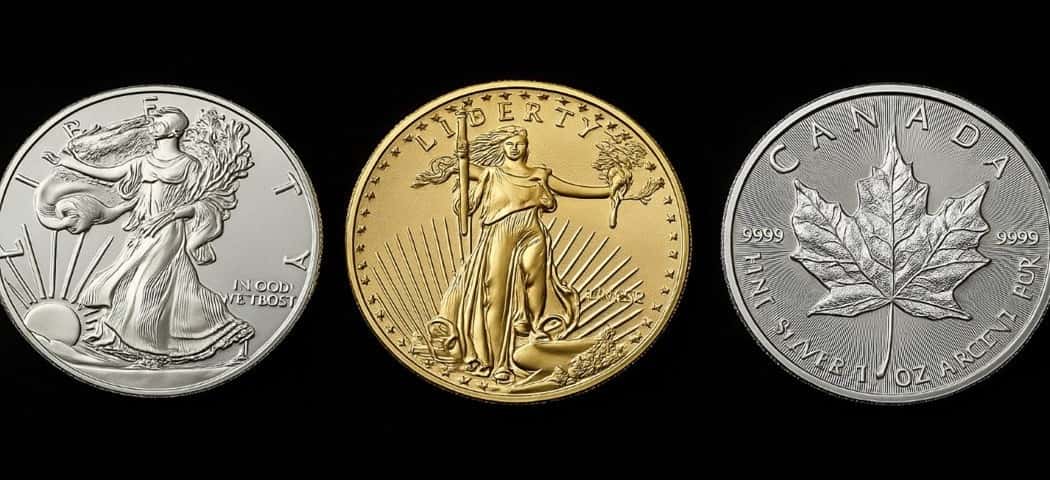
What Is a Reverse Proof Coin?
A reverse proof coin represents one of the most visually stunning and technically refined finishes in modern numismatics. Unlike traditional proof coins, where frosted design elements appear over a polished mirrorlike background, reverse proofs invert that relationship. Their design elements gleam with high mirrored polish, while the background is frosted and matte, creating a powerful visual contrast that highlights depth, texture, and craftsmanship.
This striking interplay of light and shadow gives reverse proof coins an almost sculptural appearance — a quality that has made them favorites among collectors and investors seeking artistry beyond standard bullion.
The Origins of the Reverse Proof Finish
The concept of the reverse proof finish is relatively new in the long history of minting. The United States Mint debuted the first-ever official reverse proof coin in 2006 to commemorate the 20th Anniversary of the American Silver Eagle. This special edition was an instant success, admired for its sharp contrasts and captivating sheen.
Following that milestone, the reverse proof finish quickly became a hallmark of excellence. The U.S. Mint expanded the technique to several popular series, including:
-
American Gold, Platinum, and Palladium Eagles
-
American Innovation $1 Coins
The success of these issues set a global trend, inspiring leading world mints to experiment with their own reverse proof designs.
Mints Around the World Embracing the Reverse Proof
The appeal of reverse proof coins quickly became global. Today, several of the world’s leading mints incorporate reverse proof finishes into limited-edition issues, celebrating artistry and precision craftsmanship:
-
Royal Canadian Mint (RCM): Known for technical innovation, the RCM regularly includes reverse proof designs in its Maple Leaf and commemorative wildlife coins.
-
Perth Mint (Australia): Features reverse proofs in its Kangaroo, Kookaburra, and Lunar Series coins, enhancing collectibility and visual appeal.
-
Royal Mint (United Kingdom): Offers select Britannia and Queen’s Beasts reverse proof coins, showcasing British heritage and elegant finishes.
-
Mexican Mint (Casa de Moneda de México): One of the oldest mints in the world, it has produced stunning Libertad reverse proof coins known for intricate design and limited availability.
-
New Zealand Mint and South African Mint: Periodically release reverse proof commemoratives featuring national symbols and cultural icons.
This global adoption demonstrates how the reverse proof finish has evolved into a universal hallmark of minting excellence.
Why Collectors Love Reverse Proof Coins
The allure of reverse proof coins lies in their beauty, scarcity, and craftsmanship. They are not mass-produced circulation coins but rather carefully minted works of art.
Key reasons for their popularity include:
-
Striking Visual Appeal: The inverted finish creates a unique, high-contrast aesthetic that emphasizes intricate details.
-
Limited Availability: Reverse proofs are typically produced in smaller mintages, enhancing collectibility and potential long-term value.
-
Investment Potential: Their exclusivity and demand can lead to strong secondary-market appreciation.
-
Artistic Significance: Reverse proof coins reflect the pinnacle of modern minting technology — precision, creativity, and innovation combined.
These factors make reverse proofs especially appealing to collectors who appreciate both the art and science of coin design.
Reverse Proof vs. Standard Proof vs. Enhanced Reverse Proof
For collectors new to the terminology, it’s important to distinguish between the three main high-quality finishes:
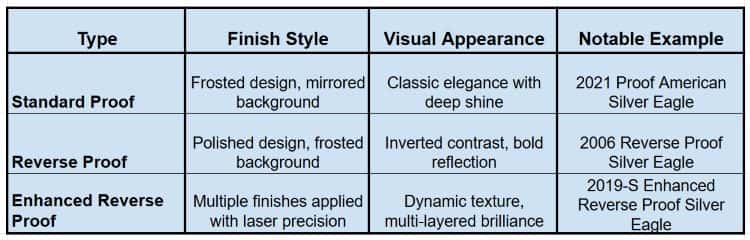
The enhanced reverse proof builds upon the traditional reverse proof by applying varying levels of polish and frost to specific areas, often using laser technology. This precision highlights fine details and creates a multidimensional effect that feels almost alive under light.
Iconic Reverse Proof Coins
Certain reverse proof coins have achieved iconic status, admired by collectors worldwide for their design, significance, and limited availability:
-
2006 American Silver Eagle Reverse Proof – The first of its kind and the inspiration for future reverse proof releases.
-
2006-W American Gold Eagle Reverse Proof – Issued as part of the 20th Anniversary Gold Eagle Set, this coin combined the beloved Saint-Gaudens design with a brilliant reverse proof finish, setting a new standard for modern gold numismatics.
-
2013-W 1 oz Reverse Proof Gold Buffalo – A masterpiece celebrating the 100th anniversary of James Earle Fraser’s iconic Buffalo Nickel design.
-
2019-S Enhanced Reverse Proof Silver Eagle – Limited to 30,000 coins, it became one of the fastest sellouts in U.S. Mint history.
-
2021 Canadian Maple Leaf Reverse Proof – A Royal Canadian Mint showpiece with exceptional detail and security features.
Each of these coins represents a milestone in the evolution of the reverse proof finish, marrying artistry with technological precision.
The Symbolism and Appeal of Contrast
Beyond the technical mastery, reverse proof coins carry a symbolic resonance — they celebrate contrast itself. The gleaming designs rising from their soft, frosted fields embody balance, craftsmanship, and the beauty of opposites. For collectors, they represent more than precious metal — they are expressions of artistry and light, frozen in time.
As minting technology evolves, the reverse proof finish remains a testament to how far coin design has come — blending history, innovation, and aesthetics into a collectible that transcends currency.
Another article that may interest you:
Understanding COPY Marks on Coins