
 View Charts


The Key Date 1911-D Indian Head Quarter Eagle
The 1911-D Indian Head Quarter Eagle is one of the most sought-after coins in the Indian Head gold coin series, which was minted from 1908 to 1929. This particular coin stands out due to its low mintage, unique design, and historical significance. Collectors and investors highly value the 1911-D for its exceptional rarity and the exquisite craftsmanship the gold coin embodies. In this article, we will delve into the details that make the 1911-D Indian Head Quarter Eagle a key date coin and explore the importance of professional grading.
Historical Context and Rarity
The Indian Head $2.5 gold coin series was created by Bela Lyon Pratt, a protege of the eminent sculptor Augustus Saint-Gaudens. The coin marked a notable break from conventional U.S. coin designs. The 1911-D Quarter Eagle was minted in Denver, with a mintage of just 55,680 coins, the lowest mintage in the $2.5 denomination of the series. This drastically low production number significantly contributes to its rarity and desirability among collectors.
The coin's release during a period of economic growth and innovation in the United States adds to its historical significance. The early 20th century was a time of great change and progress in America. The industrial revolution was in full swing, and the nation was establishing itself as a global economic power. The coinage redesigns initiated by President Theodore Roosevelt were part of a broader effort to reflect this new era of American optimism and strength. Roosevelt believed that the nation's coins should be as artistic and impressive as those of ancient Greece and Rome, leading to the commissioning of designs by artists like Augustus Saint-Gaudens and Bela Lyon Pratt.
Unique Incuse Design
One of the most distinctive features of the Indian Head Quarter Eagle is its incuse design. Unlike most coins where the design is raised above the surface, the Indian Head Quarter Eagle features an incuse (or recessed) design, meaning the images and inscriptions are sunken into the surface of the coin. This technique was revolutionary at the time and remains unique in U.S. coinage.
1911-D Indian Head Quarter Eagle
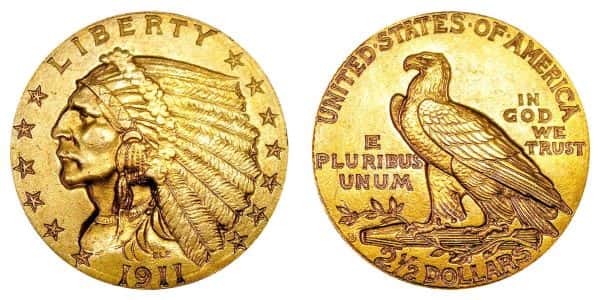
Image source: https://www.usacoinbook.com
The obverse of the coin depicts a Native American chief in full headdress, symbolizing respect and recognition of Native American culture. The reverse showcases a standing eagle, a powerful symbol of freedom and strength. The incuse design not only gives the coin a distinctive appearance but also made it more resistant to wear, as the recessed areas were less prone to abrasion.
Importance of Professional Grading
Given the rarity and historical significance of the 1911-D Indian Head Quarter Eagle, professional grading is crucial. Professional grading services, such as the Professional Coin Grading Service (PCGS) and the Numismatic Guaranty Company (NGC), provide an unbiased assessment of a coin’s condition and authenticity. Professional grading confirms the coin's authenticity, ensuring it is genuine and not a counterfeit. The coin is carefully examined and graded on a scale, typically from 1 to 70, indicating its condition. This grading helps determine its market value. Graded coins are encapsulated in tamper-evident holders, providing assurance to buyers about the coin’s authenticity and condition. This encapsulation also protects the coin from environmental factors that could degrade its condition over time. Coins that have been professionally graded and encapsulated generally fetch higher prices in the market, as buyers are willing to pay a premium for verified quality.
The 1911-D Indian Head $2.50 gold coin holds a special place in collectors' hearts, with values generally ranging from a few thousand dollars for lower-grade examples to considerably higher for those in pristine condition. Its value is primarily driven by its scarcity, historical importance, and overall condition, making it one of the most coveted coins in the Indian Head gold coin series. A PCGS graded MS-66 example with a strong “D” mint mark sold for $204,000 at a January 2022 Heritage Auctions event.
Conclusion
The 1911-D Indian Head Quarter Eagle is a remarkable coin that represents a significant period in American numismatic history. Its low mintage, unique incuse design, and the artistry of Bela Lyon Pratt make it a prized piece for collectors. The importance of professional grading cannot be overstated, as it ensures the coin’s authenticity, provides a reliable assessment of its condition, and enhances its marketability.
At Bullion Exchanges, we understand the value of these numismatic treasures. We offer a range of professionally graded coins, including coins from the U.S. Mint’s 1908-1929 Indian Head gold coin series. Explore our website, contact us, or visit us in person at our New York City location to learn more about how you can enhance your collection with these exceptional coins.