
 View Charts


A Small Coin with a Big Legacy
The Mercury Dime, officially known as the Winged Liberty Head Dime, is one of the most enduring coins in U.S. numismatic history. Produced from 1916 through 1945, it blended elegance, symbolism, and silver value, appealing to collectors and investors alike. Its debut marked a major shift in American coinage, introducing modern artistry into everyday currency. Circulating through events such as World War I, the roaring prosperity of the 1920s, the Great Depression, and World War II, the coin became a silent witness to nearly three decades of change. Today, it continues to attract attention both as a historic collectible and as an affordable path into vintage U.S. silver.
Origins of the Winged Liberty Head Design
By the early 1910s, the Barber dime had grown stale, prompting the Treasury and U.S. Mint to seek a design that captured America’s ideals in a fresh way. Sculptor Adolph A. Weinman, already recognized for medallic art and architectural sculpture, submitted a neoclassical design that won the competition in 1916. The obverse depicted Liberty with a winged cap — symbolizing freedom of thought — and quickly earned the nickname “Mercury Dime” for its resemblance to the Roman god Mercury. Weinman’s creation embodied both youthful optimism and dignity, perfectly suiting the nation’s progressive mood as it entered World War I and modernized its coinage.
Artistic Symbolism and the Designer
Weinman’s work on the Mercury Dime combined strength, elegance, and metaphor:
-
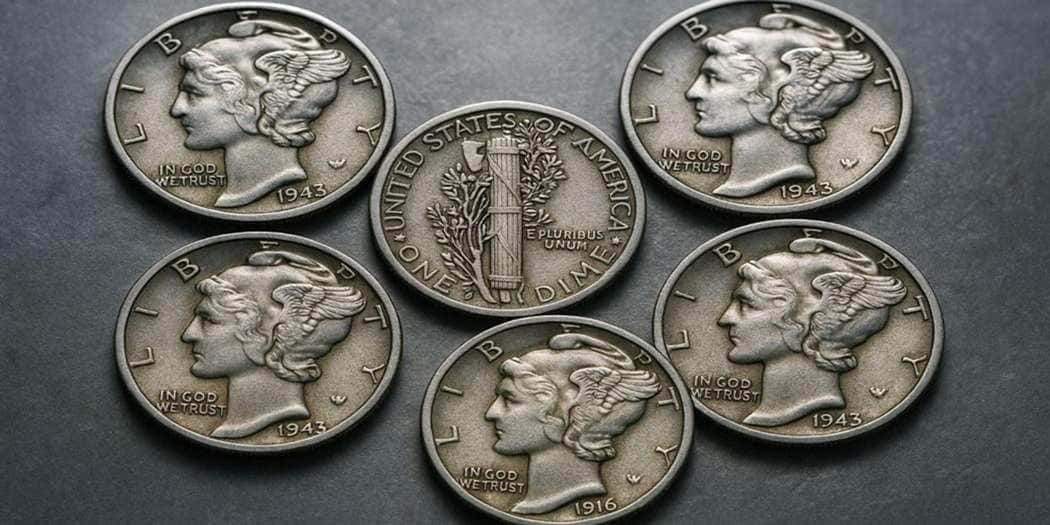
Obverse – Winged Liberty: Liberty appears in profile wearing a winged Phrygian cap, representing liberty guided by intellect. The inscriptions LIBERTY and IN GOD WE TRUST, along with the date, frame the design with clarity and balance. Notably, this portrait has enjoyed new life in the U.S. Mint’s American Palladium Eagle coins, which adopt the same Winged Liberty head for a modern audience.
-
Reverse – Fasces and Olive Branch: The reverse showcases a fasces, symbolizing unity and authority, wrapped with an olive branch that underscores peace as an essential companion to strength. This blend of imagery speaks to America’s enduring balance between power and diplomacy.
-
Designer Profile: Adolph A. Weinman (1870–1952) studied under famed sculptor Augustus Saint-Gaudens and became one of the leading figures in early 20th-century U.S. coin design. Beyond the Mercury Dime, he created the Walking Liberty Half Dollar and architectural sculptures that still adorn U.S. landmarks, cementing his reputation for timeless artistry.Technical Specifications and Mintages
Technical Specifications and Mintages
The Mercury Dime paired practical silver content with meticulous craftsmanship. Its primary attributes include:
-
Composition: 90% silver and 10% copper, giving the coin both resilience and intrinsic value.
-
Weight: 2.5 grams, a standard for its denomination and era.
-
Diameter: 17.9 millimeters, making it small enough for everyday circulation but substantial enough to showcase detailed artwork.
-
Edge: Reeded, deterring clipping and providing a clean border for the design.
-
Mints: Issued at Philadelphia (no mintmark), Denver (D), and San Francisco (S), reflecting national demand for silver coinage.
-
Total Mintage: Over 2.7 billion pieces across the series, with sharp contrasts in output. The 1916 and 1921 issues saw extremely low mintages, while the early 1940s featured heavy production to support a wartime economy.
Key Dates, Varieties, and Rarities
Several dates and varieties remain essential for serious collectors:
-
1916-D: The premier rarity, with a mintage of only 264,000, making it a cornerstone of any complete set.
-
1921 and 1921-D: Struck in minimal numbers during an economic downturn, these issues are difficult to locate in high grades.
-
1942/1 and 1942/1-D Overdates: Created when dies were punched with overlapping years, these bold overdates are highly coveted for their dramatic look.
-
Full Bands Designation: Coins with fully defined horizontal bands across the fasces indicate an exceptional strike and command premiums for their sharpness.
These standout issues reveal the diversity of the series and reward collectors who seek historical depth and numismatic challenge.
Why Collectors and Investors Prize the Mercury Dime
The Mercury Dime remains popular because it blends rich symbolism, bullion content, and accessibility. New collectors appreciate that common dates are still affordable in circulated condition, while advanced enthusiasts pursue mint-state examples and certified rarities. Each coin contains 0.07234 troy ounces of silver, making the series a convenient gateway to precious metals. Investors often view the dime as a low-barrier way to diversify portfolios with vintage bullion, while hobbyists enjoy how it encapsulates pivotal moments in U.S. history.
Stories and Cultural Connections
The Mercury Dime carries anecdotes that enrich its appeal. Its fasces-and-olive branch reverse resonated strongly during World War II, representing peace through strength. Many Americans remember finding these coins in circulation well into the 1960s, long after production ceased, giving them a nostalgic charm. Roll-search enthusiasts and estate sale hunters continue to unearth hidden gems, while artists cite Weinman’s design as an inspiration for later U.S. coinage. Its revival on the Palladium Eagle underscores how enduring and adaptable the Winged Liberty portrait has become.
Relevance in Today’s Market
Even decades after its last mintage, the Mercury Dime holds a special place for collectors and investors. Its modest size and silver value appeal to those starting out, while high-grade or rare-date examples satisfy experienced numismatists seeking long-term appreciation. Dealers recommend the series for buyers interested in fractional silver coins with historical cachet. Modern tributes — including the 2016 Centennial Gold Mercury Dime, commemorative 1 oz silver rounds, and the Palladium Eagle series — ensure Weinman’s masterpiece continues to inspire U.S. coinage and contemporary bullion programs.
A Legacy That Still Shines
More than 75 years since production ended, the Mercury Dime continues to stand as a testament to artistry, craftsmanship, and resilience in U.S. currency. Its Winged Liberty design lives on in contemporary bullion coins, linking modern investors to an iconic chapter in numismatic history. Collectors who explore this series gain a tangible connection to American heritage while owning a versatile silver asset.