
 View Charts


How to Test if Gold is Real
Understanding How to Identify Genuine Gold
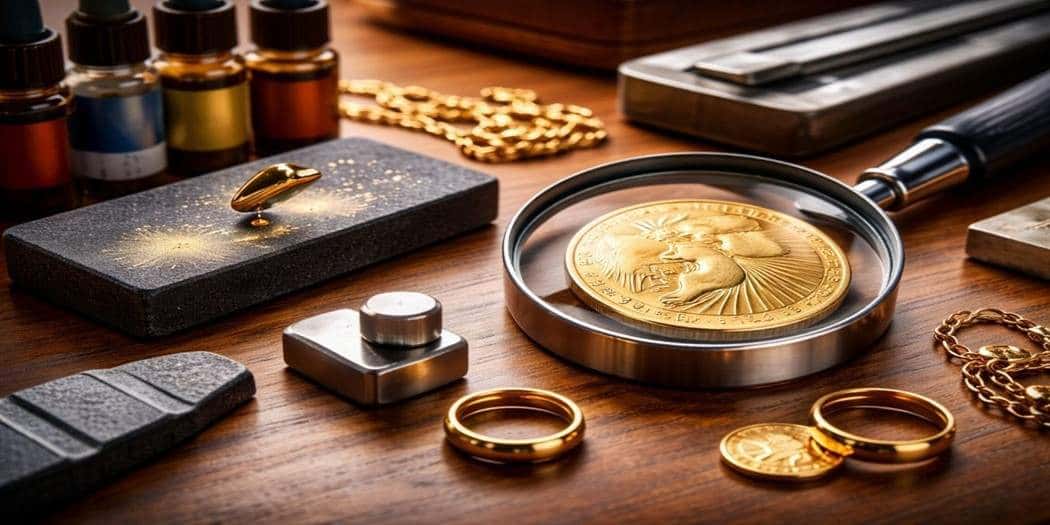
Knowing how to test if gold is real is an important skill for investors, collectors, and anyone who buys or sells precious metals. Because gold has unique physical and chemical properties, there are several reliable ways to determine whether a piece of gold is authentic. Whether you are inspecting gold bullion bars, gold coins, or gold jewelry, learning how to check gold authenticity can help protect your investment and prevent costly mistakes—especially when the gold spot price reflects significant market value.
In this guide, we’ll explain several gold testing methods you can perform at home, including hallmark inspection, the magnet test, float test, and the traditional acid test. These techniques can help determine whether an item may be real gold or fake gold, even without professional equipment. While these methods are not a substitute for laboratory testing, they are widely used by collectors and bullion investors to quickly evaluate the authenticity of precious metals.
Professional precious metals dealers and refineries rely on more advanced analytical tools to verify gold purity with exceptional precision. Techniques such as X-ray fluorescence (XRF) analysis, fire assay testing, and inductively coupled plasma mass spectrometry (ICP-MS) are commonly used within the bullion industry to determine the exact composition of a gold item. These technologies allow experts to confirm gold fineness, purity levels, and metal content with a high degree of accuracy. However, the basic tests covered in this guide can help identify potential issues before seeking professional verification.
Gold remains one of the most trusted assets in the world due to its distinctive color, resistance to corrosion, and remarkable durability. For centuries, investors have relied on gold as a store of value during economic uncertainty and inflation. Whether you are verifying a newly purchased coin, evaluating inherited jewelry, or checking the authenticity of bullion, understanding how to test gold properly provides confidence in the value of your precious metals holdings.
The Legacy of Gold
Why Gold Has Been Trusted for Thousands of Years
Gold’s reputation as a symbol of wealth and stability dates back thousands of years. Ancient civilizations quickly recognized the metal’s rarity and beauty, and it soon became associated with power, prestige, and prosperity. The Egyptians were among the earliest cultures to mine and craft gold, producing jewelry, ceremonial artifacts, and decorative objects as early as 2600 BC.
One reason gold became so valuable is its natural durability. Unlike many metals, gold does not rust, tarnish, or degrade over time. These properties made gold ideal for coinage, trade, and long-term wealth preservation. As civilizations developed monetary systems, gold played a central role in global commerce and economic stability.
Today, gold continues to serve as a reliable store of value. Governments, central banks, and private investors maintain gold reserves and bullion holdings as part of diversified financial strategies. The metal’s long history of stability and global demand reinforces its reputation as one of the most trusted assets in the financial world.
Why Verifying Gold Authenticity Matters Today
The Rise of Counterfeit Gold in Modern Markets
Although gold has been valued for centuries, verifying its authenticity has become increasingly important in modern markets. Advances in manufacturing have allowed counterfeiters to create fake items that closely resemble genuine gold products. These counterfeits may include gold-plated base metals, tungsten-filled bars, or jewelry stamped with misleading purity marks.
Hallmarks, stamps, and karat markings can provide useful information about an item’s gold content, but they should never be considered definitive proof of authenticity. Some counterfeit products are intentionally stamped with false markings, while legitimate antique pieces may lack hallmarks entirely. Because of this, relying solely on markings can be misleading when determining whether gold is real.
Learning how to identify fake gold and perform basic gold authenticity tests can significantly reduce the risk of purchasing counterfeit items. By combining visual inspection with simple physical testing methods, investors and collectors can make more informed decisions when buying gold coins, gold bullion, and gold jewelry.
Bullion Exchanges Expertise in Precious Metals Authentication
At Bullion Exchanges, precious metals authentication is a critical part of ensuring trust within the bullion market. As a leading precious metals dealer, the company works with trusted mints and suppliers and utilizes professional verification methods to confirm the purity, weight, and authenticity of gold bullion products.
Experienced dealers understand that verifying gold involves multiple steps, including physical inspection, weight and measurement verification, and advanced analytical testing when necessary. These practices help maintain confidence among investors and collectors while ensuring that the gold products entering the market meet strict quality standards.
For individuals learning how to test gold at home, the methods outlined in this guide can serve as a useful starting point. When in doubt, consulting a reputable precious metals dealer or professional assay service is always recommended to confirm gold authenticity.
The Unique Properties of Gold
Gold’s appeal lies not only in its historical significance but also in its extraordinary physical and chemical properties. With the chemical symbol Au, gold is one of the most enduring and versatile metals:
-
Resistant to Oxidation: Gold doesn’t rust, tarnish, or corrode, maintaining its brilliant luster for centuries, making it timeless and durable.
-
Non-Magnetic: Gold is not attracted to magnets, a property often used to test its authenticity and distinguish it from imposters.
-
Highly Conductive: Renowned for its ability to conduct heat and electricity while resisting corrosion, gold plays a vital role in modern electronics.
-
Unique Solubility: Gold dissolves only in aqua regia (a mix of nitro-hydrochloric acid), setting it apart from other metals chemically.
-
Malleable and Ductile: Gold can be pressed into ultra-thin sheets or drawn into fine wires, enabling its use in diverse applications, from dentistry to aerospace.
-
Soft and Sectile: Pure gold’s softness leads to it being alloyed with metals like silver or copper to enhance strength, influencing durability and its spectrum of colors, such as rose or white gold.
-
Radiant Appearance: Gold’s captivating shine and warm hue make it instantly recognizable and treasured for its aesthetic and intrinsic value.
-
Distinctive Density: Gold's high density differentiates it from lighter alloys or imitations. While tungsten shares similar density, it lacks gold’s malleability and is much harder due to its atomic structure.
-
Chemical Stability and Adaptability: Gold’s brilliance, resistance to degradation, and versatile properties solidify its status as one of the most sought-after metals, valued for beauty, practicality, and economic significance.
Gold Purity Chart - Karat and Millesimal Fineness Systems
|
% of Gold Content |
Karat System |
Millesimal Fineness System |
Gold or not gold (US standards) |
|---|---|---|---|
|
33.3 |
8K |
333 |
Not gold |
|
37.5 |
9K |
375 |
Not gold |
|
41.7 |
10K |
417 |
Gold alloy |
|
58.3 |
14K |
583 (585) |
Gold alloy |
|
62.5 |
15K |
625 |
Gold alloy |
|
75.0 |
18K |
750 |
Gold alloy |
|
83.3 |
20K |
833 |
Gold alloy |
|
87.5 |
21K |
875 |
Gold alloy |
|
91.6 |
22K |
916 |
Gold alloy |
|
95.8 |
23K |
958 |
Gold alloy |
|
99.9 |
24K |
999 |
Pure Gold |
Pure gold is often stamped with “24K,” signifying 99.9% gold content. However, to enhance its strength and durability, gold jewelry is typically alloyed with other metals. Common gold alloys include 18K (75% gold), 14K (58.3% gold), and 10K (41.7% gold).
Gold purity can also be expressed using the millesimal fineness system, which measures the parts per thousand of pure gold in the alloy by mass. The chart above compares the karat system with the millesimal fineness scale, providing the actual percentage of gold content for each purity level. Keep in mind that in the United States, items with a purity below 10K are not recognized as commercial gold products.
Methods to Test If Gold is Real at Home
Now that you’re familiar with gold’s unique properties, it’s time to explore the best methods for determining its authenticity and purity. Below, we’ve outlined the most common techniques for testing gold, ranging from simple at-home methods to advanced testing machines that deliver highly accurate results.
1. Magnifying Glass Test
The Magnifying Glass Test is an easy and accessible first step to check the authenticity of your gold. All you need is your gold item and a magnifying glass to conduct this straightforward visual inspection.
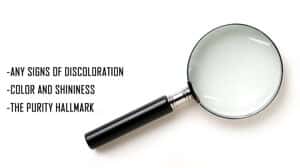
During this test, carefully examine your gold piece for key visual clues:
- Discoloration: Authentic gold is chemically inert, meaning it doesn’t tarnish or react with environmental factors. If you spot discoloration or other metals showing through, it’s likely a fake or gold-plated item. Discolored areas are a clear sign that your piece may not be pure gold.
- Color and Luster: Genuine gold has a soft, rich yellow tone and isn’t overly shiny. If your item appears overly bright, overly yellow, or has a different hue (such as reddish tones), it may indicate that the gold is either not pure or alloyed with other metals.
- Purity Hallmark: Look for hallmark engravings that indicate the item’s gold content. Common purity markings include "999" or "24K" for pure gold, and other values like "18K," "14K," or "10K" for alloyed gold. Be cautious—while a hallmark is a useful clue, it’s not definitive proof of authenticity, as engravings can be faked.
If your gold piece fails the Magnifying Glass Test, it’s likely not pure gold. However, to confirm its fineness and authenticity, additional testing methods are recommended. Keep your magnifying glass handy—it may be needed for the next steps, especially for spotting additional markings on jewelry that could offer further insights into your item’s composition and origin.
2. Hallmark Test (Stamp Test or Jewelry Markings Test)
The Hallmark Test, also known as the Stamp Test or Jewelry Markings Test, is one of the easiest ways to assess whether your gold item is genuine. Authentic gold pieces are often stamped with hallmarks that indicate their purity or type. These marks can typically be found on the clasp of a necklace or bracelet or on the inner band of a ring.

Common hallmarks include karat ratings such as “10K,” “14K,” “18K,” or “24K,” which signify the percentage of pure gold in the item. Some pieces may also feature additional markings, like the manufacturer's logo or a stamp specifying the alloy type. Using a magnifying glass, inspect your gold piece closely to locate and examine these details.
When inspecting, items stamped with labels such as “HGP” (Heavy Gold Plate), “GF” (Gold Filled), “GP” (Gold Plated), “H.G.E.” (Hydrostatic Gold Electroplating), “G.E.P.” (Gold Electroplating), or “1/20,” serve as indications that the item is gold-plated rather than solid gold. Additionally, marks like "800," "925," and "950" are silver hallmarks, meaning the item contains silver rather than gold.
While the hallmark is a helpful starting point in identifying gold authenticity, it’s not foolproof—stamps can sometimes be faked. If you have doubts, further testing methods are recommended to confirm whether your item is genuine.
3. Skin Test
The Skin Discoloration Test is one of the simplest ways to check the authenticity of gold. Genuine gold does not react with the skin and will not cause any discoloration.

To perform this test, hold the gold item in your hand for a couple of minutes. If it’s fake, a chemical reaction between your skin’s sweat and the alloy metals may cause your skin to turn green or black. This reaction indicates the presence of non-gold metals, such as copper or nickel. If your skin remains unaffected, the item is likely genuine gold.
Important Note: If you’ve applied liquid foundation or powder to your skin, real gold may leave a black streak due to the makeup’s reaction. To avoid compromised results, ensure that the testing area is clean and makeup-free before conducting the test.
If your clean skin develops discoloration, it’s a sign that the gold item is not authentic. If no discoloration occurs, continue with additional tests to confirm the purity of your gold.
4. Makeup Test
While not completely reliable, this quick method can be useful in a pinch. Apply a small amount of liquid foundation to your hand, blend it in, and set it with powder. Once the foundation has dried, rub your gold item on the area. If a black mark appears, the item is likely made of real gold. If you do not see a line or black streak, the object is likely to be another metal or gold-plated.
5. Float Test
The float test is one of the simplest and safest ways to determine if your gold is authentic at home.
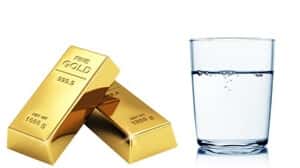
To perform this test, fill a glass with water and gently place the gold item into it. Genuine gold will sink straight to the bottom due to its high density, while fake gold will float or hover near the surface. This straightforward method offers a quick indication of authenticity.
For a more precise evaluation, you can test gold using its density, or specific gravity. Begin by weighing the gold item to determine its mass, then measure its volume by submerging it in a container of water and recording the displacement. Calculate the density by dividing the weight by the volume. Pure gold has a density of approximately 19.3 g/cm³. Comparing your result to this standard can help you assess the item's purity. Significant deviations from this value may suggest the presence of other metals.
Additionally, real gold is naturally water- and tarnish-resistant due to its unique chemical properties. Contact with liquids will not alter its color or cause discoloration, which is why showering with gold jewelry, such as a necklace or chain, is perfectly safe. This resistance to environmental factors is another characteristic of genuine gold, distinguishing it from counterfeit or gold-plated items.
6. Porcelain Tile and Ceramic Plate Test (Scratch Test)
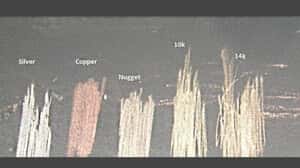
When you scratch a piece of gold against a hard object, such as an unglazed ceramic tile or plate, it will leave a golden or yellow streak due to gold’s softness. If the item is fake and made of darker-colored metals, scratching it will produce a dark streak instead.
7. Magnet Test
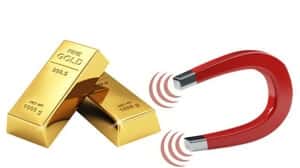
Since genuine gold is not magnetic, it won’t attract any magnets.
To test if your gold is real using a magnet, bring a strong magnet close to the gold item and observe the reaction. Pure gold is non-magnetic, so if there is no attraction, it is likely genuine. However, if the magnet is drawn to the item, it indicates the presence of other metals, such as nickel, and suggests the gold is not pure. Be aware that gold-plated items may also show no reaction to the magnet due to their non-magnetic coatings, so this test is not always definitive for authenticity.
8. Acid Test
An acid test is a proven method for assessing the purity of gold. Acid testing kits are widely available and come with various strengths of acid to test different karats. This method involves applying acid to a gold item to observe its reaction, helping determine its authenticity and purity. Pure gold will resist the acid, while lower purity gold or fake metals will react by changing color or texture.
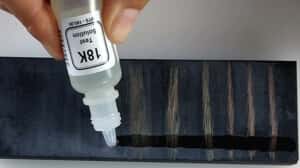
Step-by-Step Guide to Acid Testing Gold:
-
Rub the gold item firmly against a test stone to leave a visible streak.
-
Apply a drop of acid to the streak on the stone.
-
Watch for any color changes or reactions on the streak.
-
Compare the reaction to the color chart included with your testing kit.
-
Assess the gold’s purity based on how the acid interacts with the streak.
Testing with Nitric Acid
Alternatively, you can test gold directly with nitric acid. Find an inconspicuous spot on the jewelry, such as under a clasp or on the inside of a ring, where you can make a small scratch. Ensure the scratch goes deep enough to expose the underlying metal, if any. Carefully apply a drop of nitric acid to the scratch. Genuine gold will remain unchanged, while fake gold may react, turning green or milky as the acid interacts with base metals.
Safety First: Handling Acid Responsibly
When performing an acid test, always prioritize safety. Conduct the test in a well-ventilated area and wear gloves and eye protection to prevent accidental contact with the acid. Protect your workspace by using a non-reactive, acid-resistant mat or tray to avoid spills or damage. Store the acid securely away from children and pets, and handle it with care to minimize risks.
By following these steps and precautions, the acid test can serve as a reliable, straightforward method to confirm the authenticity and purity of your gold items.
9. Vinegar Test
To test the authenticity of your gold using vinegar, begin by placing the item on a flat surface or holding it securely in your hand. Carefully pour a small amount of distilled white vinegar onto the gold, or use a dropper to apply a few drops. Observe closely—if the gold changes color, smokes, fizzes, or reacts in any way, it is most likely not genuine. Authentic gold will remain unchanged, retaining its shine and color.
Alternatively, you can immerse the gold item in a glass of vinegar and allow it to soak for 5-8 minutes. After rinsing the item with water, inspect it for any changes in appearance. Genuine gold will show no signs of discoloration or reaction, whereas fake gold may darken or exhibit other signs of deterioration. These simple tests can provide a quick and effective way to determine whether your gold is real.
10. Weight & Size Test
This test is particularly useful for verifying the authenticity of gold bullion coins, as they are minted to precise weight and size specifications. Gold's exceptional density—one of the highest among metals—makes it extremely difficult to replicate accurately. Counterfeit materials often require greater volume to match gold's weight, leading to discrepancies in size or thickness. To perform this test, start by referencing the expected weight, diameter, and thickness of your specific gold coin. Then, carefully weigh and measure your coin. Any significant deviation from the standard specifications could indicate a fake. This straightforward method helps distinguish genuine gold coins from counterfeits with ease.
11. Black Jeweler’s Stone Test
Note: Exercise caution with this test, as improper handling can damage your gold item.
To perform the jeweler's stone test, rub your gold item firmly against a black jeweler's stone to create a visible streak. If the streak is solid and gold-colored, the piece is likely genuine gold. A faint or nonexistent streak, on the other hand, may indicate the item is gold-plated or not gold at all.
For a more advanced version of this test, gold’s resistance to corrosion, oxidation, and acid can be leveraged. Rub the gold item against the jeweler's stone to leave a clear mark, then apply a small amount of nitric acid or aqua regia (a mix of nitric and hydrochloric acids) to the streak. If the mark dissolves, the item is not gold. Genuine gold is a noble metal and will remain unaffected by these acids, providing further confirmation of its authenticity.
12. Toothpaste Test
Apply a small amount of toothpaste to the gold item and gently rub it. If the gold remains unaffected, it is likely genuine. Fake gold may exhibit signs of discoloration or wear.
13. Lighter or Heat Test
Real gold does not darken or burn when exposed to heat. Instead, it melts, allowing it to be shaped and molded without losing its natural color. In contrast, metals like copper, iron, and brass will change color and darken when heated, distinguishing them from genuine gold.
14. “Take a Bite” Test
At Bullion Exchanges, we don’t endorse this method, but it’s worth mentioning for its pop culture appeal. You’ve probably seen it in movies—whether it’s a Wild West cowboy or a city slicker, they bite into a gold piece to test its authenticity. The idea is that real gold, being a soft metal, will show bite marks.
However, we advise against trying this for two key reasons. First, even gold-plated items can show bite marks, making this test unreliable. Second, and more importantly, biting into any metal object—gold or otherwise—can damage your teeth. While it may seem fun or nostalgic, this method is best left to the big screen rather than real-life gold testing.
Gold Testing Machines - Electronic and XRF Thermo Gold Testers
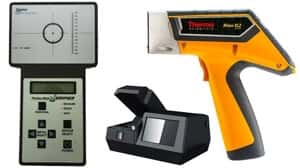
Professional Testing Methods for Gold: Precision and Reliability
When it comes to ensuring the authenticity of gold, professional testing methods using advanced electronic or XRF testing machines provide unmatched accuracy. These methods are widely utilized by certified appraisers and gold owners who demand precise results without risking damage to the gold item.
Electronic Gold Testing with Sigma Metalytics
The Sigma Metalytics Precious Metal Verifier is an excellent choice for testing gold coins and bars quickly and non-destructively. This device measures the resistivity of gold using electromagnetic waves, penetrating the surface to analyze the underlying metal. This ensures accurate results, even for items with gold plating or protective plastic casings. If the resistivity reading falls within the acceptable range, your gold is authentic. Otherwise, the device will flag inconsistencies, even detecting slight alloy variations.
Advantages of Sigma Metalytics Verifier:
-
Instant results and user-friendly operation.
-
Non-invasive testing through protective cases.
-
Reliable for detecting counterfeit gold and other precious metals.
-
Durable and portable, with long battery life.
XRF Thermo Scientific Analyzer: Gold Testing at the Atomic Level
X-ray fluorescence (XRF) spectrometry is the gold standard for precise metal analysis. Devices like the Thermo Scientific™ analyzer use X-rays to excite atoms in the gold, detecting the radiation they emit as they return to their normal state. This advanced technology provides exact details of a gold piece’s composition, including karat weight and alloy percentages.
The Thermo Scientific™ analyzer features AuDIT™ (Gold Detection and Identification Technology), which identifies plating and counterfeit gold with unparalleled accuracy. This makes it ideal for appraising high-value items or advanced fakes that are challenging to detect through conventional methods.
Key Benefits of XRF Testing:
-
Instant, highly accurate composition analysis.
-
Non-destructive testing, preserving the item’s integrity.
-
Precision readings without manual calibration.
-
Ability to detect even advanced counterfeits and plating.
Reliable Gold Testing with Bullion Exchanges: 100% Guaranteed Results
For the ultimate peace of mind, consider having your gold tested by certified experts. At Bullion Exchanges, we offer free appraisals using the Sigma Metalytics Precious Metal Verifier and the XRF Thermo Scientific Analyzer. Our transparent process ensures that your gold is tested right in front of you, providing accurate and reliable results.
We specialize in authenticating coins, rounds, and bars made of gold, silver, platinum, and palladium. With extensive expertise in detecting counterfeits, our certified appraisers will help confirm the authenticity and purity of your precious metal items, ensuring you get the most accurate appraisal possible.
Key Takeaways
This guide highlights both easy home methods and advanced testing techniques for determining gold authenticity. While at-home tests can be useful, the safest and most accurate approach is to rely on a trusted provider like Bullion Exchanges.
If you’re unsure about the authenticity of your gold or want to confirm its value, don’t hesitate to contact us. Our customer service team is ready to answer your questions, and our appraisers are here to provide a complimentary, expert evaluation of your precious metals. Visit our location in New York City’s Diamond District or reach out online to take the next step in securing confidence in your investment.