
 View Charts


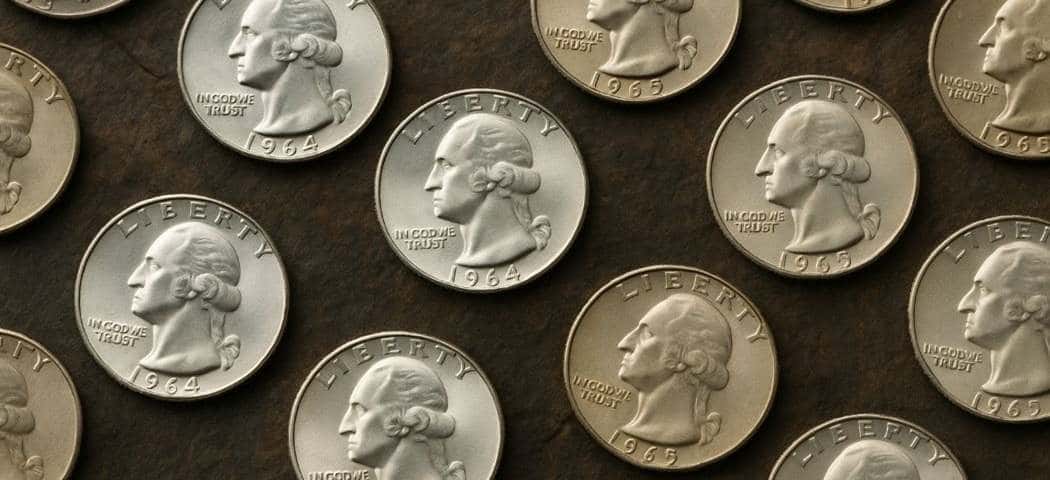
The Quarter That Changed Everything
To most Americans, quarters are simply everyday change. But in the world of numismatics and precious metals, the years 1964 and 1965 mark a watershed moment in U.S. minting history. The transition from 90% silver to base-metal clad coinage redefined the value of the Washington Quarter - both literally and symbolically.
If you've ever wondered why some quarters are worth far more than 25 cents, understanding this shift can help you uncover hidden gems in your coin jar - and even begin building a silver stack.
The 1964 Washington Quarter: America’s Final Circulating Silver Quarter
The 1964 Washington Quarter represents the last year that the U.S. Mint struck quarters from 90% silver and 10% copper. Designed by John Flanagan, this coin closes the chapter on nearly two centuries of circulating U.S. silver coinage.
Key Specs of the 1964 Quarter:
-
Composition: 90% Silver, 10% Copper
-
Weight: 6.25 grams
-
Silver Content: 0.1808 troy ounces
-
Diameter: 24.3 mm
Why It’s Valuable:
-
Bullion Value: With silver currently trading near $36 per ounce, the melt value of a 1964 quarter is approximately $6.50.
-
Historical Importance: It’s the final year of silver in U.S. quarters, making it a top target for collectors and silver stackers.
-
Inflation Hedge: Investors often accumulate “junk silver” - pre-1965 coins - for their tangible, inflation-resistant value.
The 1965 Washington Quarter: The Beginning of Clad Coinage
In response to rising silver prices and nationwide hoarding, the U.S. government enacted the Coinage Act of 1965. This legislation removed silver from dimes and quarters, replacing it with a copper-nickel clad composition that remains the standard today.
1965 Quarter Specs:
-
Outer Layer: 75% Copper, 25% Nickel
-
Core: Pure Copper
-
Weight: 5.67 grams
-
Silver Content: 0%
-
Diameter: 24.3 mm
Why the Change?
-
Silver Shortage: The melt value of silver coins began exceeding their face value in the early 1960s.
-
Hoarding Crisis: Citizens hoarded silver coins, leading to coin shortages.
-
Cost Efficiency: Clad coinage was more economical to produce for circulation.
Today’s standard quarters still use the same copper-nickel clad formula introduced in 1965.
Mintage Numbers: A Shift in Scale and Strategy
In addition to their metal content, the 1964 and 1965 quarters also differ in total mintage - shedding light on the broader economic forces at play.
1964 Washington Quarter Mintage:
-
Over 1.18 billion quarters were struck in 1964 across all U.S. Mint facilities (Philadelphia and Denver combined), marking a massive production push ahead of the upcoming switch from silver to clad coinage.
-
This strategic oversupply was intended to mitigate the impact of silver coin hoarding as collectors and the public anticipated the metal transition.
1965 Washington Quarter Mintage:
-
With silver officially removed from the composition, the U.S. Mint produced over 1.82 billion clad quarters in 1965.
-
These coins were struck without any mint marks to discourage collecting and reduce public confusion during the metal shift. The unusually high mintage was necessary to satisfy nationwide demand and combat ongoing coin shortages.
These staggering figures illustrate how the U.S. Mint responded to market conditions and public behavior - highlighting how both scarcity and composition drive a coin’s value.
How to Tell the Difference Between a 1964 and 1965 Quarter
Though they look nearly identical, there are simple ways to distinguish these two coins:
-
Date Check: 1964 is silver; 1965 is clad.
-
Edge Inspection: Silver quarters have a solid white edge; clad quarters display a visible copper stripe.
-
Weight Test: A silver quarter weighs 6.25 grams; a clad one weighs only 5.67 grams.
Are There Valuable 1965 Quarters?
While most 1965 quarters are only worth face value, a few rare versions exist:
1. 1965 Silver Planchet Error
A handful of 1965 quarters were mistakenly struck on leftover silver blanks from 1964. These transitional error coins are extremely rare and can fetch $5,000–$10,000+ if graded and authenticated.
2. Double Dies & Off-Center Errors
Some 1965 quarters exhibit doubled inscriptions or misaligned designs. Although less valuable than silver errors, they still attract collector interest and can be worth hundreds of dollars depending on rarity and grade.
Why 1964 Quarters Remain Popular with Collectors
1964 silver quarters continue to be a staple for both new and seasoned collectors. Here's why:
-
Real Metal Value: Each contains nearly 1/5 oz of pure silver.
-
Iconic Design: As the final silver issue, it holds nostalgic and historical value.
-
High Liquidity: These coins are easy to trade and sell based on their silver content.
-
Affordable Investment: Compared to rare bullion coins, 1964 quarters offer a low-cost entry into precious metals investing.
The 1964 vs. 1965 Quarter - A Turning Point in U.S. Coinage
The Washington Quarters of 1964 and 1965 may appear similar, but they represent two completely different chapters in American monetary history:
-
1964 Quarters contain real silver, with collector and bullion value far beyond their face.
-
1965 Quarters launched the modern clad era, holding only base metal content.
If you’re seeking to invest in silver, stacking 1964 quarters (and other pre-1965 silver coins) remains a trusted and recognizable way to add real metal to your portfolio. And if you're just getting started, there's no better place than Bullion Exchanges - your source for authentic U.S. silver coins, market expertise, and unbeatable selection.
Another article that may interest you:
2022 Maya Angelou Quarter: Values, Design & Rare Error Guide