
 View Charts


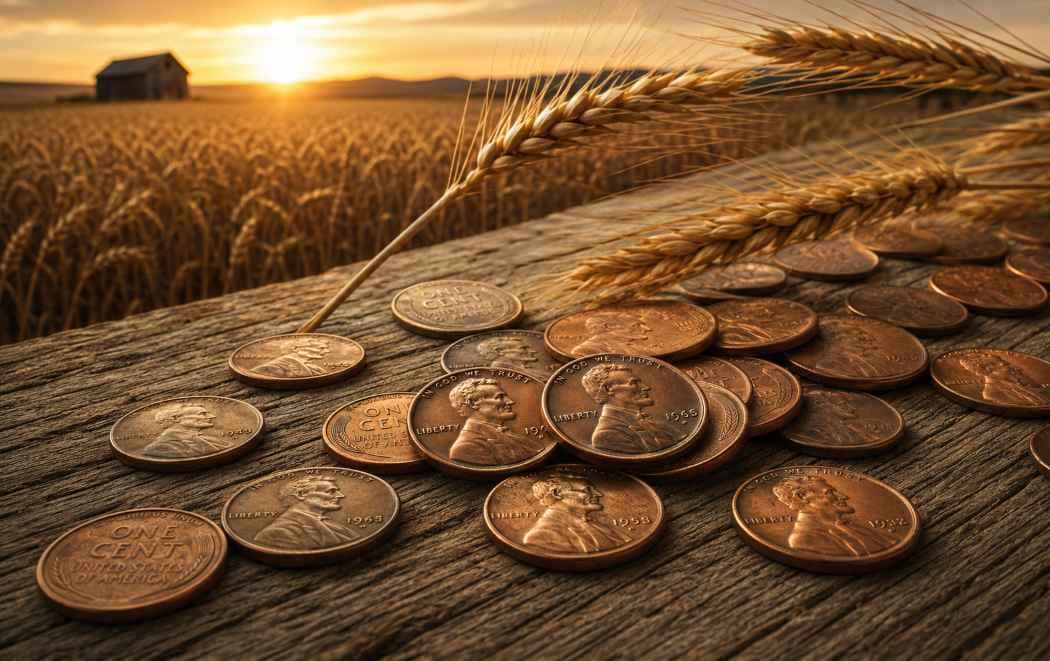
The Top 100 Most Valuable Wheat Pennies
Why Wheat Pennies Matter More After the End of the U.S. Penny
With the official discontinuation of U.S. penny production in November 2025, the Lincoln cent has transitioned from everyday pocket change to a completed chapter in American monetary history. As new cents are no longer being struck, collectors and casual holders alike are taking a closer look at older issues — especially the iconic Wheat pennies minted from 1909 to 1958.
Wheat pennies were already among the most beloved coins in U.S. numismatics. Now, with the cent itself no longer in production, these historic pieces represent the early foundation of a coin series that spanned more than a century. Their rarity, key dates, and famous errors are receiving renewed attention as collectors reassess what the end of penny production may mean for long-term value and demand.
1. Historical Significance: Honoring Abraham Lincoln
Wheat pennies were first minted in 1909 to celebrate the 100th anniversary of President Abraham Lincoln’s birth. Designed by Victor D. Brenner, the coin marked the first time a real historical figure replaced the allegorical Lady Liberty on U.S. coinage.
-
Why It Matters: Lincoln’s portrait on the obverse was groundbreaking and reflected a shift in the cultural landscape, celebrating a leader who symbolized unity and progress.
-
The Design: The reverse features two wheat stalks flanking the words “ONE CENT,” symbolizing prosperity. This minimalist yet meaningful design remains iconic.
2. A Symbol of Change in U.S. Coinage
The release of the wheat penny signified a new chapter in American coinage. The U.S. Mint aimed to connect coinage with national identity, making Lincoln an ideal figure for this transition.
-
Victor D. Brenner’s Influence: Brenner’s design was selected as part of a broader movement to honor historical figures in art and culture.
-
Cultural Context: The wheat penny emerged during a time of significant innovation, including the rise of industry and progressivism in early 20th-century America.
3. Scarcity and Key Dates: Why Some Wheat Pennies Are Rare
For collectors, the value of a wheat penny often lies in its rarity and condition. Some key dates and varieties stand out for their historical and numismatic importance:
-
1909-S VDB Wheat Penny: This first-year coin featured designer Victor D. Brenner’s initials on the reverse, but public backlash led to their quick removal, creating a low-mintage rarity. These pennies can fetch $600 to over $1,500 depending on condition.
-
1943 Wheat Penny: During World War II, copper was diverted for military use, leading to steel cents coated in zinc. A few accidental copper pennies were minted in 1943, making them some of the most valuable coins, worth up to $100,000 or more at auction.
-
1955 Double Die Wheat Penny: A famous error featuring clear doubling of the date and lettering, this coin can command $1,000 to $20,000, depending on grade.
4. Everyday History: A Tangible Link to the Past
One of the reasons wheat pennies are so fascinating is their connection to everyday history.
-
In Circulation: Wheat pennies were widely used from 1909 to 1958, meaning each coin has a story to tell. These coins may have been in the pockets of soldiers, students, and workers during pivotal moments in American history.
-
Finding a Treasure: Discovering a wheat penny in your change or coin roll hunting feels like uncovering a small piece of history. It’s this tangible link to the past that keeps collectors intrigued.
5. Accessibility and Affordability: Perfect for All Collectors
Wheat pennies are an excellent entry point for new collectors due to their affordability and availability.
-
Affordable Collecting: Most wheat pennies can be purchased for under $1 in circulated condition, making them accessible to anyone starting a collection.
-
Advanced Collecting: For experienced numismatists, rarer varieties like the 1922 “No D” penny or error coins offer significant challenges and rewards.
6. Unique Design Appeal: Simple and Iconic
The design of the wheat penny has timeless charm, with Lincoln’s profile on the obverse and wheat stalks on the reverse.
-
Symbolism: The wheat stalks represent prosperity and growth, a reflection of American values during the early 20th century.
-
Legacy: Even after the wheat penny was replaced by the Lincoln Memorial reverse in 1959, its design remains one of the most recognizable in U.S. coinage history.
7. Collecting Tips for Wheat Pennies: Maximize Your Success
Building a collection of wheat pennies can be both exciting and rewarding, but knowing how to approach it can make all the difference. Here are some practical tips to help you succeed:
-
Start Small and Expand Gradually: Begin with common wheat pennies to familiarize yourself with the series. Once you’ve built confidence, focus on key dates, errors, and varieties to add more value to your collection.
-
Organize Your Collection: Use coin folders or albums to keep your collection in order. These tools not only protect your coins but also make it easy to track your progress and identify gaps in your collection.
-
Roll Hunt for Hidden Gems: Search through bank rolls or jars of coins for wheat pennies. Many collectors have found rare varieties in circulation, especially in older rolls.
-
Understand Coin Grades: Learn about grading systems like those used by the Professional Coin Grading Service (PCGS) or Numismatic Guaranty Company (NGC) to evaluate your coins' condition and determine their market value.
-
Research Market Trends: Stay informed about the numismatic market. Prices for rare wheat pennies, such as the 1909-S VDB or 1943 copper penny, can fluctuate based on demand.
-
Buy from Reputable Dealers: Ensure authenticity and quality by purchasing from trusted sources like Bullion Exchanges, which guarantees the integrity of its collectible coins.
By following these tips, collectors can enjoy the thrill of building a collection while making informed decisions that enhance the long-term value of their holdings.
8. How to Identify Rare Pennies
Spotting rare wheat pennies is a skill that sets successful collectors apart. Recognizing these coins often comes down to identifying specific features, errors, and historical significance. Here’s what to look for:
-
Examine the Date and Mintmark: Key dates like the 1909-S VDB or 1943 Copper Wheat Penny are known for their rarity. Pay attention to the mintmark (S for San Francisco, D for Denver, or no mark for Philadelphia) to pinpoint the coin’s origin. Some combinations, such as the 1914-D, are particularly scarce.
-
Search for Errors and Varieties: Minting errors, like doubled dies, off-center strikes, or repunched mintmarks (RPMs), can add significant value. Famous examples include the 1955 Double Die and the 1922 "No D" pennies.
-
Inspect for Metal Composition: Some coins, such as the 1943 copper penny, were accidentally struck on the wrong planchets, making them incredibly valuable. Understanding metal compositions can help identify these rare examples.
-
Assess the Condition: A coin's grade impacts its value significantly. High-grade coins with minimal wear and original luster are highly sought after. Familiarize yourself with professional grading scales for accurate evaluations.
-
Study the Reverse Design: Look for unique features on the reverse, such as die cracks or wheat stalk anomalies, that enhance a coin’s collectibility.
-
Utilize Tools and Resources: Use magnifying glasses or digital microscopes to spot small details that may otherwise go unnoticed. Reference price charts, guides, and expert resources to confirm your findings.
By mastering these identification techniques, you’ll be better equipped to uncover rare treasures and build a collection that combines historical significance with exceptional value.
Top 100 Most Sought-After Wheat Pennies
Wheat pennies are more than just small pieces of copper—they’re pieces of American history and, in some cases, extraordinary investments. Among these beloved coins, certain dates and errors stand out for their rarity, unique characteristics, and exceptional value. In this section, we’ll explore the Top 100 Most Sought-After Wheat Pennies, showcasing the coins that have captured the hearts of collectors and investors alike. Whether it’s a famous error, a low mintage, or a historical significance, these coins prove that even a humble penny can hold a treasure trove of value.
-
1943 Copper Wheat Penny
Accidentally struck on leftover copper planchets instead of steel, this rare error is one of the most famous and valuable coins in U.S. history.
(Value: Up to $250,000+) -
1944 Steel Wheat Penny
Struck on leftover steel planchets from 1943, this error coin is highly rare and coveted by collectors.
(Value: $75,000–$125,000) -
1943 Bronze Wheat Penny (Philadelphia Mint)
Another rare error struck on leftover bronze planchets intended for 1942 coins.
(Value: $100,000+) -
1942 Steel Wheat Penny Pattern
This experimental coin never made it to circulation, making it extremely rare.
(Value: $30,000–$75,000) -
1959 Wheat Penny Pattern
An experimental wheat penny struck after the series ended, making it highly rare.
(Value: $25,000–$50,000) -
1955 Double Die Wheat Penny
Known for its striking doubling of the obverse text, this error is a must-have for serious collectors.
(Value: $1,000–$20,000+) -
1958 Doubled Die Obverse Wheat Penny
A rare error with doubling on the obverse, making it a standout in the series.
(Value: $2,000–$10,000+) -
1909-S VDB Wheat Penny
The inaugural wheat penny featuring Victor D. Brenner’s initials, with a limited mintage of only 484,000 coins.
(Value: $700–$2,000+) -
1922 "No D" Wheat Penny
A Denver-minted coin missing its "D" mintmark due to a die error, making it a unique and valuable collector’s piece.
(Value: $500–$2,500+) -
1914-D Wheat Penny
With a mintage of just over 1 million, this coin is a key date in the series and highly sought after.
(Value: $200–$1,500+) -
1931-S Wheat Penny
One of the lowest-mintage coins of the Great Depression era, with fewer than 900,000 produced.
(Value: $100–$1,000+) -
1924-D Wheat Penny
A semi-key date with a relatively low mintage, making it valuable among collectors.
(Value: $50–$800+) -
1917 Double Die Obverse Wheat Penny
Features dramatic doubling of obverse elements, adding significant value.
(Value: $150–$600+) -
1912-S Wheat Penny
A key date with limited mintage, making it a valuable addition to collections.
(Value: $80–$400+) -
1936 Double Die Obverse Wheat Penny
Subtle but collectible doubling on the obverse design makes this coin desirable.
(Value: $75–$200+) -
1923-S Wheat Penny
A low-mintage coin from the San Francisco Mint, sought after for its scarcity.
(Value: $50–$300+) -
1920-S Wheat Penny
This early San Francisco mint coin remains popular due to its relative scarcity.
(Value: $30–$150+) -
1939 Double Die Reverse Wheat Penny
Doubling on the reverse design elements makes this a standout collector’s piece.
(Value: $75–$250+) -
1913-D Wheat Penny
A semi-key date with a relatively low mintage from the Denver Mint.
(Value: $40–$150+) -
1949-S Wheat Penny with RPM
Repunched mintmark varieties on this coin add unique value to an otherwise common issue.
(Value: $30–$120+) -
1918-D Wheat Penny
A semi-key date with lower mintage from the Denver Mint.
(Value: $30–$125+) -
1934 Double Die Reverse Wheat Penny
Doubling on the reverse design makes this a standout piece.
(Value: $75–$300+) -
1933-D Wheat Penny
A scarce coin produced during the Great Depression, sought after by numismatists.
(Value: $50–$200+) -
1927-S Wheat Penny
A collectible coin due to its relatively low production numbers.
(Value: $40–$150+) -
1930-S Wheat Penny
This San Francisco-minted coin is sought after for its relative scarcity.
(Value: $35–$150+) -
1926-S Wheat Penny
A low-mintage coin that remains in high demand among collectors.
(Value: $50–$200+) -
1913-S Wheat Penny
This semi-key date from the San Francisco Mint is highly sought after due to its low mintage.
(Value: $75–$300+) -
1921-S Wheat Penny
A rare coin from a year with lower overall production.
(Value: $60–$300+) -
1915-S Wheat Penny
With a mintage of just over 4.8 million, this coin is a semi-key date in the series.
(Value: $70–$350+) -
1929-S Wheat Penny
A low-mintage coin that remains in demand among collectors.
(Value: $25–$100+) -
1928-S Wheat Penny
Known for its lower mintage and high demand among collectors.
(Value: $30–$150+) -
1925-S Wheat Penny
This coin’s low mintage and scarcity make it a popular choice for collectors.
(Value: $30–$200+) -
1916-S Wheat Penny
A semi-key date from the San Francisco Mint with lower production numbers.
(Value: $50–$300+) -
1922-D Wheat Penny with Weak Reverse
This Denver-minted coin is notable for its faintly struck reverse, creating unique collector appeal.
(Value: $40–$150+) -
1931-D Wheat Penny
A scarce coin with fewer than 4.4 million minted, making it highly desirable.
(Value: $50–$250+) -
1919-S Wheat Penny
A semi-key date with relatively low production, making it a desirable piece.
(Value: $40–$200+) -
1927-D Wheat Penny
A Denver-minted coin with relatively low production numbers.
(Value: $30–$120+) -
1943 Steel Penny with Die Breaks
Die breaks or cracks make this already unique wartime penny even more collectible.
(Value: $20–$75+) -
1920-D Wheat Penny
A Denver-minted coin with lower mintage, making it more collectible.
(Value: $30–$120+) -
1930-D Wheat Penny
A lower mintage coin from the Denver Mint, prized for its scarcity.
(Value: $25–$100+) -
1938-D Wheat Penny
Known for its lower mintage, this coin appeals to collectors completing a set.
(Value: $25–$75+) -
1936-S Wheat Penny
A semi-key date from the San Francisco Mint with a relatively low mintage.
(Value: $40–$150+) -
1940-S Wheat Penny with Die Cracks
Die cracks on these coins create unique patterns, increasing their desirability.
(Value: $25–$100+) -
1911-S Wheat Penny
A semi-key date with a lower mintage from the San Francisco Mint.
(Value: $100–$400+) -
1912-D Wheat Penny
A key date from the Denver Mint with a relatively low mintage.
(Value: $50–$250+) -
1947-S Wheat Penny with RPM
Repunched mintmarks make these coins stand out from the standard issues.
(Value: $25–$100+) -
1941-S Wheat Penny with RPM
The repunched mintmark adds collectibility to this early World War II-era coin.
(Value: $30–$120+) -
1948-S Wheat Penny with Die Chips
Die chip errors on this coin add a unique touch for collectors.
(Value: $25–$100+) -
1949-D Wheat Penny with Die Chips
Die chips on this Denver-minted coin add to its collector appeal.
(Value: $20–$60+) -
1942-D Wheat Penny with RPM
This Denver-minted coin features a repunched mintmark, making it a desirable error for collectors.
(Value: $40–$150+) -
1937 Double Die Obverse Wheat Penny
Features doubling on the obverse inscriptions, making it a collectible standout.
(Value: $50–$200+) -
1926-D Wheat Penny
A low-mintage coin from the Denver Mint with lasting appeal for collectors.
(Value: $30–$125+) -
1915-D Wheat Penny
This Denver-minted coin has a low mintage, making it highly collectible.
(Value: $40–$150+) -
1924-S Wheat Penny
A scarce coin from the San Francisco Mint with high demand among collectors.
(Value: $50–$300+) -
1945-S Wheat Penny with RPM (Repunched Mintmark)
Repunched mintmarks add intrigue and value to this post-war coin.
(Value: $50–$150+) -
1918-S Wheat Penny
This semi-key date from the San Francisco Mint has enduring collector demand.
(Value: $40–$150+) -
1920 Wheat Penny (Weak Strike)
A weak strike error makes this early penny highly desirable.
(Value: $25–$100+) -
1951-D Wheat Penny with Die Rotations
This error adds uniqueness to an otherwise common coin.
(Value: $20–$75+) -
1952 Wheat Penny with Die Chips
Die chips on this coin enhance its value for collectors.
(Value: $15–$50+) -
1953-D Wheat Penny with RPM
A later wheat penny with repunched mintmark varieties that collectors love.
(Value: $20–$75+) -
1955-D Wheat Penny with RPM
Repunched mintmark errors make this late-series penny collectible.
(Value: $20–$60+) -
1954-S Wheat Penny with RPM
The repunched mintmark error adds a layer of value to this mid-century coin.
(Value: $20–$60+) -
1949-S Wheat Penny with RPM
Repunched mintmark varieties on this coin add unique value to an otherwise common issue.
(Value: $30–$120+) -
1950-S Wheat Penny with Die Cracks
Die cracks elevate the collectibility of this mid-century coin.
(Value: $15–$50+) -
1934 Double Die Reverse Wheat Penny
Doubling on the reverse design makes this a standout piece.
(Value: $75–$300+) -
1941 Double Die Obverse Wheat Penny
Doubling on the obverse inscriptions makes this coin a collector’s favorite.
(Value: $100–$500+) -
1939 Double Die Reverse Wheat Penny
Doubling on the reverse design elements makes this a standout collector’s piece.
(Value: $75–$250+) -
1935 Double Die Obverse Wheat Penny
This subtle error adds value and intrigue to an otherwise common year.
(Value: $50–$250+) -
1936 Double Die Obverse Wheat Penny
Subtle but collectible doubling on the obverse design makes this coin desirable.
(Value: $75–$200+) -
1929-S Wheat Penny
A low-mintage coin that remains in demand among collectors.
(Value: $25–$100+) -
1940-P Wheat Penny with Die Cracks
Visible die cracks enhance the collectibility of this pre-war penny.
(Value: $20–$75+) -
1947-D Wheat Penny with RPM
The repunched mintmark error adds to the appeal of this post-war coin.
(Value: $20–$60+) -
1948-S Wheat Penny with Die Rotations
This rotated die error makes the post-war penny a desirable piece.
(Value: $20–$75+) -
1951-S Wheat Penny with Die Cracks
Die cracks elevate the collectibility of this mid-century coin.
(Value: $15–$50+) -
1952-D Wheat Penny with Die Rotations
Rotated die errors make this a unique and valuable coin.
(Value: $30–$150+) -
1945-D Wheat Penny with RPM
Repunched mintmark varieties make this coin a standout for collectors.
(Value: $20–$60+) -
1923-S Wheat Penny
A low-mintage coin from the San Francisco Mint, sought after for its scarcity.
(Value: $50–$300+) -
1928-D Wheat Penny
A Denver-minted coin with relatively low production, sought after by numismatists.
(Value: $30–$120+) -
1943-D Steel Wheat Penny
This wartime penny with unique features appeals to numismatists.
(Value: $10–$50+) -
1919 Wheat Penny with Die Cracks
Die crack errors make this early wheat penny a collectible standout.
(Value: $20–$75+) -
1957-D Wheat Penny with Die Cracks
This late-series wheat penny features unique die cracks that increase its value.
(Value: $15–$50+) -
1920-S Wheat Penny
This early San Francisco mint coin remains popular due to its relative scarcity.
(Value: $30–$150+) -
1921-S Wheat Penny
A rare coin from a year with lower overall production.
(Value: $60–$300+) -
1933-D Wheat Penny
A scarce coin produced during the Great Depression, sought after by numismatists.
(Value: $50–$200+) -
1930-S Wheat Penny
This San Francisco-minted coin is sought after for its relative scarcity.
(Value: $35–$150+) -
1913-S Wheat Penny
This semi-key date from the San Francisco Mint is highly sought after due to its low mintage.
(Value: $75–$300+) -
1910-S Wheat Penny
A semi-key date that appeals to collectors due to its low mintage.
(Value: $50–$200+) -
1943 Steel Wheat Penny with Errors
Unique errors, such as doubling or die cracks, elevate the value of these wartime coins.
(Value: $50–$100+) -
1917-S Wheat Penny
A San Francisco-minted coin with lower production numbers, prized by collectors.
(Value: $50–$200+) -
1914-S Wheat Penny
A lower-mintage coin from the San Francisco Mint, making it a must-have for collectors.
(Value: $50–$200+) -
1915-S Wheat Penny
With a mintage of just over 4.8 million, this coin is a semi-key date in the series.
(Value: $70–$350+) -
1932 Wheat Penny
A low-mintage coin from the Great Depression era, appealing to collectors.
(Value: $25–$75+) -
1956-D Wheat Penny with Die Cracks
Unique die crack patterns increase the value of these later wheat pennies.
(Value: $20–$75+) -
1912-S Wheat Penny
A key date with limited mintage, making it a valuable addition to collections.
(Value: $80–$400+) -
1958-P Wheat Penny with Die Chips
A late-series coin with die chip errors, enhancing its collectibility.
(Value: $15–$50+) -
1946-P Wheat Penny with Die Cracks
Die cracks give this post-war penny additional collector value.
(Value: $15–$50+) -
1939-S Wheat Penny
A lower mintage coin from the San Francisco Mint, often sought after by collectors.
(Value: $20–$75+) -
1942-S Wheat Penny with RPM
The repunched mintmark adds intrigue to this wartime penny.
(Value: $25–$75+) -
1947-D Wheat Penny with RPM
The repunched mintmark error adds to the appeal of this post-war coin.
(Value: $20–$60+) -
1929-D Wheat Penny
A semi-key date with moderate mintage from the Denver Mint.
(Value: $30–$100+)
Note on Values:
The values listed for each Wheat Penny are estimates based on current market conditions, rarity, and coin grades. Actual prices may vary depending on factors such as collector demand, condition, and where the coin is sold. Professional appraisal or grading is recommended for accurate valuation.
The 2025 Omega Pennies: The Official End of the U.S. Cent
While Wheat pennies represent the early foundation of the Lincoln cent series, the story of the denomination officially concluded in 2025. With the U.S. Mint ending penny production after 232 years (1793–2025), a historic commemorative release marked the final chapter: the 2025 Lincoln Cent Omega Privy series.
Unlike private countermarks or novelty issues, the Omega pennies were officially authorized and struck by the United States Mint. Each coin bears an Ω (Omega) privy mark — the final letter of the Greek alphabet — symbolizing the end of the longest-running circulating coin in American history.
Ultra-Low Mintage: Only 232 Sets
To honor the cent’s 232-year lifespan, the Mint authorized exactly 232 Omega sets, each containing:
One 2025 Lincoln Cent (Omega privy)
One 2025-D Lincoln Cent (Omega privy)
One 2025 24-karat gold Lincoln Cent (Omega privy)
This means only 232 examples of each coin exist — the lowest mintage in Lincoln cent history. By comparison, even key-date Wheat pennies such as the 1909-S VDB were struck in the hundreds of thousands.
The First and Only Gold Lincoln Cent
The Omega program also introduced something unprecedented: the first-ever 24-karat gold Lincoln cent. Struck in .9999 fine gold and weighing 0.213 troy ounces, the gold Omega penny created an entirely new category within Lincoln cent collecting.
Historic Auction Results
When all 232 sets were auctioned through Stack’s Bowers Galleries in December 2025, the results confirmed their historic significance. Prices ranged from $48,000 to $800,000, with total realizations exceeding $16.7 million. These results firmly established the Omega pennies as one of the most important modern U.S. Mint releases of the 21st century.
Why the Omega Pennies Matter to Wheat Collectors
For collectors of Wheat pennies, the Omega release carries broader implications. Coins that mark the beginning or end of a denomination often attract heightened long-term demand. With penny production officially discontinued, attention has shifted across the entire Lincoln cent series — from early Wheat issues to the final Omega sets.
The end of production does not automatically increase the value of common Wheat cents, but it has renewed collector interest in key dates, high-grade examples, and complete Lincoln cent collections. As the cent transitions from circulation to history, both its earliest and final chapters carry added symbolic weight.
A Legacy Sealed: Wheat Pennies in the Post-Penny Era
With the United States officially ending penny production in 2025, the Lincoln cent has entered a new historical phase. What was once the most common coin in circulation is now a concluded denomination, and that shift inevitably influences collector psychology.
Wheat pennies — representing the first fifty years of Lincoln cent history — now carry additional symbolic weight. They are no longer just early issues of an ongoing series; they are foundational artifacts of a finished era. While market values will continue to depend on rarity, condition, and demand, the end of penny production has brought renewed focus to key dates, error coins, and complete Wheat cent collections.
For collectors and investors alike, understanding the historical arc of the Lincoln cent — from its 1909 debut to the 2025 production sunset — adds deeper context to every Wheat penny discovered. As interest grows in the denomination’s legacy, these small copper coins may see sustained long-term collector attention driven as much by history as by rarity.
FAQs
Why are Wheat pennies valuable?
Wheat pennies (1909–1958) are valued based on rarity, condition, mintmark, and known error varieties. Key dates such as the 1909-S VDB and the 1943 copper cent can command substantial premiums, especially in high grades.
What are the rarest Wheat pennies?
Among the rarest Wheat pennies are the 1909-S VDB, 1914-D, 1922 “No D,” 1943 copper cent, and the 1955 Doubled Die Obverse. These coins are highly sought after due to low mintages or significant minting errors.
Did the U.S. officially discontinue the penny?
Yes. The United States Mint ended penny production in November 2025 after 232 years of continuous issuance, citing rising production costs and reduced commercial utility.
Will the end of penny production increase Wheat penny values?
The discontinuation of the penny has renewed interest in Lincoln cents, particularly key-date and high-grade Wheat pennies. While common circulated examples may not rise dramatically, scarce varieties and certified coins may see sustained collector demand.
What is the 2025 Omega Penny?
The 2025 Omega Penny is an officially authorized U.S. Mint release marking the final year of penny production. Each coin bears an Omega (Ω) privy mark symbolizing the end of the denomination.
How rare are the 2025 Omega Pennies?
Only 232 Omega sets were produced, each containing a 2025-P cent, a 2025-D cent, and a 24-karat gold Lincoln cent. This represents the lowest mintage in Lincoln cent history.
Is the 2025 gold Lincoln cent real gold?
Yes. The Omega gold penny is struck in .9999 fine 24-karat gold and weighs 0.213 troy ounces. It is the first gold Lincoln cent ever issued by the U.S. Mint.
How can I tell if my Wheat penny is rare?
Examine the date and mintmark, check for known error varieties such as doubled dies or missing mintmarks, and assess condition. For potentially valuable coins, professional grading through services like PCGS or NGC is recommended.
Other articles that may interest you:
The 25 Most Valuable Buffalo Nickels
The Iconic 1909-S VDB Lincoln Wheat Penny
The 1943 Copper Penny: The Rarest Lincoln Wheat Cent