
 View Charts


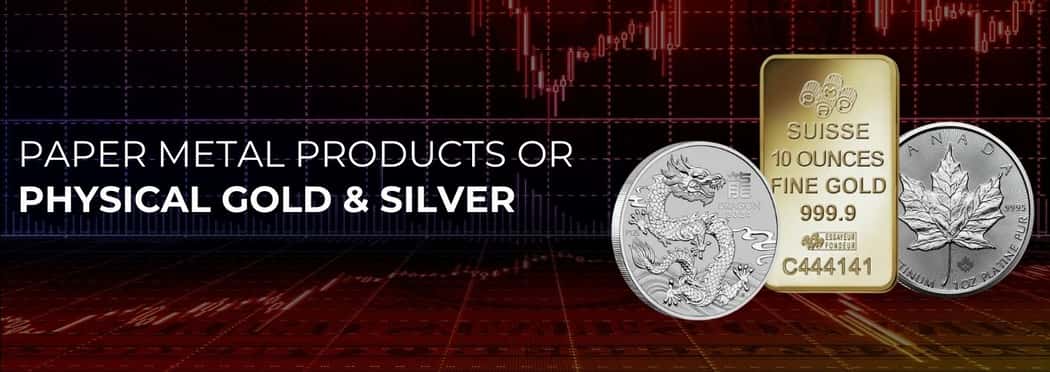
Paper Metal Products or Physical Gold and Silver
Investing in precious metals is an age-old strategy for wealth preservation and portfolio diversification. Whether it's to hedge against inflation or safeguard against market volatility, gold and silver are time-tested financial tools. However, prospective investors often need help with choosing between paper metal products and physical gold and silver. This article will examine both forms of investment to help you decide which is best suited to your goals and risk tolerance.
Understanding Paper Metal Products
Paper metal products are financial instruments representing ownership of precious metals but are not tangible assets. These include:
- Exchange-Traded Funds (ETFs): ETFs are funds that track the price of gold or silver and are traded on stock exchanges. Examples include SPDR Gold Shares (GLD) and iShares Silver Trust (SLV). They are easy to buy and sell, providing liquidity and convenience.
- Futures Contracts: Futures contracts allow investors to agree to buy or sell a set amount of gold or silver at a predetermined price on a future date. This form is more speculative and often used by experienced investors.
- Mining Stocks and Mutual Funds: Investing in mining company stocks or mutual funds that focus on mining provides indirect exposure to precious metals.
- Options: Options give investors the right, but not the obligation, to buy or sell gold or silver at a specific price within a set timeframe.
Advantages of Paper Metal Products
- Liquidity and Accessibility
Paper metal products like ETFs and stocks are highly liquid, allowing investors to quickly buy or sell during trading hours.
- Lower Storage and Insurance Costs
Since paper metal products are intangible, they do not require storage or insurance fees.
- Ease of Trading
Paper investments are easily traded through brokerage accounts, making them convenient and accessible to a wider range of investors.
- Diverse Investment Options
Investors can gain exposure to different sectors, like mining or refining, by purchasing stocks or mutual funds.
Disadvantages of Paper Metal Products
- Counterparty Risk
Since paper metal products involve third parties (funds, brokerages, etc.), there's a risk that the financial health of these entities may impact the value.
- Potential Disconnect from Physical Metal Prices
The value of paper assets doesn't always align directly with the spot prices of gold or silver due to management fees, market conditions, and other factors.
- Complexity
Some forms, like futures contracts and options, require a high level of market knowledge and financial understanding.
Understanding Physical Gold and Silver
Physical gold and silver refer to tangible bullion in the form of coins, bars, or jewelry. They are often bought through authorized dealers, private or government mints.
- Coins: Coins like the American Gold Eagle, Canadian Maple Leaf, and Krugerrand are widely recognized and trusted. They are easy to trade and store.
- Bars: Gold and silver bars come in various sizes and typically have lower premiums compared to coins, making them a cost-effective option.
- Jewelry: Although not the most cost-effective investment, gold and silver jewelry can carry significant value if crafted from high-purity metal.
Advantages of Physical Gold and Silver
- Tangible Asset Ownership
Holding physical bullion provides a direct and tangible sense of ownership that is not reliant on intermediaries.
- Safe-Haven Asset
Physical gold and silver often retain their value during economic crises, making them a reliable store of value.
- Legacy Value
Tangible precious metals can be passed down through generations, providing lasting security and legacy value.
- Intrinsic Value
Physical gold and silver have intrinsic value due to their rarity and wide range of uses in industries, jewelry, and technology.
Disadvantages of Physical Gold and Silver
- Storage and Insurance Costs
Safely storing precious metals requires security measures that can add to costs, including insurance premiums.
- Liquidity Issues
Selling physical metals can be slower than selling paper assets due to the need for appraisal and market availability.
- Premiums and Markups
Physical gold and silver often come with additional premiums due to minting, manufacturing, and dealer markups.
Choosing Between Paper Metal Products and Physical Gold and Silver
Your choice between paper metal products and physical gold or silver should align with your investment goals, risk tolerance, and personal preferences.
- Diversification: For variety within the metals sector, consider paper assets like ETFs or mining stocks.
- Hedging: To protect against inflation and market instability, physical gold and silver offer tangible security.
- Liquidity: Paper products are highly liquid for short-term trading, while physical metals work best for long-term investments.
- Legacy and Wealth Preservation: Physical gold and silver can be inherited, providing a reliable way to pass on wealth.
Each investment type has its unique benefits and challenges. Understanding both paper and physical precious metals will help you create an investment strategy that aligns with your financial goals.
What Is the Key Benefit of Owning Physical Gold And Silver?
When investing in GLD or SLV shares, you can potentially earn profits if gold or silver prices rise, and you have the flexibility to sell your shares and exit the market entirely. However, it's essential to note that these investments won't provide you with physical gold or silver in return.
The primary advantage of owning physical precious metals is that you can see and hold the gold or silver that you possess. Despite delivery, storage, and associated costs, the ownership is tangible, and you have the autonomy to convert your holdings into other monetary forms whenever and wherever needed.
Conclusion
Gold and silver are universally recognized and accepted, providing global exchangeability. For investors who prioritize certainty and have a low tolerance for risk, physical metals offer a reliable investment option. There's virtually no chance that your investment can't be converted into value at any point in time.
Whether you prefer the flexibility of paper metal products or the security of physical gold and silver, diversify your portfolio today. Contact us to find the best investment option for your goals!