
 View Charts


How do you know if your silver is real?
Why Verifying Silver Authenticity Matters
Silver has long been valued by investors, collectors, and jewelers for its beauty, rarity, and monetary significance. Whether you are purchasing silver bullion bars, collectible coins, or sterling jewelry, confirming authenticity is essential. Counterfeit silver products have become increasingly sophisticated, making it more important than ever to understand how to test silver before making a purchase.
Fake silver items can appear convincing at first glance but often contain base metals or thin silver plating that dramatically reduces their value. Learning how to identify genuine silver helps protect your investment and ensures that the metal you purchase truly reflects its intrinsic worth. Fortunately, there are several simple tests that can help determine whether silver is real, many of which can be performed at home.
In this guide, we’ll cover both basic silver testing methods and professional verification techniques, giving investors and collectors the tools needed to confidently evaluate silver coins, bars, and jewelry.
The History and Value of Silver
Why Silver Has Been Valuable for Thousands of Years
Silver has played a vital role in global trade and currency systems for thousands of years. Ancient civilizations such as the Greeks, Romans, and Chinese used silver coins as a standard form of money, and the metal eventually became a cornerstone of early financial systems.
Beyond its monetary role, silver is also one of the most useful industrial metals in the world. It has the highest electrical and thermal conductivity of any metal, making it essential in electronics, solar panels, medical equipment, and advanced technologies. These industrial uses continue to support long-term demand for silver across global markets.
Today, investors closely monitor the silver spot price, which represents the current market price for one ounce of pure silver. The spot price fluctuates daily based on global supply, demand, currency movements, and economic conditions. Because silver serves both as an industrial commodity and a precious metal investment, its price often reacts to changes in economic growth, inflation expectations, and geopolitical uncertainty.
For investors purchasing silver bullion, verifying authenticity is just as important as monitoring the market price. Ensuring that your silver is genuine protects both the intrinsic metal value and its investment potential.
What Makes Silver Unique?
Silver is widely recognized for its brilliant white metallic appearance and distinctive physical properties. Compared to many other metals used in jewelry and coinage, silver is relatively soft and highly workable, allowing it to be shaped into intricate designs while maintaining its strength.
Fine silver, often labeled ".999 silver" or "999 fine silver," contains 99.9% pure silver with minimal impurities. Because of this high purity, fine silver is commonly used in investment-grade bullion bars and coins traded in global precious metals markets.
Sterling silver, which is stamped "925," contains 92.5% silver and 7.5% other metals, usually copper. This combination improves durability while preserving silver’s appearance, making sterling silver a popular choice for jewelry and decorative objects.
Silver also has a natural tendency to tarnish when exposed to sulfur compounds in the air, forming a dark surface layer known as silver sulfide. While tarnish may appear undesirable, it can actually serve as an indicator that the item contains genuine silver.
These characteristics make silver relatively easy to identify using a variety of physical and chemical tests.
What Does “Real Silver” Actually Mean?
When people ask how to tell if silver is real, they are often referring to whether the item contains solid silver rather than plating or imitation metal. Real silver typically appears in a few standardized purity levels used across the jewelry and bullion industries.
The most common forms include:
Fine Silver (.999 silver) – 99.9% pure silver, typically used for bullion coins and bars.
Sterling Silver (.925 silver) – 92.5% silver mixed with small amounts of copper to improve durability.
Coin Silver (.900 silver) – Historically used in older U.S. coins and some antique pieces.
These purity standards are important because they directly affect the intrinsic value of silver items and their relationship to the spot price of silver, which represents the current market value of one ounce of pure silver traded globally.
Understanding silver purity markings helps investors and collectors determine whether an item is investment-grade bullion, collectible coinage, or standard jewelry. While purity stamps such as 925 or 999 can provide helpful clues, they should always be verified with additional testing methods since counterfeit pieces may also display false hallmarks.
Silver vs Silver-Plated: How to Tell the Difference
One of the most common challenges when identifying real silver is distinguishing solid silver from silver-plated items. While plated pieces may look nearly identical to genuine silver at first glance, they contain only a thin outer layer of silver applied over a base metal such as copper, brass, or nickel.
Because the silver layer is extremely thin, plated items generally have far less intrinsic value than solid silver pieces.
Thickness of the Silver Layer
Solid silver items contain silver throughout the entire piece, while silver-plated objects only have a surface coating. Over time, plated items may show wear or flaking, revealing the underlying base metal.
Hallmarks and Purity Marks
Authentic silver usually carries purity marks such as .925, .900, or .999, indicating the percentage of silver content. Silver-plated items often include stamps like EP, EPNS (Electroplated Nickel Silver), or Silverplate, which signal that the item is not solid silver.
Weight and Density
Real silver is denser than most base metals used in plating. As a result, genuine silver coins, bars, and jewelry typically feel heavier than plated pieces of the same size.
Tarnish Behavior
Solid silver naturally develops a uniform tarnish over time due to oxidation. Silver-plated items may tarnish unevenly or reveal discoloration where the plating has worn away.
Market Value
The value of solid silver is closely tied to the silver spot price, which represents the current global market value for one ounce of pure silver. Silver-plated items, however, usually carry little to no intrinsic metal value.
Understanding these differences helps collectors and investors quickly determine whether an item is likely solid silver or simply silver-plated, allowing them to make more informed purchasing decisions.
Why Real Silver Tarnishes (And Why That’s Actually a Good Sign)
One characteristic that often surprises new collectors is that real silver can tarnish over time. Tarnish occurs when silver reacts with sulfur compounds in the air, forming a thin layer of silver sulfide on the surface. While this darkening may appear undesirable, it is actually a natural chemical reaction that helps confirm the presence of genuine silver.
Unlike plated metals that may peel or discolor unevenly, authentic silver develops a consistent patina that can easily be polished away. This property is one reason why the polish test is often used to verify silver authenticity.
Silver also has extremely high thermal conductivity, which is why tests such as the ice test work so well for identifying genuine silver. Because silver transfers heat efficiently, ice placed on the metal melts faster than it would on most other materials.
These natural properties make silver one of the easier precious metals to authenticate using simple physical tests.
Quick Ways to Tell If Silver Is Real
If you need a fast way to evaluate whether an item may be genuine silver, several simple checks can provide helpful clues. While these methods do not replace professional testing, they can help identify suspicious items before purchasing or appraising them.
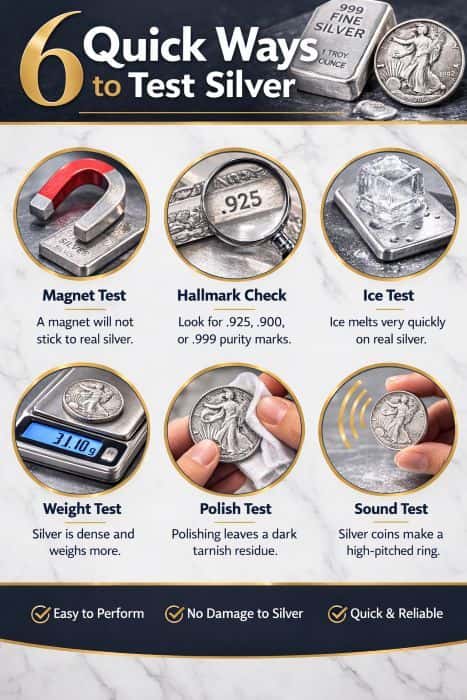
Some of the most reliable quick silver tests you can perform at home include:
• Magnet Test – Real silver is not magnetic, so a strong magnet should not stick to the item.
• Hallmark Check – Look for purity marks such as .925, .900, or .999, which indicate silver content.
• Ice Test – Silver conducts heat extremely well, causing ice to melt noticeably faster.
• Weight Test – Genuine silver feels dense and heavy compared to plated metals.
• Polish Test – Rubbing real silver with a cloth often leaves a dark residue due to tarnish removal.
• Sound Test – Silver coins produce a distinctive high-pitched ringing sound when lightly tapped.
These quick checks can help determine whether an item is likely solid silver or a plated imitation. For valuable bullion or collectible coins, professional verification using tools such as XRF analyzers or certified appraisals remains the most reliable method.
Methods For Testing Silver At Home
1. Magnet Test
Silver is not magnetic, meaning it won't be strongly attracted to a magnet. If a magnet sticks firmly to the item, it likely contains a ferromagnetic material and is not pure silver. Genuine silver may exhibit slight resistance when a magnet slides down a smooth silver bar due to weak magnetic effects, but it will not stick. This test is simple and can help differentiate real silver from fake or silver-plated items. For best results use a strong neodymium magnet.
2. Hallmarks and Stamps
Hallmark Identification: Authentic silver items often bear hallmarks or stamps that indicate their purity. Common stamps include "925" (92.5% pure sterling silver), "999" (99.9% fine silver), "900" (90% silver), and "800" (80% silver). Use a magnifying glass to inspect these marks, as they are crucial indicators of authenticity. For example, "STER" or "STERLING" denotes traditional sterling silver.
Craftsmanship and Details: High-quality craftsmanship is a hallmark of genuine silver items. Inspect the item for uniformity in design and detail that is often lacking in counterfeit pieces. Authentic silver should have precise and high-quality engravings or moldings.
3. Ice Test
The Ice Test: Silver’s high thermal conductivity makes it excellent for this test. Place an ice cube on the silver item; if the ice melts quickly and noticeably faster than it would on a non-conductive surface, the item is likely real silver. Silver transfers heat extremely efficiently, causing ice to melt rapidly even at room temperature.
4. Acid and Chemical Tests
Important note: Acid tests may cause minor damage to your silver items. If you're considering testing a silver coin or jewelry that may be of high value, it's advisable to skip this method to prevent any potential harm.
Nitric Acid Test: Apply a small drop of nitric acid to an inconspicuous spot on the silver item. Genuine silver will show a milky white reaction, while other metals or silver-plated items will react differently.
Advanced Acid Test: Using a combination of nitric acid, distilled water, and potassium dichromate, observe the color changes on the item. Acid reactions can reveal the composition and purity of silver items through visible color changes. A bright red reaction indicates fine or pure silver, while a darker red signifies sterling silver with 92.5% purity. Brown corresponds to 80% silver content, and green suggests a silver purity of approximately 50%. Yellow points to the presence of tin or lead, dark brown indicates brass, and blue reveals the presence of nickel. These reactions serve as a reliable guide for determining the metal's authenticity.
The Bleach Test: Apply a small drop of bleach to the silver item. If it tarnishes and turns black rapidly, the piece is likely real silver. This test should be performed with caution, as bleach can damage the item.
Caution: When conducting acid tests, ensure your work area is well-ventilated and away from children or pets. Wear gloves and safety goggles for personal protection, and test on an inconspicuous area to minimize visible surface damage. Always handle acids with care to avoid spills or harm.
5. Surface and Polish Tests
Polish Test: Rub the silver item with a clean, soft cloth. Real silver will leave a black residue on the cloth due to tarnish removal, while silver-plated items will not respond to polishing in the same way.
The Flake Test: Scratch the item lightly to check for a base metal beneath the surface. If another material is revealed, the item is plated rather than solid silver. For further confirmation, test the flakes with acid to see if the reaction indicates pure silver.
6. Coin-Specific Test
Edge Inspection: Examine the edge of the coin for a solid silver appearance, which indicates pure silver. If a copper stripe is visible, the coin may be clad rather than solid silver. Some coins with faint copper traces may be partially silver, such as U.S. Kennedy half dollars minted from 1965 to 1970, which are 40% silver.
7. Heat Test
The Lighter Test: Apply a flame to a small area of the silver item for 10 to 15 seconds. Genuine silver conducts heat quickly and may develop a temporary dark patina that can be polished away. This property is due to silver’s high thermal conductivity.
8. Weight and Sound Tests
Silver has a distinctive density and sound. Silver coins typically produce a clear ringing tone when struck gently against another metal object, and they should feel heavy for their size. Comparing the weight of the item to official weight standards for silver coins and bars can also be a reliable test
Professional Methods Used to Test Silver
While many at-home tests can help identify genuine silver, valuable bullion, rare coins, or antique jewelry should sometimes be verified using professional equipment. Precious metals dealers and certified appraisers use specialized tools that provide highly accurate results without damaging the item.
X-Ray Fluorescence (XRF) Analysis
XRF scanners analyze the elemental composition of a metal using X-ray technology. This non-destructive method can instantly determine the percentage of silver and other metals in an item.
Electronic Precious Metal Testers
These devices measure electrical conductivity and resistance to estimate silver purity. They are commonly used by jewelers and bullion dealers for quick authentication.
Density Testing
Because silver has a specific density, professionals can measure the weight and displacement of water to determine whether an item matches the expected density of real silver.
Professional Appraisal
Certified appraisers and reputable bullion dealers have the experience and equipment necessary to verify the authenticity of silver coins, bars, and jewelry without damaging them.
For high-value items or investment-grade bullion, professional testing provides the most reliable confirmation of silver purity and authenticity.
How to Avoid Buying Fake Silver
Learning how to test silver is important, but prevention is often the best strategy. Counterfeit silver products have become increasingly sophisticated, especially in online marketplaces where buyers cannot physically inspect items before purchasing.
Here are a few practical tips to reduce the risk of buying fake silver:
Buy from reputable precious metals dealers
Established dealers test their inventory and maintain strict sourcing standards to ensure authenticity.
Check product specifications carefully
Verify the weight, purity, and dimensions of coins and bars against official mint specifications.
Understand typical pricing
If a deal appears dramatically cheaper than the current silver spot price, it may indicate a counterfeit product or plated metal.
Look for consistent craftsmanship
Genuine bullion products typically display sharp details, consistent edges, and precise minting.
Combining these precautions with the testing methods described earlier can significantly reduce the likelihood of purchasing counterfeit silver.
Common Sense and Recognizing Red Flags
Even the best tests can’t replace careful buying practices. When purchasing silver, always choose reputable dealers and established marketplaces. Be cautious of items priced significantly below the market rate, poor craftsmanship, or missing purity marks.
Counterfeit products often rely on unrealistic pricing to attract buyers. If an offer seems too good to be true, it usually is.
At Bullion Exchanges, we prioritize transparency and authenticity in every transaction. Our team verifies the purity and quality of precious metals to ensure customers receive genuine bullion products.
If you need assistance verifying your silver or have questions about testing methods, feel free to contact us or visit our location in New York City’s Diamond District to speak with one of our precious metals specialists.