
 View Charts


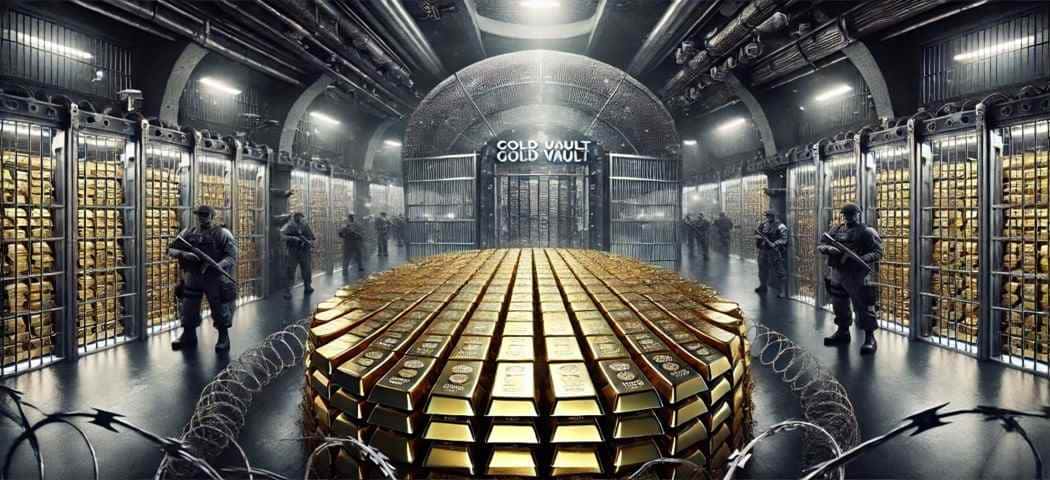
The Secretive Stronghold: How Fort Knox Became America’s Gold Vault
For decades, Fort Knox has been synonymous with gold reserves and national security, serving as one of the most secure locations in the world. But how did this heavily fortified facility become the primary U.S. gold depository, and how has its role evolved over time? From safeguarding gold during World War II to the rare audits and public visits, the history of Fort Knox gold reserves is filled with intrigue, secrecy, and economic significance.
Why Was Fort Knox Chosen as the Nation’s Gold Depository?
In the early 20th century, the U.S. government sought a secure location to store its rapidly growing gold reserves. Before Fort Knox, gold was primarily held in New York (Federal Reserve Bank) and Philadelphia, but concerns over potential security threats—especially with rising global tensions in the 1930s—led the Treasury to seek a more fortified, inland location.
Several key factors made Fort Knox, Kentucky, the ideal choice:
-
Remote yet accessible location: Situated far from coastal threats but still near essential railways.
-
Already a military stronghold: Fort Knox was home to the U.S. Army’s training facility, providing built-in security.
-
Natural protection: Surrounded by rugged terrain, making it difficult for any large-scale attack.
In 1936, the United States Bullion Depository was completed at Fort Knox, featuring massive steel-reinforced concrete walls and an impenetrable vault capable of holding thousands of tons of gold.
Major Historical Events Involving Fort Knox Gold
Gold Transfer and the Great Depression (1937-1941)
Shortly after Fort Knox was completed, the U.S. government began transferring gold from various locations to the new facility. Much of this gold came from private citizens after President Franklin D. Roosevelt’s 1933 executive order requiring Americans to turn in their gold in exchange for paper currency—a move designed to stabilize the economy during the Great Depression.
By 1941, Fort Knox held nearly 649.6 million ounces of gold, representing over half the world’s total gold supply at the time.
World War II: A Temporary Storage for National Treasures
During World War II, Fort Knox played a crucial role beyond just storing gold. Fearing possible invasions or attacks on major cities, the U.S. government used Fort Knox to safeguard some of the nation’s most valuable and sensitive items, including:
-
The U.S. Constitution and Declaration of Independence, kept in the vault for protection.
-
The original Gutenberg Bible, one of the rarest books in history.
-
The Hungarian Crown Jewels, held for safekeeping during the war.
This period reinforced Fort Knox’s reputation as an ultra-secure facility, further solidifying its role in American economic and military history.
Audits and Public Visits: How Much Gold Is Really in Fort Knox?
For decades, conspiracy theories have swirled around Fort Knox, with some questioning how much gold is truly stored there today. Due to its extreme security, very few people have been inside the vault, and official audits have been rare.
Notable Inspections and Audits
-
1953: The first major audit, conducted in the presence of U.S. officials, confirmed large quantities of gold but didn’t weigh every bar.
-
1974: U.S. Treasury Secretary William Simon allowed a select group of reporters and members of Congress to enter the vault—one of the only public visits in history.
-
2017: U.S. Treasury Secretary Steven Mnuchin toured the facility and confirmed the presence of gold reserves, though detailed audits remain limited.
Today, the U.S. Treasury claims Fort Knox holds 147.3 million ounces of gold, valued at over $280 billion. However, the lack of frequent audits fuels ongoing speculation.
How Gold’s Value and Role in U.S. Monetary Policy Has Changed
The Gold Standard Era (Before 1971)
For much of U.S. history, gold backed the U.S. dollar, meaning paper money could be exchanged for physical gold. This system provided stability but limited economic flexibility.
The Nixon Shock and the End of Gold-Backed Currency
In 1971, President Richard Nixon officially ended the gold standard, decoupling the dollar from gold reserves. This decision, known as the Nixon Shock, transformed Fort Knox from a direct monetary reserve into more of a symbol of economic stability.
Gold as a Safe Haven Asset Today
While Fort Knox no longer backs the dollar, gold remains a crucial financial asset. Investors turn to gold as a hedge against inflation, currency devaluation, and economic uncertainty. Central banks, including the Federal Reserve, continue to hold large gold reserves as part of national wealth security.
Fort Knox’s Legacy and the Future of Gold Reserves
Fort Knox remains a symbol of American financial strength, but its role has evolved significantly over the decades. While it once anchored the U.S. monetary system, today it primarily serves as a strategic reserve of wealth, with gold playing a key role in global financial markets.
As economic landscapes shift, the importance of gold investing continues to grow. Whether held in government vaults, private reserves, personal portfolios, or secure storage facilities like Bullion Exchanges’ vault services, gold remains one of the most trusted assets for wealth preservation.