
 View Charts


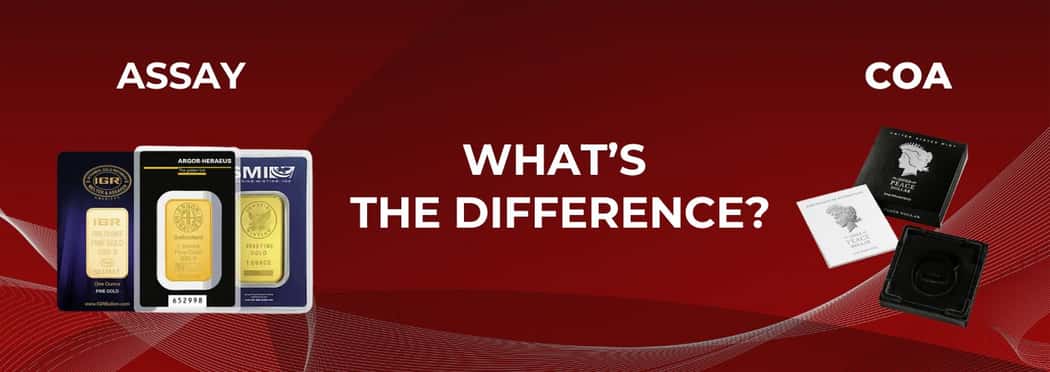
Assay or Certificate of Authenticity? What's the Difference?
When purchasing precious metals, such as gold, silver, platinum, or palladium, buyers often encounter two important documents: the assay and the certificate of authenticity. These documents are essential for verifying the purity and authenticity of the metals, but they serve different purposes and offer different types of assurances. Understanding the differences between an assay and a certificate of authenticity can help buyers make informed decisions and ensure the integrity of their investments.
What is an Assay?
An assay is a comprehensive analysis conducted to determine the content and purity of a precious metal item. This process involves testing and measuring the metal to verify its composition. Assays are typically performed by specialized laboratories or facilities with the necessary equipment and expertise. The results of the assay are documented in an assay report, which provides detailed information about the metal's purity and composition.
Types of Assays:
- Fire Assay: This traditional method involves melting the metal sample and separating its components to measure the amount of precious metal present. Fire assays are highly accurate and are considered the gold standard for testing gold and silver.
- X-Ray Fluorescence (XRF) Assay: This non-destructive method uses X-rays to determine the elemental composition of the metal. XRF assays are quick and convenient, making them popular for testing gold, silver, and other precious metals.
- Electronic Assay: These assays use electronic devices to measure the metal's conductivity and other properties to estimate its purity. While less accurate than fire assays, electronic assays are useful for quick and non-invasive testing.
Assay Markings:
- Assay Stamp: Items that have been assayed often bear an assay stamp, indicating the metal's purity. For example, a gold bar may be stamped with "999.9" to signify its 99.99% purity.
- Assayer's Mark: This is a unique mark or symbol used by the assaying facility to identify its work. The presence of an assayer's mark adds credibility to the assay results.
What is a Certificate of Authenticity?
A Certificate of Authenticity (COA) is a document that accompanies a precious metal item, certifying its genuineness and ensuring its quality. COAs are typically issued by the manufacturer or a recognized third-party authority. Unlike an assay, which involves testing the metal's composition, a COA primarily serves as a guarantee that the item is genuine and meets the specified standards.
Components of a COA:
- Description of the Item: The COA includes detailed information about the precious metal item, such as its weight, purity, dimensions, and any unique features or serial numbers.
- Issuer Information: The COA provides information about the entity issuing the certificate, whether it's the manufacturer, a mint, or a third-party certification service.
- Signature and Seal: The COA is often signed by an authorized representative and may include a seal or hologram to prevent counterfeiting.
Purpose of a COA:
- Authenticity Verification: A COA confirms that the precious metal item is genuine and produced by the stated manufacturer or mint.
- Quality Assurance: The COA guarantees that the item meets the specified standards of purity and quality.
Key Differences Between an Assay and a Certificate of Authenticity
- Purpose:
- Assay: Determines and verifies the content and purity of the precious metal through scientific testing.
- Certificate of Authenticity: Verifies the authenticity and quality of the item, ensuring it is genuine and meets specified standards.
- Process:
- Assay: Involves laboratory testing and analysis, which can include fire assays, XRF assays, or electronic assays.
- Certificate of Authenticity: Issued based on the item’s provenance and standards set by the manufacturer or certifying authority, without necessarily involving lab testing.
- Information Provided:
- Assay: Detailed composition and purity results, often with an assay stamp and assayer's mark.
- Certificate of Authenticity: Description of the item, issuer information, and quality guarantee, often with a signature and seal.
- Usage:
- Assay: Used by investors and buyers to verify the precious metal content of an item, especially for bullion bars and coins.
- Certificate of Authenticity: Used to assure buyers of the genuineness and quality of a wide range of precious metal items, including bullion, collectible coins, and jewelry.
Conclusion
Both assays and certificates of authenticity play crucial roles in the precious metals market, offering different types of verification and assurance. An assay provides a scientific analysis of the metal's content and purity, making it essential for verifying the intrinsic value of bullion bars and coins. A certificate of authenticity, on the other hand, guarantees that the item is genuine and meets the specified standards, offering peace of mind to buyers and collectors.
When purchasing precious metals, it’s important to consider both the assay and the certificate of authenticity to ensure you are making a sound investment. By understanding the differences and purposes of these documents, you can confidently navigate the precious metals market and make informed decisions.
Ready to invest in precious metals? Explore our wide selection of bullion bars, coins, and collectible items at Bullion Exchanges. We provide both assay reports and certificates of authenticity to ensure the quality and authenticity of your purchases. Visit our website today and start building your precious metal portfolio with confidence!