View Charts
Gold vs. Silver: Which Is the Better Investment in 2025?
 0
0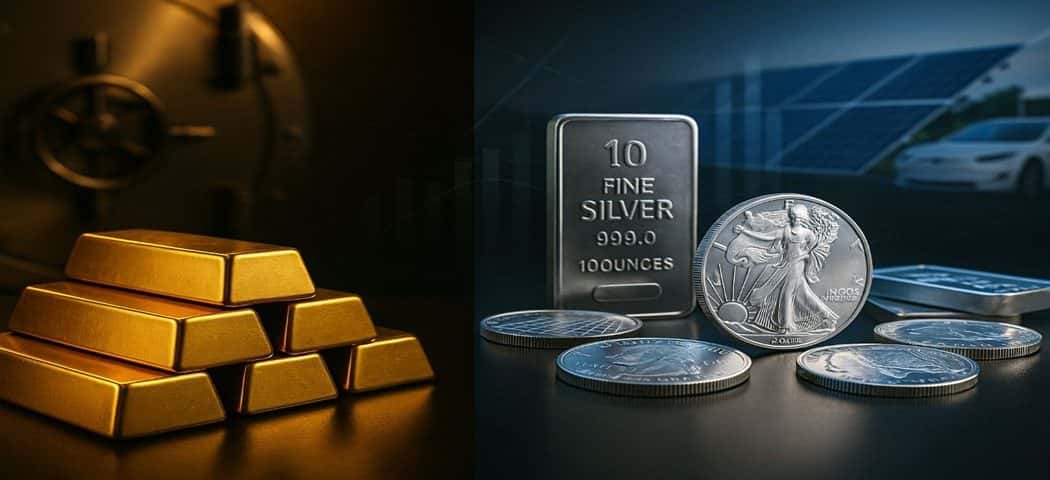
A Crucial Year for Precious Metals
As 2025 progresses, precious metals remain at the forefront of global market attention. Gold has climbed to fresh record highs near $3,750 per ounce, while silver broke past $45 this week — its strongest level in more than a decade. With investors closely watching inflation trends, shifting Federal Reserve policy, and accelerating industrial demand, the comparison between gold and silver has taken on renewed urgency. Which of these two metals presents the stronger opportunity for investors as the year heads into its final quarter?
YTD Price Performance: Silver Outpaces Gold
The year began with gold priced around $2,623.96 per ounce and silver near $28.87 per ounce. By late September 2025:
-
Gold climbed to ~$3,750, a 43.0% year-to-date gain.
-
Silver surged to ~$45, representing a remarkable 55.9% gain YTD.
While gold has delivered steady record-breaking strength, silver’s performance highlights its reputation as the more volatile — but potentially more rewarding — of the two. Historically, silver often lags gold during the early phases of a bull market, only to accelerate later with sharper percentage gains, a pattern repeating in 2025.
The Gold-to-Silver Ratio: Signals of Undervaluation
A key measure for evaluating the two metals is the gold-to-silver ratio — how many ounces of silver equal one ounce of gold.
-
With gold at $3,750 and silver at $45, the ratio currently sits near 83:1.
-
Historically, the long-term average is closer to 60:1.
-
At past cycle peaks, such as 2011, the ratio compressed sharply, signaling silver’s relative strength.
An elevated ratio suggests silver is undervalued compared to gold, giving bullish investors confidence that silver still has room to run — potentially narrowing the gap as it “catches up” with gold’s rally.
Industrial Demand vs. Safe-Haven Strength
Gold and silver share safe-haven status, but silver has a second engine of demand: industry.
-
Gold: Primarily valued as a monetary metal, with 2025 central bank purchases reaching multi-decade highs. Nations seeking to hedge against currency risk and diversify reserves have been steady gold buyers, reinforcing its status as the ultimate store of value.
-
Silver: In addition to safe-haven appeal, silver is indispensable in solar panels, electric vehicles, semiconductors, and medical technologies. With green energy spending accelerating globally, silver’s industrial demand continues to rise. According to industry forecasts, silver demand from photovoltaics alone is projected to grow 15–20% annually through the decade.
This dual nature means silver benefits in both financial crises and growth booms, something gold cannot claim to the same extent.
Comparing Silver With Platinum and Palladium
While gold and silver dominate investor portfolios, platinum and palladium provide useful context for understanding the broader precious metals landscape.
-
Platinum: Trading well below gold on a per-ounce basis in 2025, platinum is experiencing renewed momentum as industrial demand surges and supply remains constrained. Rising lease rates — with short-term terms spiking above 20% — highlight severe tightness in physical availability. Combined with its critical role in the automotive sector, jewelry markets, and the green-energy transition, platinum’s performance is strengthening, with many analysts viewing it as undervalued compared to gold and palladium.
-
Palladium: Scarcer but highly industrial, palladium demand comes largely from catalytic converters. Though it experienced explosive gains in past years, substitution with platinum and its reliance on the auto sector have left its 2025 trajectory uneven.
Placed alongside these metals, silver stands out. Unlike platinum and palladium, it not only serves vital industrial uses but also retains safe-haven credibility akin to gold. This dual character positions silver uniquely in 2025 as both a growth-linked commodity and a defensive asset, reinforcing its importance in the gold-versus-silver investment debate.
Volatility and Liquidity: Silver’s Rollercoaster Edge
One of the starkest contrasts between gold and silver is volatility:
-
Silver’s average daily price swings in 2025 have been 1.8–2.2 times larger than gold’s, making it more unpredictable.
-
Liquidity favors gold, with trading volumes far higher across futures and ETFs, but silver’s smaller market size magnifies moves when investor flows surge.
-
Example: On a recent Fed announcement, gold moved 2% intraday while silver spiked over 5%, before pulling back the next session.
For investors, this volatility can be intimidating, but it also creates short-term trading opportunities and outsized returns for those willing to ride the swings.
Lessons From Silver’s Historic Peaks
Silver’s rollercoaster is not new. Its biggest rallies coincided with major global dislocations:
-
1980: Prices spiked to $49.45 per ounce during runaway inflation, oil supply shocks, and speculative excess.
-
2011: Silver hit $49.21 in the aftermath of the global financial crisis and unprecedented central bank stimulus.
In both cases, silver thrived when inflation, loose monetary policy, and uncertainty converged. Today’s rally shares these conditions — but adds the industrial demand dynamic, which was less influential during past peaks.
Investor Takeaways for 2025
So which metal makes the better investment in 2025?
-
Gold: Offers stability, liquidity, and central bank backing. It remains the cornerstone of safe-haven investing and portfolio insurance.
-
Silver: Provides greater upside potential, bolstered by industrial demand, but with higher volatility. Its relative undervaluation vs. gold strengthens the bullish case.
A blended strategy may be optimal: gold for security, silver for growth potential.
Investor Outlook: Balancing Gold & Silver in 2025
Gold and silver are proving their value in 2025, but in distinctly different ways. Gold has once again asserted its dominance as the ultimate safe-haven asset, reaching record highs near $3,750 per ounce and offering investors stability amid persistent inflation and global uncertainty. Its role as a portfolio anchor remains unmatched.
Silver, meanwhile, has delivered eye-catching returns, surging past $45 per ounce and posting percentage gains far greater than gold’s. Its dual nature as both an investment metal and an industrial necessity — critical for solar panels, electric vehicles, and the broader green energy transition — gives it a compelling long-term story, even as volatility keeps short-term traders on edge.
For investors, the lesson is clear: gold provides security and consistency, while silver offers growth potential and leverage in times of strong market momentum. Together, they form a complementary pairing that can both protect wealth and capture upside opportunities.
In 2025, embracing this balance may be the most strategic approach. Allocating to both metals ensures participation in silver’s growth story while maintaining gold’s proven resilience. For those navigating an uncertain global economy, the combination of gold and silver remains one of the most powerful tools for diversification and long-term security.
FAQ: Gold vs. Silver in 2025
Why has silver been so volatile this year?
Silver spiked above $45 before retreating as traders booked profits. Its smaller market size and dual role in industry and investment make it more prone to sharp swings than gold.
How has gold performed compared to silver in 2025?
Gold has climbed from about $2,624 at the start of the year to near $3,750, up ~43%. Silver surged from $28.87 to around $45, a gain of ~56%, showing silver’s stronger percentage move.
What does the gold-to-silver ratio reveal right now?
At roughly 83:1, the ratio is well above the long-term average of 60:1. This suggests silver may be undervalued relative to gold, often seen as a bullish signal for silver.
Which metal is the safer investment?
Gold remains the primary safe-haven asset, widely used to hedge inflation and geopolitical risks. Silver also has safe-haven appeal, but its volatility makes it riskier in the short term.
How does industrial demand affect silver differently than gold?
Gold’s demand is mainly investment and jewelry-based, while silver has major industrial uses in solar panels, EVs, and electronics. This makes silver more sensitive to global economic cycles.
Is platinum’s or palladium’s performance relevant to this debate?
Yes, but indirectly. Platinum and palladium are more industrially focused, and while both are rallying in 2025, the main investor choice remains between gold’s stability and silver’s volatility.
Should investors choose gold or silver in 2025?
Gold provides stability and long-term wealth preservation, while silver offers greater upside potential but with sharper volatility. Many investors choose to hold both for balance.
Other articles that may interest you:
Gold vs. Silver in 2025: What Will $50,000 Buy?
Gold Fatigue Ahead? Signals and Shifts in Precious Metals 2025
Could $5,000 Silver Become Reality? Analysis and Outlook for 2025