View Charts
Gold Fatigue Ahead? Signals and Shifts in Precious Metals 2025
 0
0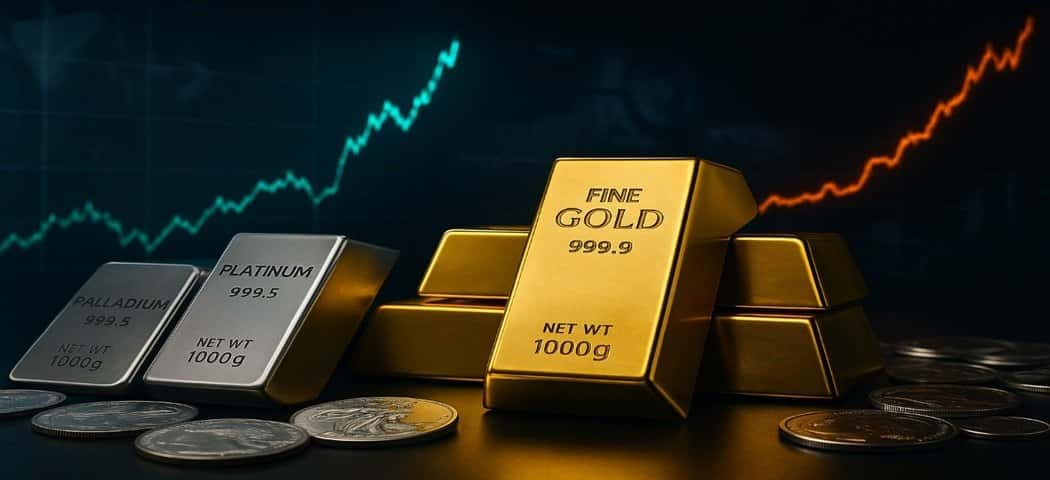
Gold’s Relentless Rally in 2025
Gold has dominated financial headlines in 2025, climbing to fresh record highs and now approaching a $3,800 per ounce spot price. Fueled by central bank demand, persistent inflationary concerns, and global political tensions, gold remains the cornerstone of safe-haven investing. Its ability to push higher even as other risk assets stumble highlights its enduring appeal. But with momentum slowing at the edges, some investors are asking if gold fatigue is on the horizon — and what it could mean for the rest of the metals complex.
What Is “Gold Fatigue” — and Why It Matters
In market psychology, “gold fatigue” describes periods when gold’s relentless upward momentum begins to slow or stall. It doesn’t always mean a crash, but rather a shift in investor behavior. After long rallies, enthusiasm can wane, valuations look stretched, and profit-taking sets in.
Typical warning signals include:
-
Technical exhaustion: Overbought readings on indicators like the Relative Strength Index (RSI).
-
Declining turnover: Falling trading volumes in futures and ETFs despite rising prices.
-
Investor divergence: Gold prices rising while jewelry or retail demand softens.
-
Macro shifts: Central bank buying levels off or interest rate expectations change.
Historically, such moments often trigger a rotation within the metals complex, where investors seek opportunities in underperforming assets like platinum, palladium, or even silver.
Mini-Case Study: Gold Fatigue in 2011
To understand what “gold fatigue” might mean in 2025, it helps to look back at history. In 2011, gold soared to nearly $1,900/oz, setting a record at the time. But after that peak, gold entered a long period of stagnation, while other metals — especially silver and platinum — briefly outperformed. Silver surged to $49.21/oz in the same year, and platinum topped $1,900 before correcting later.
This episode illustrates a recurring pattern: when gold momentum stalls, capital often rotates into alternative metals with more industrial upside or perceived undervaluation. Platinum and palladium’s recent rallies suggest that investors are already considering a similar shift in 2025.
Signs of Gold Fatigue in 2025
Gold’s rally has been extraordinary — up ~44% YTD, from about $2,624 on January 1 to nearly $3,800 by late September — but subtle cracks are appearing.
-
Flattening Momentum: Gains have slowed compared to the powerful surges of Q1 and Q2.
-
ETF Inflows: Fund demand is softening, showing investor enthusiasm isn’t keeping pace with price increases.
-
Turnover & Futures: Trading volumes have tapered, while leveraged speculative positions in futures markets are rising.
-
Technical Indicators: Elevated RSI levels and moving average divergences point to overbought conditions.
-
Physical Demand: Jewelry demand is softening at these higher levels, as retail buyers are priced out.
Still, gold’s foundation remains solid. Central banks have purchased more than 900 metric tons so far in 2025 (WGC data), reinforcing strong structural support even as short-term fatigue signs appear.
Platinum & Palladium: The Underdogs Gaining Steam
While gold continues its upward climb toward $3,800 per ounce, platinum and palladium have quietly staged impressive gains in 2025.
-
Platinum opened the year at about $910/oz and now trades near $1,580/oz, reflecting a 73.6% YTD increase. This rally is driven by tight supply — with South Africa producing ~70% of mined platinum, ongoing power shortages and labor unrest have squeezed output. Elevated lease rates, at times spiking above 20% annualized, confirm the immediate scarcity of physical platinum and highlight why investors are rotating into the metal.
-
Palladium started 2025 around $1,022/oz and currently sits close to $1,300/oz, for a more modest but still notable 27.2% YTD gain. Its momentum is fueled by steady automotive demand for catalytic converters, though its performance is tempered by gradual substitution with platinum in the auto sector.
Taken together, these rallies show why platinum and palladium are drawing increasing attention as investors look beyond gold for opportunity and diversification.
Historical Lessons: Metals Rotation
History shows that when gold hits extended highs, other metals often play catch-up:
-
Late 1990s–2000s: Gold was range-bound, but platinum surged as auto demand soared.
-
2010–2011: Gold peaked, and silver briefly outperformed, hitting nearly $50 per ounce.
-
2020–2021: Gold rallied on pandemic fears, but palladium and platinum later grabbed headlines with record prices due to supply squeezes.
These cycles show that gold fatigue doesn’t mean the end of opportunity — rather, it often marks the beginning of diversification plays within the precious metals sector.
Investor Implications: Positioning for What’s Next
For investors navigating late 2025, the key lies in balance and awareness:
-
Maintain core gold exposure: As the ultimate hedge, gold remains indispensable.
-
Add tactical platinum and palladium: Tight supply and industrial growth offer upside if gold pauses.
-
Watch leading signals: Lease rates, ETF flows, RSI levels, and central bank activity often foreshadow shifts.
-
Diversify strategically: A metals basket can smooth volatility while capturing rotation gains.
Strength Today, Rotation Tomorrow
Gold’s surge toward $3,800 underscores its strength, but history teaches us that no rally lasts forever. Early hints of fatigue — slowing inflows, overbought signals, and softening physical demand — suggest a potential pause on the horizon. For investors, this isn’t a reason to abandon gold, but rather an invitation to broaden horizons. Platinum and palladium, long considered secondary players, may be poised for their turn in the spotlight.
In 2025, the wisest strategy may be embracing metals rotation: holding gold as the anchor of value while leaning into platinum and palladium’s rising role. Gold fatigue doesn’t signal collapse — it signals opportunity elsewhere in the precious metals market.
FAQ: Gold Fatigue and Precious Metals in 2025
What does “gold fatigue” mean in 2025?
Gold fatigue refers to a slowdown in gold’s momentum after a strong rally. It’s marked by softer ETF inflows, overbought technical signals, and weaker physical demand, suggesting the rally may pause or consolidate.
How much has gold gained so far this year?
Gold began 2025 at about $2,624 per ounce and is now nearing $3,800, representing a year-to-date gain of roughly 44%.
How are platinum and palladium performing compared to gold?
Platinum has surged about 73.6% YTD, rising from $910 to $1,580 per ounce. Palladium has gained 27.2%, moving from $1,022 to $1,300 per ounce. These moves suggest investors are rotating into other metals alongside gold.
Why is platinum rallying so strongly in 2025?
Platinum’s rally is fueled by tight supply — South Africa produces ~70% of global mined platinum, but power shortages and labor strikes have disrupted output. Rising lease rates and strong demand from the auto and green energy sectors add further momentum.
What role are central banks playing in the gold market?
Central banks have purchased over 900 metric tons of gold so far in 2025 (WGC data), supporting gold prices even as investor sentiment shows signs of fatigue.
Does gold fatigue mean prices will crash?
Not necessarily. Gold fatigue usually signals a slowdown or consolidation, not a collapse. Historically, these periods open the door for other metals like silver, platinum, and palladium to outperform.
How should investors position for late 2025?
A balanced approach works best: keep gold as a core safe-haven asset while adding tactical exposure to platinum and palladium. Watching signals like lease rates, ETF flows, and technical levels can help time allocations.
Another article that may interest you:
U.S. Gold Reserves Top $1 Trillion: Will This Spark a Fort Knox Audit?