View Charts
Why Gold and Silver Prices Are Falling on Dollar Strength
 0
0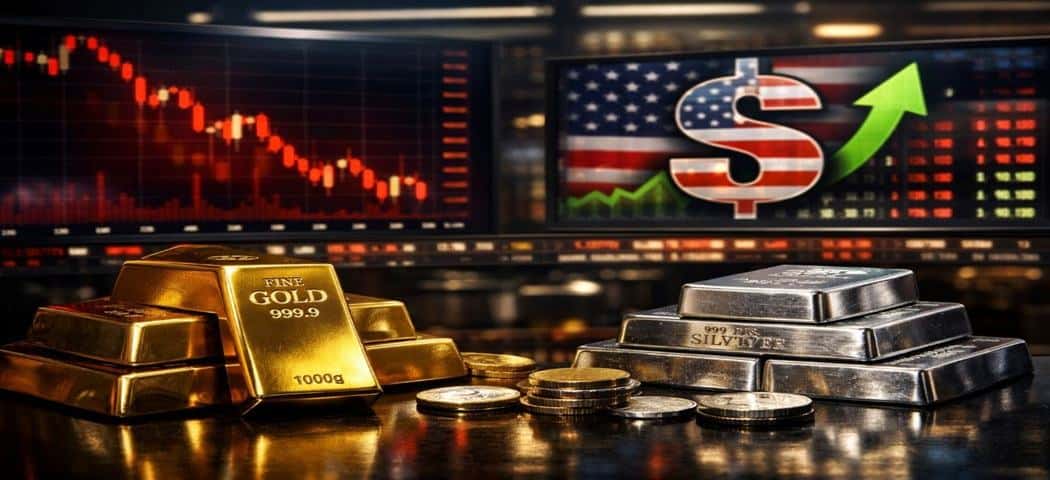
A Sudden Shift in the Gold and Silver Markets
Precious metals prices are sharply lower today, with the gold spot price and silver spot price experiencing broad selling pressure across global markets. After weeks of heightened volatility, today’s decline has captured investor attention and raised important questions about the near-term gold price outlook. Platinum and palladium are also trading lower, reflecting a coordinated move across the metals complex.
While short-term price swings are not unusual in the precious metals market, the magnitude of today’s drop signals a combination of macroeconomic forces at work. For investors tracking the gold price today and monitoring the silver spot price, understanding the underlying drivers is essential.
Stronger U.S. Dollar Pressures the Gold Spot Price
One of the most immediate catalysts behind today’s decline is renewed strength in the U.S. dollar. Because gold and silver are priced in dollars, a rising dollar index typically weighs on the gold spot price and silver spot price by making metals more expensive for foreign buyers.
Currency fluctuations often influence short-term trading activity in the gold market. When the dollar strengthens amid changing interest rate expectations, non-yielding assets such as gold face increased opportunity cost pressure. As a result, even modest shifts in dollar strength can trigger noticeable movement in the gold price today.
Interest Rate Expectations and Yield Movements
Shifts in Treasury yields are another critical factor influencing precious metals prices. Gold, often viewed as an inflation hedge and store of value, tends to perform best when real interest rates are declining. When yields rise or when markets anticipate prolonged higher rates, demand for non-yielding assets can soften.
Recent economic data has altered expectations surrounding Federal Reserve policy, leading to adjustments in bond markets. As yields move higher, some investors reallocate capital toward interest-bearing instruments, placing short-term pressure on spot prices.
This dynamic does not necessarily signal a long-term reversal, but it can create near-term volatility in the gold price forecast.
Easing Safe-Haven Demand
Geopolitical developments have also played a role in today’s price action. When global tensions appear to stabilize, safe-haven demand for precious metals can temporarily decline. Gold often rallies during periods of uncertainty, and when perceived risk moderates, some of that defensive positioning may unwind.
As safe-haven flows cool, the gold spot price can retrace quickly, especially in thin trading environments. The silver spot price, which carries both monetary and industrial demand components, frequently amplifies these moves.
Thin Liquidity Amplifies Market Moves
Today’s decline has occurred amid lighter global trading volumes, particularly with certain overseas markets operating on reduced schedules. Several major Asian financial centers are observing Lunar New Year holiday closures or shortened trading sessions, temporarily reducing both physical bullion demand and futures market participation. The holiday period is traditionally associated with strong seasonal gold demand across parts of Asia, but with markets closed, that buying activity is temporarily muted. Thin liquidity conditions often exaggerate price swings, as fewer participants can lead to larger percentage moves.
In lower-volume sessions, technical levels in the gold spot price and silver spot price can break more easily, triggering algorithmic and momentum-driven selling. This type of market structure can intensify intraday volatility without necessarily altering the broader gold price outlook.
Impact Across the Precious Metals Complex
The weakness is not limited to gold and silver. Platinum and palladium prices are also under pressure, reflecting broader sentiment shifts within commodities markets.
Industrial demand expectations influence platinum and palladium more directly, but these metals often follow the direction of the gold spot price during macro-driven sessions. As the entire precious metals market adjusts to currency and rate signals, correlated selling can occur.
Is This a Structural Shift or Short-Term Repricing?
While the gold price today is sharply lower, it is important to distinguish between structural trend changes and short-term repricing events. Central bank gold buying remains a significant long-term support factor for the gold spot price. Institutional demand for physical gold continues to underpin the broader market.
Additionally, gold’s role as an inflation hedge remains intact. Temporary strength in the U.S. dollar or shifts in yield expectations do not eliminate underlying concerns about fiscal expansion, sovereign debt levels, and long-term currency stability.
Historically, sharp declines in the gold spot price during macro adjustments have often been followed by periods of consolidation before the next directional move.
What Investors Should Consider
For investors tracking the silver spot price and gold price forecast, today’s volatility underscores the importance of perspective. Precious metals markets are inherently sensitive to macroeconomic data, currency movements, and geopolitical headlines.
Physical gold and silver ownership remains distinct from leveraged futures exposure. Many long-term investors view price corrections as opportunities to accumulate bullion at more favorable levels, particularly when structural demand drivers such as central bank gold buying and reserve diversification remain in place.
As always, monitoring support levels, macro developments, and interest rate expectations will be key in assessing where the gold spot price may stabilize.
Volatility Within a Broader Framework
Today’s sharp drop in precious metals prices reflects macro-driven repositioning rather than a fundamental collapse in demand. A stronger U.S. dollar, shifting interest rate expectations, easing geopolitical tensions, and thin trading liquidity have combined to pressure the spot prices of gold and silver.
While short-term volatility can be unsettling, long-term drivers — including central bank gold buying, inflation hedge demand, and reserve diversification — continue to provide structural support to the precious metals market.
For investors watching the gold price today, the focus now shifts to whether prices stabilize near technical support levels or continue adjusting as macro conditions evolve.
Related reading you may find interesting:
Cheapest Way to Buy Silver: Bars vs Coins Guide