View Charts
Cheapest Way to Buy Silver: Bars vs Coins Guide
 2
2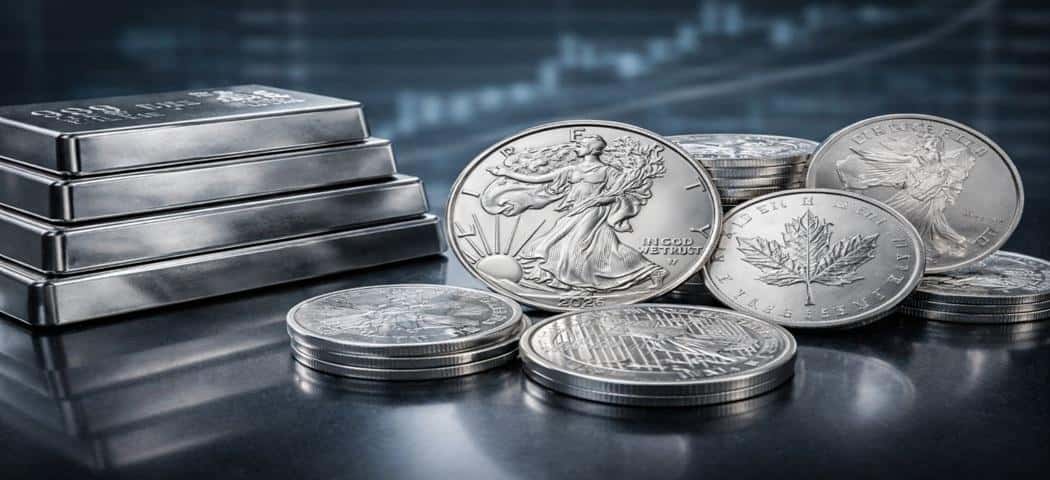
How to Pay the Lowest Premium Over Silver Spot Price
Investors searching for the cheapest way to buy silver are usually focused on one key factor: how much they are paying above the silver spot price. Whether you choose silver bars or silver coins, understanding premiums, production costs, and dealer pricing models is essential.
While the silver spot price reflects the global benchmark for raw silver, retail buyers pay a premium above spot to cover minting, distribution, and dealer margins. The goal is not simply to buy silver — it’s to buy silver efficiently.
Understanding the Silver Spot Price and Dealer Premiums
The silver spot price represents the current market value of unfabricated silver traded on global exchanges. However, physical silver products rarely sell at the live silver spot price.
When you purchase silver bars or silver coins, the total cost includes:
-
The current silver spot price
-
Fabrication and minting costs
-
Distribution expenses
-
Dealer operating margins
Premiums fluctuate based on supply and demand, market volatility, and inventory levels. During periods of heightened demand or limited supply, premiums can rise significantly above the silver spot price.
Monitoring both the spot price and dealer premiums is critical when evaluating the cheapest way to buy silver.
Silver Bars: Typically the Lowest Cost Per Ounce
For investors focused strictly on minimizing cost per ounce, silver bars often provide the lowest premium over spot.
Why Silver Bars Are Cheaper
-
Lower manufacturing complexity
-
Simpler designs
-
No government minting fees
-
Lower marketing costs
Large-format bars — such as 10 oz silver bars or 100 oz silver bars — generally offer lower premiums than 1 oz products. The larger the bar, the closer the price typically tracks the silver spot price.
For investors accumulating silver based on weight rather than collectibility, bars are frequently the most economical choice.
Silver Coins: Higher Premium, Higher Liquidity
Government-issued silver coins — such as American Silver Eagles or Canadian Silver Maple Leafs — typically carry higher premiums than bars.
Why Coins Cost More
-
Legal tender status
-
Government mint backing
-
Intricate design and security features
-
Strong global recognition
While the premium above the silver spot price may be higher, coins often offer superior liquidity in secondary markets. Many investors are willing to pay extra for recognizability and resale flexibility.
The cheapest option is not always the lowest upfront cost — liquidity and resale demand also matter.
What Is the Absolute Cheapest Way to Buy Silver?
Beyond choosing bars over coins, there are additional strategies investors use to reduce cost.
1. Buy Larger Quantities
Premiums per ounce often decrease as order size increases.
2. Consider Secondary Market Silver
Pre-owned silver products frequently sell at lower premiums while still tracking the silver spot price.
3. Watch for Promotional Pricing
Some dealers periodically offer silver at spot price or even below spot as limited-time promotions. These offers are often capped in quantity and designed to attract new customers.
Buying silver at spot price significantly reduces acquisition cost — but availability is usually limited.
4. Monitor Silver Spot Price Pullbacks
Short-term dips in the silver spot price can present opportunities to accumulate at lower overall cost.
Timing entries relative to the live silver spot price can materially impact long-term return.
Bars vs Coins: Which Is Truly Cheaper?
If the objective is lowest possible price per ounce, silver bars generally win.
If the objective includes liquidity, recognizability, and ease of resale, coins may justify the higher premium.
The cheapest way to buy silver depends on your priorities:
-
Maximum ounces per dollar → bars
-
Brand recognition and resale strength → coins
-
Balanced approach → mix of both
Comparing total cost relative to the silver spot price — not just product type — provides the clearest answer.
How Bullion Exchanges Helps You Secure Competitive Silver Pricing
At Bullion Exchanges, pricing is continuously aligned with movements in the live silver spot price, allowing investors to evaluate opportunities based on real-time market conditions rather than outdated quotes.
Investors can register for product-specific price alerts and silver spot price alerts to receive notifications when pricing reaches preferred levels. Monitoring shifts in the silver spot price can help buyers act during pullbacks, periods of premium compression, or short-term volatility.
Bullion Exchanges also frequently offers select silver products at spot price — and at times even below spot silver — through limited-time promotions. These offers are typically quantity-restricted and can change quickly depending on inventory and market conditions. For disciplined investors focused on minimizing cost per ounce, securing silver at or below the silver spot price can meaningfully improve long-term average acquisition cost.
Staying proactive with alerts and monitoring promotional availability allows buyers to accumulate silver strategically rather than reactively.
Focus on Total Acquisition Cost
The cheapest way to buy silver is not just about finding the lowest advertised number — it’s about minimizing premium relative to the silver spot price while aligning with your investment goals.
Silver bars typically offer the lowest upfront premium. Silver coins provide liquidity and recognizability that may justify higher cost. Strategic buyers monitor the silver spot price, watch for promotional pricing, and compare products carefully.
In volatile markets, disciplined purchasing — especially during spot price dips or limited-time offers — can materially improve long-term results.
Whether accumulating silver as a hedge against inflation, currency debasement, or economic uncertainty, understanding how premiums interact with the silver spot price is the key to buying smarter.
2 Comments