View Charts
Why Artificial Intelligence Could Become Silver's Biggest Demand Driver
 0
0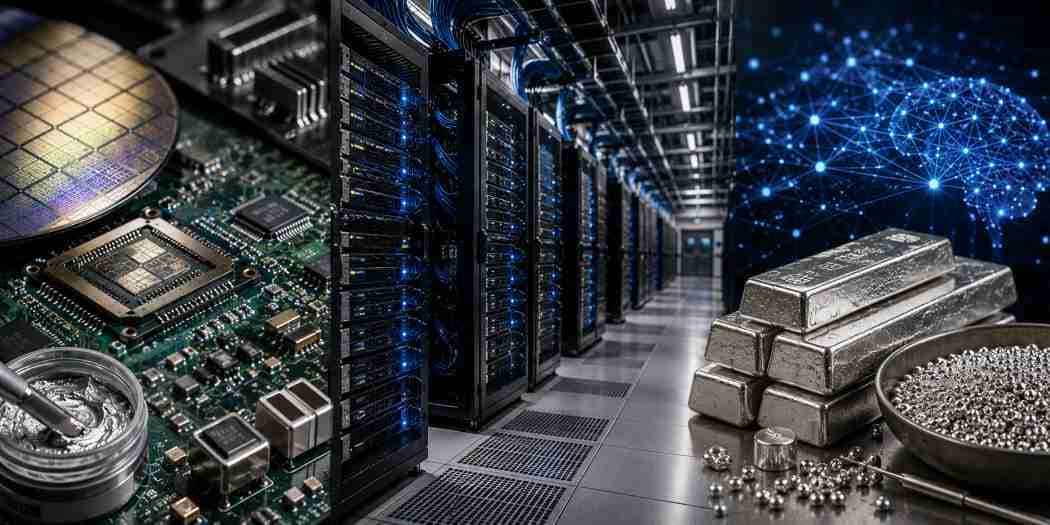
The AI Boom Is Creating a New Silver Demand Story
Investors have spent the past several years focusing on artificial intelligence through the lens of technology stocks. Companies tied to data centers, advanced semiconductors, cloud infrastructure, and AI software have captured most of the attention, while the physical materials making that expansion possible have received far less scrutiny. Yet beneath the headlines surrounding Nvidia, hyperscale computing, and generative AI sits an industrial metal that is quietly becoming more important to the technology ecosystem: silver.
The conversation around silver demand has traditionally centered on solar panels, electronics, jewelry, and investment demand. Those sectors remain important, but the rapid buildout of AI infrastructure is introducing a new source of consumption that many investors are only beginning to appreciate. Every AI model requires massive computing power, every computing cluster requires advanced semiconductor technology, and every semiconductor manufacturing process depends on highly conductive materials. That chain increasingly points back to silver.
What makes the trend particularly significant is that AI demand is arriving at a time when silver markets are already facing structural supply challenges. Mine production growth has struggled to keep pace with industrial consumption, and multiple industry groups continue to project deficits between annual supply and demand. As artificial intelligence expands from a technology trend into a global infrastructure buildout, silver's role within that ecosystem is becoming harder to ignore.
AI Infrastructure Requires More Than Software
Much of the excitement surrounding artificial intelligence focuses on algorithms, applications, and digital services. However, AI is ultimately constrained by physical infrastructure. Large language models, machine learning systems, and advanced computational workloads require enormous amounts of hardware, electricity, networking equipment, and semiconductor capacity.
The scale of that infrastructure expansion is difficult to overstate. Major technology companies continue allocating hundreds of billions of dollars toward AI-focused data center projects. These facilities contain vast numbers of servers, processors, memory systems, cooling technologies, power distribution equipment, and high-speed networking hardware.
Every layer of that infrastructure relies on electrical conductivity. Silver possesses the highest electrical conductivity of any metal, making it valuable in applications where efficiency, reliability, and performance are critical. While the amount of silver contained within individual components may appear modest, demand becomes significant when multiplied across millions of processors, circuit boards, connectors, switches, and advanced electronic systems deployed globally.
The AI story therefore differs from many previous technology trends. It is not simply about software adoption. It requires a continuous expansion of physical infrastructure, and that infrastructure consumes materials.
The Semiconductor Industry Already Depends on Silver
Artificial intelligence cannot exist without semiconductors, and semiconductor manufacturing remains one of the most sophisticated industrial processes in the world.
Silver is used throughout electronics manufacturing because of its superior conductivity and thermal characteristics. It appears in contacts, connectors, multilayer ceramic capacitors, conductive pastes, and specialized electronic components found across modern computing systems. As chipmakers race to increase processing power while improving energy efficiency, material performance becomes increasingly important.
The relationship between silver and semiconductors is often overlooked because investors tend to focus on finished products rather than raw materials. Headlines concentrate on chip designers, fabrication facilities, and AI software companies. Yet every increase in semiconductor production creates incremental demand for the materials used throughout the manufacturing ecosystem.
This dynamic becomes particularly relevant when viewed alongside current AI spending projections. The world's largest technology firms are not merely upgrading existing systems. They are building entirely new generations of computing infrastructure designed specifically for AI workloads. That expansion could support silver demand for years rather than quarters.
Why AI Demand Differs From Traditional Electronics Demand
Consumer electronics have supported silver demand for decades. Smartphones, computers, televisions, and industrial electronics all consume silver in varying quantities. Artificial intelligence introduces a different demand profile because it is driven by infrastructure rather than individual devices.
Traditional electronics demand tends to fluctuate with consumer purchasing cycles. AI infrastructure spending is increasingly being treated as a strategic necessity by governments, cloud providers, semiconductor manufacturers, and multinational corporations. The objective is not simply selling more products. It is building computational capacity capable of supporting future economic activity.
That distinction matters because infrastructure investment often operates on longer timelines. Once data center projects begin, spending typically continues through multiple construction and expansion phases. Semiconductor facilities require years to plan and build. Power systems, networking equipment, and cooling infrastructure must all scale alongside computing capacity.
As a result, silver demand tied to artificial intelligence may prove more durable than many investors expect. The trend is linked to long-term capital expenditures rather than short-term consumer preferences.
Supply Constraints Are Colliding With New Sources of Demand
The timing of the AI expansion is particularly noteworthy because silver was already facing growing demand from other sectors before artificial intelligence emerged as a dominant market theme.
Solar energy remains one of the largest industrial consumers of silver. Electrification initiatives continue increasing demand across power systems and transportation infrastructure. Automotive manufacturers require silver for advanced electronics, sensors, and electric vehicle components. Medical applications and industrial technologies contribute additional consumption.
Against that backdrop, mine supply growth has remained relatively constrained. Silver production often depends on broader mining activity because much of the world's silver originates as a byproduct of lead, zinc, copper, and gold operations. This limits how quickly supply can respond to rising demand.
The result is a market where new sources of industrial consumption matter. AI-driven demand does not need to become the largest single use category overnight to influence pricing. It only needs to contribute additional pressure within an already tightening supply environment.
The Market May Be Undervaluing Silver's AI Exposure
Technology investors routinely assign premium valuations to companies benefiting from artificial intelligence. Semiconductor firms, cloud providers, networking companies, and data center operators have all experienced significant investor interest as AI spending accelerates.
Silver occupies a different position. It is rarely discussed as an AI investment despite being embedded throughout the physical infrastructure supporting the industry. This disconnect may explain why many investors understand Nvidia's importance to AI but remain unaware of silver's role in the same ecosystem.
Part of the challenge is visibility. A semiconductor manufacturer can report revenue growth directly tied to AI demand. Silver demand appears indirectly through industrial consumption statistics, manufacturing activity, and procurement trends. The connection is real but less obvious.
That may change as analysts increasingly examine the material requirements behind AI expansion. As the infrastructure buildout continues, investors could begin viewing silver not only as a precious metal or solar-energy beneficiary, but also as a strategic component of the artificial intelligence supply chain.
Silver Occupies a Unique Position Between Technology and Precious Metals
Few assets sit at the intersection of technological innovation and monetary history quite like silver. Gold derives much of its value from investment and reserve demand. Industrial metals derive value primarily from manufacturing activity. Silver participates in both worlds simultaneously.
That dual identity creates unique market behavior. During periods of economic optimism, industrial demand can support silver spot prices. During periods of uncertainty, investment demand may provide additional support. Artificial intelligence adds another layer by creating a potentially significant long-term industrial growth driver.
Unlike many technology-related investments, silver does not depend on the success of a single company, platform, or software model. Its opportunity stems from broader infrastructure expansion across the entire AI ecosystem. Whether computing demand is met by one dominant provider or dozens of competitors, the underlying hardware still requires conductive materials.
This diversification of demand sources may become increasingly important as investors seek exposure to AI trends beyond traditional technology equities.
The Next Phase of the Silver Market May Look Different
Silver's long-term investment narrative has evolved repeatedly over the decades. At various times, investors have focused on monetary demand, inflation protection, industrial growth, solar energy, and supply deficits. Artificial intelligence may represent the next major chapter in that story.
The key question is not whether AI will consume more silver than every other industry. The more relevant question is whether AI becomes another significant source of demand within a market already experiencing structural tightness. Current trends suggest that possibility deserves serious attention.
As artificial intelligence transitions from a technological breakthrough into a foundational layer of the global economy, demand for the materials supporting that transition will likely grow alongside it. Investors watching AI may continue focusing on chips, software, and data centers. Increasingly, however, they may also need to watch silver.
Related reading you may find interesting:
The Industrial Uses of Gold Beyond Jewelry and Investment
Could Artificial Intelligence Trigger a Precious Metals Supercycle?
Is Silver Becoming a Strategic Resource?