View Charts
Is Silver Becoming a Strategic Resource?
 0
0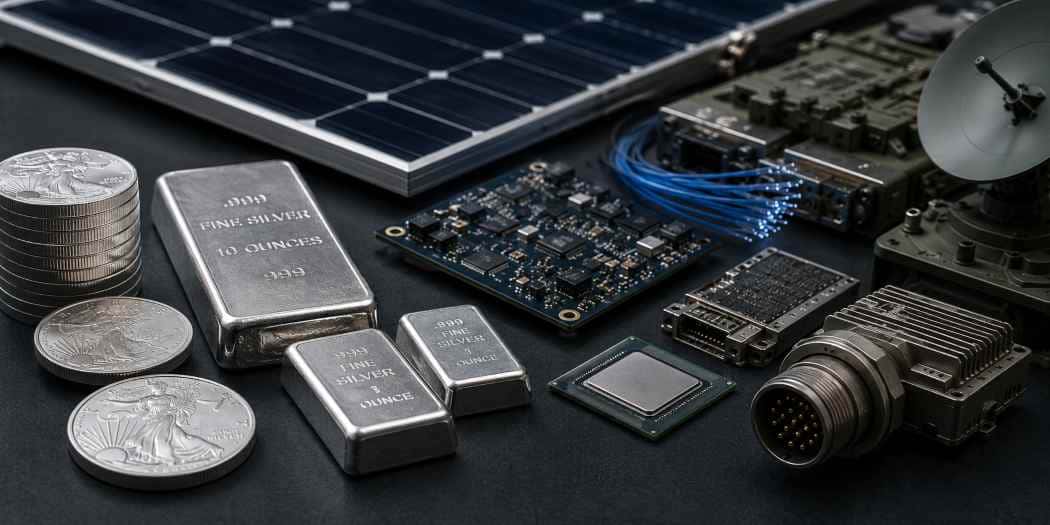
Silver Is No Longer Just Following Gold
Silver has always lived a double life. Investors know it as a monetary metal, a more volatile cousin of gold that often attracts attention when inflation, currency risk, or safe-haven demand rise. Manufacturers see something different: a highly conductive, highly reflective, corrosion-resistant industrial material that quietly sits inside solar panels, electronics, vehicles, medical devices, defense systems, and electrical infrastructure.
That second identity is becoming harder to ignore. The debate around silver is no longer limited to whether it can outperform gold in a precious metals rally. The more important question is whether silver industrial demand is pushing the metal toward a new strategic role. Solar deployment, artificial intelligence infrastructure, grid expansion, electrification, and defense technologies are all pulling on the same relatively small supply base. That does not mean silver is about to be treated like rare earths overnight. It does mean the market is beginning to ask whether a metal once viewed mainly through the lens of bullion cycles should also be discussed as a supply chain asset.
The shift is partly about price, but it is also about classification. When governments start reassessing materials through national security, energy security, and industrial resilience, the conversation changes. Silver does not have to lose its bullion identity to become more strategically important. In fact, its unusual strength comes from being both an investable precious metal and an essential industrial input at the same time.
The Technology Buildout Is Changing the Demand Floor
The modern silver market is being pulled into the infrastructure race. Solar power remains the most visible driver because silver paste is used in photovoltaic cells, where the metal’s conductivity helps move electrons efficiently. Manufacturers have worked for years to reduce silver loading per panel, but rapid growth in total solar installation has kept the demand story alive. Even when each unit uses less metal, the number of units can rise fast enough to offset efficiency gains.
Artificial intelligence adds a newer layer. AI data centers do not consume silver in the same obvious way solar panels do, but they intensify demand for electrical systems, power distribution, cooling infrastructure, advanced electronics, and energy generation. The AI boom is also putting pressure on grids, utilities, transformers, switchgear, and renewable buildouts. Silver benefits indirectly because it sits inside many of the technologies that make high-reliability power and electronics work.
This is why the phrase strategic silver is gaining traction. It captures a market reality that is broader than a single use case. Silver is not just a solar metal, not just an electronics metal, and not just a bullion metal. It is a connective material in the physical infrastructure behind digital growth. As data centers require more electricity and renewable projects expand to support that load, the silver supply chain becomes increasingly tied to the economics of technology itself.
Supply Is Not Built for a Sudden Strategic Repricing
Silver’s supply challenge is not simply that the world needs more of it. The deeper issue is that silver supply does not respond quickly when demand changes. Much of global silver production comes as a byproduct of mining lead, zinc, copper, and gold. That means a higher silver price does not always lead directly to new silver mine output. If the economics of the primary metal do not justify expansion, silver supply may remain constrained even when silver demand is rising.
This makes the market structurally different from commodities where producers can respond more directly to higher prices. Primary silver mines do exist, but they account for only part of global production. Permitting timelines, environmental requirements, financing conditions, labor costs, and ore grades all limit how quickly new supply can arrive. Recycling helps, but it cannot easily absorb a large surge in industrial demand because silver is often used in tiny quantities across millions of products, making recovery difficult and expensive.
This is where silver supply chain risk becomes more than a pricing concern. Manufacturers that rely on silver may not be able to substitute it easily without sacrificing performance. Engineers can thrift, redesign, or improve efficiency, but silver’s physical properties are difficult to replace in high-performance applications. In solar, electronics, and defense-related systems, small amounts of silver can carry outsized functional importance.
National Security Gives Silver a Different Market Language
The strategic metal narrative usually belongs to lithium, cobalt, rare earths, uranium, and copper. Silver has not always been included in that conversation because it is familiar, liquid, and widely traded. Familiarity can make a material look less vulnerable than it is. A metal does not need to be obscure to become strategically important; it only needs to be difficult to replace in systems governments consider essential.
Silver fits that description more comfortably than it once did. It is used in electronics, communications systems, photovoltaics, brazing alloys, sensors, and specialized components where reliability matters. Defense systems depend on advanced electronics, secure communications, radar, satellites, unmanned systems, and energy resilience. Not every application is silver-intensive, but strategic importance is not measured only by volume. Sometimes a small quantity of material becomes critical because the system cannot function properly without it.
Government attention to critical minerals has broadened in recent years as countries reconsider dependence on foreign processing, concentrated supply chains, and materials needed for energy transition and defense readiness. Silver’s inclusion in critical-mineral discussions would not automatically transform the market, but it would signal a shift in how policymakers view supply risk. The question is not whether silver is rare enough to panic over. The question is whether its role in essential technologies is important enough to merit planning, stockpiling, domestic sourcing, or trade scrutiny.
Bullion Investors Are Watching an Industrial Story Unfold
Silver’s investment appeal has always depended partly on volatility. The metal can lag gold during cautious markets, then outperform when speculative interest returns. That pattern remains relevant, but it now sits beside a more structural industrial story. Buyers are not only asking whether silver will rise with gold. They are asking whether the world is underestimating future physical demand.
The answer is not straightforward. Silver can still decline when the dollar strengthens, real yields rise, or traders reduce commodity exposure. Industrial strength does not make the metal immune to macro pressure. In fact, silver’s hybrid identity can make it more volatile because it is pulled by both investment flows and manufacturing expectations. When risk appetite improves, silver may benefit from industrial optimism. When recession fears rise, it may trade more like a cyclical commodity.
Physical silver adds another layer. Coins, bars, and rounds reflect the silver spot price, but they also carry premiums that can widen when retail demand increases or wholesale supply tightens. If strategic silver becomes a more widely accepted theme, interest in physical ownership could grow alongside industrial demand. That does not mean every bullion product will appreciate beyond melt value, but widely recognized silver coins and bars may become more attractive to buyers seeking tangible exposure.
The Next Silver Cycle May Look Less Like the Last One
The strongest argument for silver’s strategic future is not that the metal will suddenly disappear. It is that demand is becoming broader, more technologically embedded, and more difficult to separate from national priorities. Solar power needs efficient conductive materials. AI infrastructure needs electricity, electronics, cooling, and grid investment. Defense systems need reliability. Electrification needs more metal-intensive networks. Silver touches each of these areas in different ways.
That does not guarantee a straight-line price rally. Strategic resources can be volatile, especially when policy expectations run ahead of physical shortages. Prices may rise sharply, correct, and rise again as the market tests how much demand is real, how quickly silver supply can respond, and whether substitution becomes viable. The more useful conclusion is that silver deserves a broader valuation lens than it often receives.
For decades, investors could describe silver as a monetary metal with industrial uses. The balance may now be shifting toward an industrially essential metal with monetary appeal. That is a subtle change, but markets often reprice subtle changes slowly, then suddenly.
Silver’s next chapter will likely be shaped by whether governments, manufacturers, and investors begin treating reliable supply as a strategic priority rather than a routine commodity issue. If they do, silver may no longer be viewed simply as gold’s more volatile counterpart. It may become one of the key materials linking energy, technology, defense, and tangible wealth.
Related reading you may find interesting:
The Future of Corporate Treasuries May Extend Beyond Cash