View Charts
US Tariff Policies: Impact on Trade, Markets, and Precious Metals
 1
1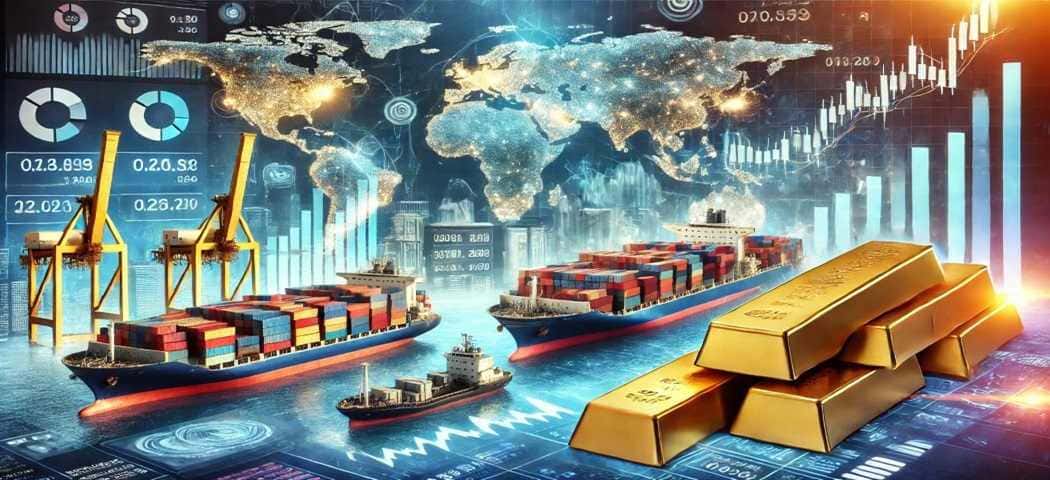
New U.S. Tariffs Shake Global Trade
On March 4, 2025, the President Donald Trump's administration implemented new tariffs on key trading partners, aiming to address trade imbalances and national security concerns. These measures have triggered retaliatory actions from affected nations, raising uncertainty in global markets. Investors are closely monitoring the effects on commodity prices, including precious metals and industrial materials.
With global trade tensions rising, gold, silver, and other safe-haven assets are drawing renewed interest. Meanwhile, businesses dependent on imported goods from Canada, Mexico, and China are bracing for increased costs and potential disruptions.
Canada and Mexico: A 25% Tariff Standoff
The U.S. has imposed a 25% tariff on imports from Canada and Mexico, citing concerns over fentanyl trafficking and trade imbalances. This move has sparked immediate responses:
-
Canada Retaliates – The Canadian government announced 25% tariffs on U.S. imports worth C$30 billion (20.74 billion USD), targeting agricultural products, manufactured goods, and energy exports.
-
Mexico Expected to Respond – While Mexico has not yet finalized countermeasures, experts anticipate similar retaliatory tariffs, likely focusing on U.S. agricultural exports and automotive components.
Market Implications
✔ Higher Consumer Prices: The increased cost of imported goods from Canada and Mexico may drive inflation, particularly in food, automobiles, and raw materials.
✔ Rising Precious Metals Demand: With growing trade uncertainty, gold and silver may see increased safe-haven investment from investors looking to hedge against volatility.
✔ Manufacturing Costs Surge: U.S. companies that rely on Canadian and Mexican raw materials could experience higher production costs, leading to potential price hikes for consumers.
U.S.-China Trade War Escalates: Higher Tariffs and Retaliation
The United States has escalated its trade war with China, increasing tariffs on Chinese goods from 10% to 20%. In response, China has:
-
Announced 10-15% tariffs on U.S. imports set to take effect on March 10, 2025.
-
Introduced export restrictions on key materials used in U.S. industries, potentially impacting the tech, automotive, and energy sectors.
-
Filed an official complaint with the World Trade Organization (WTO) against U.S. trade practices.
Economic Impact
✔ Higher Costs for Electronics and Consumer Goods: Many Chinese-manufactured products, including electronics, textiles, and industrial parts, will become more expensive for U.S. buyers.
✔ Market Volatility: The uncertainty surrounding U.S.-China trade relations may lead to fluctuations in stock markets and commodities, particularly in industrial metals and rare earth elements.
✔ Increased Precious Metals Demand: Gold and silver could benefit from economic instability, as investors seek to diversify portfolios and protect against currency devaluation.
European Union Braces for Potential Tariffs
While the European Union has not yet been hit with new U.S. tariffs, President Trump has threatened to impose trade restrictions, particularly targeting luxury goods, automobiles, and agricultural products. This uncertainty has already weighed on European markets, with industries fearing supply chain disruptions.
Possible Outcomes
✔ EU Negotiations: European officials may attempt to reach a trade agreement with the U.S. to avoid tariffs.
✔ Stock Market Reactions: European markets could experience volatility as businesses prepare for potential trade barriers.
✔ Gold’s Role as a Safe Haven: As concerns over U.S.-EU trade relations grow, investors may turn to gold and silver to hedge against market instability.
What This Means for Precious Metals Investors
With trade tensions escalating, many investors are reassessing their strategies. Historically, gold and silver prices rise during periods of economic uncertainty. Here's why:
-
Gold as a Hedge: Investors often turn to gold as a store of value when currency fluctuations and inflation concerns arise.
-
Silver’s Industrial Demand: As tariffs impact manufacturing costs, silver—widely used in electronics, solar panels, and industrial applications—could see price volatility.
-
Market Diversification: Holding a mix of precious metals can provide stability as global markets react to evolving trade disputes.
Final Thoughts: What’s Next for Trade and Markets?
The full impact of these new U.S. tariffs will unfold in the coming months, as trading partners adjust their policies and introduce countermeasures. Investors should closely monitor market reactions, particularly in precious metals, industrial commodities, and global trade sectors.
Whether these tariffs reshape global trade dynamics or trigger long-term economic shifts, one thing is certain—gold, silver, and other tangible assets will continue to play a crucial role in preserving wealth in times of economic turbulence.
For those looking to strengthen their investment portfolios, precious metals remain a reliable hedge against inflation, market volatility, and geopolitical uncertainty. Explore a wide selection of gold and silver products at Bullion Exchanges today!
1 Comments