View Charts
Top 50 Most Valuable Wheat Pennies and Lincoln Cents for Collectors
 35
35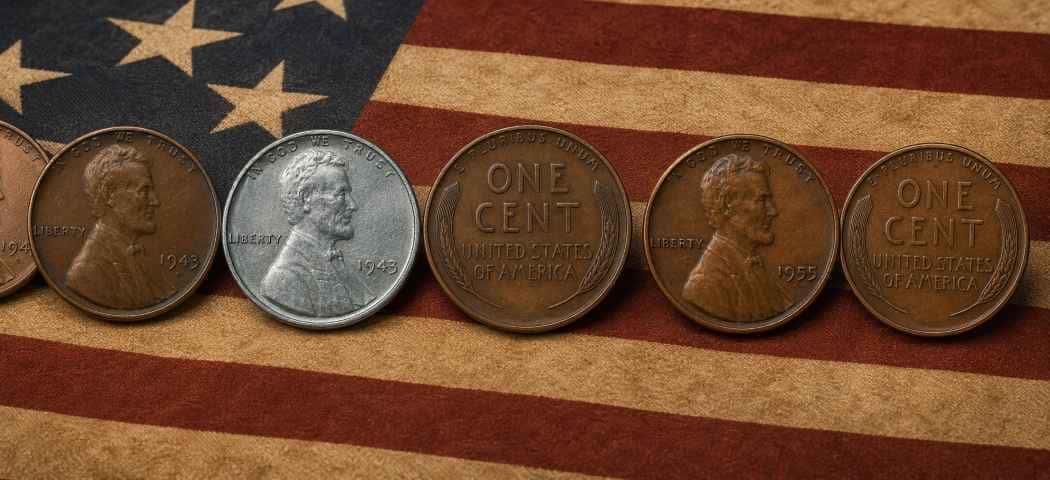
Why Lincoln Wheat Pennies Remain a Collector Favorite
Since its debut in 1909, the Lincoln Cent has become one of the most widely collected coin series in U.S. history. Originally designed by Victor David Brenner to commemorate the 100th anniversary of Abraham Lincoln’s birth, this small copper coin has evolved through multiple reverse designs, each reflecting a different era of American history. The classic Wheat Penny design (1909–1958) was later succeeded by the Lincoln Memorial reverse by Frank Gasparro and ultimately the Union Shield design by Lyndall Bass, which serves as the final reverse of the Lincoln Cent series—each carrying the legacy of the coin forward through different eras of American history.
Now that the U.S. Mint officially discontinued the penny for circulation in November 2025, the Lincoln Cent has entered a new phase. What was once everyday pocket change is rapidly becoming a finite collectible category. As a result, collectors and investors are increasingly focusing on key dates, rare varieties, and high-grade examples, driving renewed demand across the market.
The End of the Penny: A Turning Point for Collectors
The discontinuation of the U.S. penny in November 2025 marks a historic shift in American coinage. Rising production costs and declining purchasing power ultimately led to the decision, but the impact on the collector market has been immediate.
With no new pennies entering circulation, the existing supply is now fixed. This change introduces a scarcity dynamic that has historically supported long-term value appreciation in collectible coins. Lincoln Cents—especially Wheat Pennies, key dates, and recognized error varieties—are now viewed through a different lens, as both nostalgic artifacts and finite assets.
For collectors, this moment represents a unique opportunity. Coins that were once overlooked are gaining attention, while higher-grade and rare examples are becoming increasingly competitive in the marketplace.
The 2026 Dual-Date Lincoln Cent: A New Collectible Era
Although the U.S. Mint discontinued the penny for general circulation in November 2025, the Lincoln Cent is not disappearing entirely. In 2026, the Mint will issue special dual-date 1776–2026 Lincoln cents as part of official collector sets, marking the nation’s 250th anniversary.
These coins will not enter circulation, making them strictly collectible releases. This distinction is important, as it reinforces the transition of the Lincoln Cent from everyday currency to a numismatic product. For collectors, this creates a new category of modern issues that combine historical significance with limited distribution.
The introduction of these dual-date cents also signals continued demand for the series, even as circulating production has ended. As a result, both historic Lincoln Cents and modern collectible-only releases are likely to see increased attention in the evolving market.
Top 50 Most Valuable Wheat Pennies for Collectors
-
1909-S VDB Lincoln Cent
Estimated Value: $700–$2,500+
Why It’s Valuable: This coin marks the first year of issue and was struck at the San Francisco Mint with designer Victor David Brenner’s initials prominently displayed on the reverse. Production was halted after just 484,000 coins due to public backlash over the large “V.D.B.” initials.
Design Note: Obverse features Abraham Lincoln; reverse displays two wheat ears and the inscriptions “ONE CENT” and “UNITED STATES OF AMERICA.” -
1914-D Lincoln Cent
Estimated Value: $150–$2,000+
Why It’s Valuable: With only 1.2 million struck in Denver, this is one of the lowest-mintage coins of the early series. Many circulated heavily, making high-grade examples rare.
Design Note: Designed by Victor David Brenner, the wheat ears reverse continued to define the “Wheat Penny” look. -
1922 No D Strong Reverse
Estimated Value: $600–$4,000+
Why It’s Valuable: A die polishing error removed the "D" mintmark from some Denver-minted coins. Collectors seek examples with strong reverse details and no mintmark.
Design Note: Only Lincoln Cent from this era without a mintmark when all coins were struck at one mint. -
1909-S Lincoln Cent (No VDB)
Estimated Value: $90–$500
Why It’s Valuable: The follow-up to the controversial VDB version, with a modest mintage of 1.8 million.
Design Note: Same wheat reverse minus the VDB initials, making it slightly less rare but still sought-after. -
1931-S Lincoln Cent
Estimated Value: $75–$300
Why It’s Valuable: Only 866,000 minted during the Great Depression. High-grade examples are rare.
Design Note: Classic wheat design continues, often struck with sharper detail. -
1911-S Lincoln Cent
Estimated Value: $50–$250
Why It’s Valuable: Low San Francisco mintage and popular among early series collectors.
Design Note: Wheat ears reverse paired with a slightly more refined Lincoln portrait. -
1910-S Lincoln Cent
Estimated Value: $40–$200
Why It’s Valuable: Limited output from the San Francisco Mint and harder to find in uncirculated condition.
Design Note: Clear wheat lines and high relief are typical in better-struck examples. -
1915-S Lincoln Cent
Estimated Value: $35–$180
Why It’s Valuable: Scarce in high grades, and in demand due to its early era production.
Design Note: Strong vertical lines on wheat ears define quality examples. -
1924-D Lincoln Cent
Estimated Value: $55–$400
Why It’s Valuable: Known for weak strikes and lower survival rate in higher grades.
Design Note: Reverse often shows mushy or faded details. -
1926-S Lincoln Cent
Estimated Value: $45–$300
Why It’s Valuable: Low mintage and often weakly struck, leading to fewer high-grade survivors.
Design Note: Often displays incomplete detailing on the wheat ears and lettering. -
1912-S Lincoln Cent
Estimated Value: $35–$150
Why It’s Valuable: A lower-mintage coin with limited availability in mint condition.
Design Note: Collectors seek well-struck examples with sharp lettering. -
1913-S Lincoln Cent
Estimated Value: $30–$135
Why It’s Valuable: Scarce due to poor striking and low survival rates.
Design Note: Often features soft, uneven detail on the reverse. -
1915-D Lincoln Cent
Estimated Value: $25–$100
Why It’s Valuable: Popular early Denver issue that circulated heavily.
Design Note: Design mirrors earlier cents with a bolder "D" mintmark. -
1916-S Lincoln Cent
Estimated Value: $30–$125
Why It’s Valuable: A common date made scarce in better grades.
Design Note: Full lines on wheat ears help identify premium specimens. -
1917-S Lincoln Cent
Estimated Value: $20–$95
Why It’s Valuable: Lower mintage and tough to find in XF or better.
Design Note: Inconsistent strike depth on reverse is typical. -
1918-D Lincoln Cent
Estimated Value: $20–$85
Why It’s Valuable: Many were poorly struck, making crisp examples desirable.
Design Note: Slight diagonal lean to the mintmark is common. -
1918-S Lincoln Cent
Estimated Value: $20–$90
Why It’s Valuable: Often overlooked but increasingly valued in better condition.
Design Note: Finer points in lettering often worn down quickly. -
1919-S Lincoln Cent
Estimated Value: $15–$70
Why It’s Valuable: While common, fully struck and high-grade examples are elusive.
Design Note: Weak wheat kernels on reverse distinguish lower quality strikes. -
1920-S Lincoln Cent
Estimated Value: $20–$75
Why It’s Valuable: Typically exhibits poor strikes, increasing value for high-detail pieces.
Design Note: Die erosion often led to “blurry” wheat stalks. -
1921-S Lincoln Cent
Estimated Value: $25–$90
Why It’s Valuable: Often circulated extensively, driving demand for mint condition coins.
Design Note: Reverse details tend to be shallow even on nicer specimens. -
1923-S Lincoln Cent
Estimated Value: $25–$110
Why It’s Valuable: Scarce in all grades and especially in full red uncirculated condition.
Design Note: Reverse wheat lines often display softness or fade. -
1925-D Lincoln Cent
Estimated Value: $20–$95
Why It’s Valuable: Difficult to locate with full detail and even color.
Design Note: Crude minting led to inconsistent design clarity. -
1926-D Lincoln Cent
Estimated Value: $25–$110
Why It’s Valuable: Rarity increases dramatically in mint state condition.
Design Note: Red-brown and red finishes command strong premiums. -
1927-S Lincoln Cent
Estimated Value: $20–$85
Why It’s Valuable: Often comes poorly struck, reducing the pool of strong examples.
Design Note: Look for sharp separation between wheat grains and outer rim. -
1930-S Lincoln Cent
Estimated Value: $15–$65
Why It’s Valuable: Scarce in top condition due to inconsistent die quality.
Design Note: Strike quality improves over earlier S-mint coins. -
1932-D Lincoln Cent
Estimated Value: $15–$60
Why It’s Valuable: Depression-era mintage figures were lower than average.
Design Note: Crisp examples offer good color contrast and strike depth. -
1933-D Lincoln Cent
Estimated Value: $15–$55
Why It’s Valuable: Relatively low survival rate in MS condition.
Design Note: Distinctive Denver mintmark above date is sharply punched on strong examples. -
1935-S Lincoln Cent
Estimated Value: $10–$40
Why It’s Valuable: High circulation makes pristine pieces tough to locate.
Design Note: Reverse wheat details often degraded during use. -
1936-D RPM Lincoln Cent
Estimated Value: $40–$150
Why It’s Valuable: Features a re-punched “D” mintmark, highly collectible as an error.
Design Note: Close inspection reveals doubling on mintmark. -
1937-D Lincoln Cent
Estimated Value: $10–$40
Why It’s Valuable: Affordable for beginners, rare in top grade.
Design Note: Commonly used in circulated commerce, but has clean styling. -
1939-S Lincoln Cent
Estimated Value: $10–$35
Why It’s Valuable: Slightly lower mintage and better value in red finish.
Design Note: Well-centered strikes with strong luster are desirable. -
1943 Bronze Lincoln Cent
Estimated Value: $100,000–$350,000
Why It’s Valuable: An extremely rare error; struck on a bronze planchet meant for 1942.
Design Note: Appears brown rather than silver; will not be magnetic. -
1943-S Bronze Lincoln Cent
Estimated Value: $200,000+
Why It’s Valuable: Only a few known, all struck at the San Francisco Mint by mistake.
Design Note: Shares same bronze tone and non-magnetic properties as the 1943 bronze Philadelphia issue. -
1944 Steel Lincoln Cent
Estimated Value: $75,000–$175,000
Why It’s Valuable: Transitional error using leftover steel blanks from 1943.
Design Note: Magnetic coin with silvery appearance, rare post-1943. -
1944-D Steel Lincoln Cent
Estimated Value: $100,000+
Why It’s Valuable: Even scarcer than the 1944 Philly version.
Design Note: Only a handful authenticated by grading services. -
1955 Doubled Die Lincoln Cent
Estimated Value: $1,000–$15,000
Why It’s Valuable: The most famous doubled die error in U.S. coinage.
Design Note: Strong doubling visible on “LIBERTY” and “IN GOD WE TRUST.” -
1958 Doubled Die Lincoln Cent
Estimated Value: $100,000+
Why It’s Valuable: Only a few examples known; an elite error coin.
Design Note: Clear doubling on date and inscriptions; authenticated by only top grading firms. -
1946-S Lincoln Cent
Estimated Value: $5–$30
Why It’s Valuable: Scarce in MS67+ grades with full red luster.
Design Note: Sharply struck examples exhibit strong field contrast. -
1950-D Lincoln Cent
Estimated Value: $3–$20
Why It’s Valuable: Low value in circulated grades, but rare in MS66+ red condition.
Design Note: Look for crisp edges and minimal contact marks. -
1951-D/S Overmintmark Lincoln Cent
Estimated Value: $20–$75
Why It’s Valuable: Collectible overmintmark hybrid; favored by error enthusiasts.
Design Note: Dual mintmark effect visible under magnification. -
1956-D RPM Lincoln Cent
Estimated Value: $10–$40
Why It’s Valuable: Popular re-punched mintmark variety; one of the easier errors to collect.
Design Note: Doubling of “D” is best seen with a loupe. -
1960 Small Date Lincoln Cent
Estimated Value: $5–$30
Why It’s Valuable: A modern variety with steady demand.
Design Note: Shorter “0” and close “6” and “0” help ID this type. -
1960-D Over D RPM Lincoln Cent
Estimated Value: $15–$50
Why It’s Valuable: Features a doubled mintmark; adds variety value.
Design Note: “D” shows shadow-like doubling in specific light. -
1970-S Small Date Lincoln Cent
Estimated Value: $40–$250
Why It’s Valuable: A key modern variety with visual differences from the large date.
Design Note: “Liberty” often appears weakly struck. -
1982-D Small Date Copper Lincoln Cent
Estimated Value: $15,000+
Why It’s Valuable: Rare transitional error as U.S. switched to zinc planchets.
Design Note: Must weigh 3.1g to confirm copper composition. -
1983 Doubled Die Reverse Lincoln Cent
Estimated Value: $100–$300
Why It’s Valuable: Strong doubling seen on reverse lettering.
Design Note: Look closely at “ONE CENT” for doubling. -
1984 Doubled Ear Lincoln Cent
Estimated Value: $35–$150
Why It’s Valuable: Clearly doubled earlobe makes this error easy to spot.
Design Note: No magnification required to appreciate this dramatic variety. -
1992 Close AM Lincoln Cent
Estimated Value: $1,000–$5,000
Why It’s Valuable: Rare variety where the “AM” in “AMERICA” nearly touches.
Design Note: Reverse spacing reveals error to the naked eye. -
1999 Wide AM Lincoln Cent
Estimated Value: $400–$1,200
Why It’s Valuable: Another reverse variety; spacing is visibly wide unlike typical close AMs.
Design Note: Spot the gap between the “A” and “M” in “AMERICA.” -
1995 Doubled Die Lincoln Cent
Estimated Value: $50–$200
Why It’s Valuable: A popular modern error with visible doubling on the obverse.
Design Note: Bold doubling on “LIBERTY” and motto.
-
Note on Estimated Values
The values listed above are approximate estimates based on recent sales, current market trends, and collector demand as of early 2026. Actual prices can vary significantly depending on factors such as a coin’s condition, color designation (RD, RB, BN), strike quality, and whether it has been certified by a leading grading service like PCGS or NGC.
Uncirculated coins—particularly those with full “Red” (RD) surfaces and higher Mint State (MS) grades—can command substantial premiums compared to circulated examples. Conversely, coins that show signs of damage, corrosion, or cleaning may trade at a discount to the ranges provided.
Because these variables play such a critical role in determining value, accurate assessment is essential. This is where professional grading becomes especially important, providing both authentication and a standardized measure of quality in an increasingly competitive and evolving collector market.
How Professional Grading Impacts Lincoln Cent Value
As the Lincoln Cent transitions from everyday currency to a finite collectible, the importance of professional grading has never been greater. With no new pennies entering circulation, the market is increasingly focused on quality, authenticity, and condition—key factors that directly influence value.
Coins certified by leading grading services such as PCGS or NGC benefit from standardized evaluation, authentication, and encapsulation, which enhances both buyer confidence and resale potential. In particular, high-grade examples—especially those with “Red” (RD) designation—can command significant premiums compared to circulated or lower-grade coins.
For collectors who believe they may have a key date, error variety, or exceptionally well-preserved example, professional grading provides clarity and market recognition. In an environment where supply is fixed and demand is rising, properly graded Lincoln Cents are often the most competitive and desirable pieces in the marketplace.
Why Lincoln Cents Matter More Than Ever
The Lincoln Cent has always been a cornerstone of American numismatics, but its role is evolving in the post-circulation era. With the penny no longer being produced for everyday use, these coins are transitioning from common currency to collectible history.
This shift is already influencing market behavior, as collectors and investors seek to secure meaningful examples before availability tightens further. From rare Wheat Pennies to modern varieties and error coins, the series offers a wide range of opportunities for both new and experienced collectors.
As interest continues to grow, the importance of proper identification, preservation, and grading becomes even more critical. In a market defined by finite supply and rising demand, Lincoln Cents are no longer just small change—they are lasting pieces of American coinage history with increasing relevance in today’s collecting landscape.
Another article that may interest you:
5 Valuable Wheat Pennies You Could Still Find in a Coin Jar
35 Comments