View Charts
U.S. Treasury Announces End of Penny Production
 4
4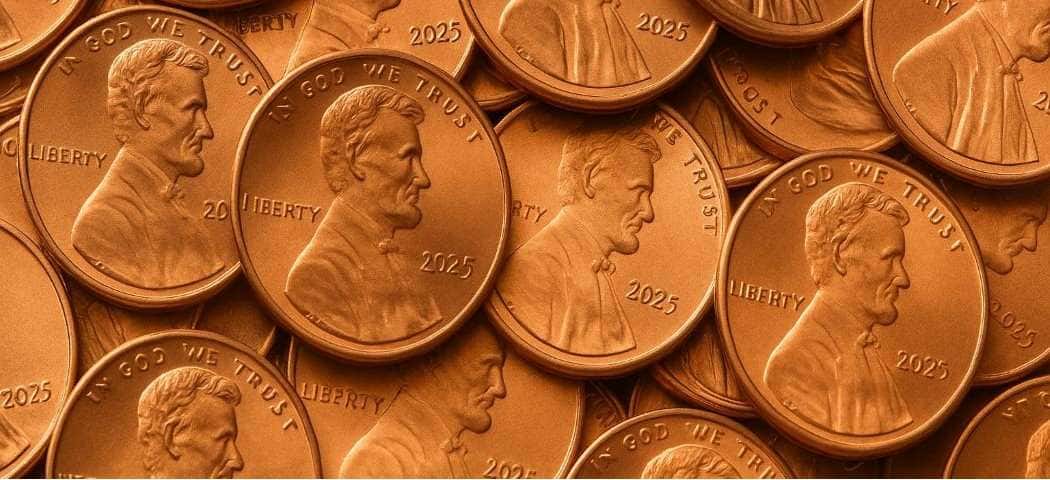
A Monumental Shift in American Coinage Policy
In a historic and financially driven move, the U.S. Treasury has officially confirmed that the nation will cease production of the one-cent coin, widely known as the penny. This announcement marks the beginning of the end for a denomination that has been part of American currency for over 230 years. Once considered a vital part of everyday commerce, the penny has steadily lost relevance in a world increasingly dominated by digital payments and cashless transactions.
The final shipment of penny blanks has already been ordered, and the U.S. Mint will phase out production once those materials are exhausted. The decision, long debated among policymakers and economists, is expected to save taxpayers tens of millions of dollars annually. While existing pennies will continue to be honored as legal tender, no new one-cent coins will be minted moving forward.
Why the Penny Is Being Discontinued
The penny’s demise is primarily a matter of economics. As of fiscal year 2024, the cost to produce a single penny stood at 3.7 cents - nearly four times its actual value. In total, the Mint incurred a loss of over $85 million in 2024 alone due to the production of approximately 3.2 billion pennies.
Beyond the production costs, the penny has largely become a redundant component of everyday transactions. Most vending machines, toll booths, and even some retail stores no longer accept them. They're frequently left in tip jars, lost in couch cushions, or ignored entirely. As mobile payments and card-based purchases rise in popularity, the practicality of the penny continues to decline.
How the End of the Penny Affects Shoppers and Retailers
The retirement of the penny will require some adjustments, particularly for cash transactions. Retailers across the country are expected to implement a rounding system, where purchase totals will be rounded to the nearest five cents when paying with cash. This method, already in use in countries like Canada and Australia, is designed to be fair and negligible in its effect on total spending.
For credit and debit card transactions, nothing will change - totals will continue to be calculated to the exact cent. The U.S. Treasury and IRS will also issue updated guidance to state and local tax authorities to ensure sales tax calculations remain compliant and consistent.
Consumers may initially experience minor confusion or concern, but studies from other countries that eliminated their lowest-denomination coins suggest that the public quickly adapts, and the financial impact is statistically neutral over time.
Could the Nickel Be Next on the Chopping Block?
With the penny set to retire, attention has now turned to the nickel. As of 2024, producing a nickel costs nearly 14 cents - almost three times its face value. This makes it even more costly than the penny in relative terms.
While no official announcements have been made, economic logic and precedent suggest that the nickel may be the next denomination to face review. If future evaluations show continued losses and minimal consumer reliance on the nickel, the Treasury could follow a similar path. For now, however, the nickel remains in production.
Implications for Collectors and Precious Metals Investors
The end of the penny opens new avenues for collectors and investors alike. Historically significant pennies - such as the 1909-S VDB, the 1943 bronze cent, and the 1955 Doubled Die Obverse - are likely to see increased interest and value due to renewed public attention on the denomination.
Bullion investors may also take this opportunity to explore the intrinsic and collectible value of coinage beyond face value. The penny’s phase-out is another reminder that the physical currency system is evolving, and those who recognize the numismatic value of rare coins stand to benefit.
A New Era in American Currency
The decision to end penny production represents more than a budget adjustment - it signals the evolution of America’s monetary system. While the penny has played a sentimental and economic role since the days of Abraham Lincoln, its relevance in today’s fast-paced, digital-first economy has drastically diminished.
As consumers, collectors, and businesses adapt, the phase-out may prompt broader discussions about modernizing U.S. coinage and reconsidering the cost-effectiveness of low-denomination coins. Whether the nickel follows remains to be seen, but the penny’s retirement is undoubtedly a defining moment in American coin history.
Bullion Exchanges will continue to monitor and report on updates that impact the coin and precious metals community. Be sure to check back regularly or subscribe to our newsletter to stay informed on the latest developments in U.S. currency policy and numismatic collecting.
4 Comments