Banner slider
logo

Top 50 Most Valuable Wheat Pennies and Lincoln Cents for Collectors

Explore the top 50 most sought-after Lincoln Cents with values, key dates, errors, and tips for collectors. Find out if your penny is worth big money.
May 06, 2026comment35

Top 50 Most Valuable Wheat Pennies and Lincoln Cents for Collectors

Why Lincoln Wheat Pennies Remain a Collector Favorite

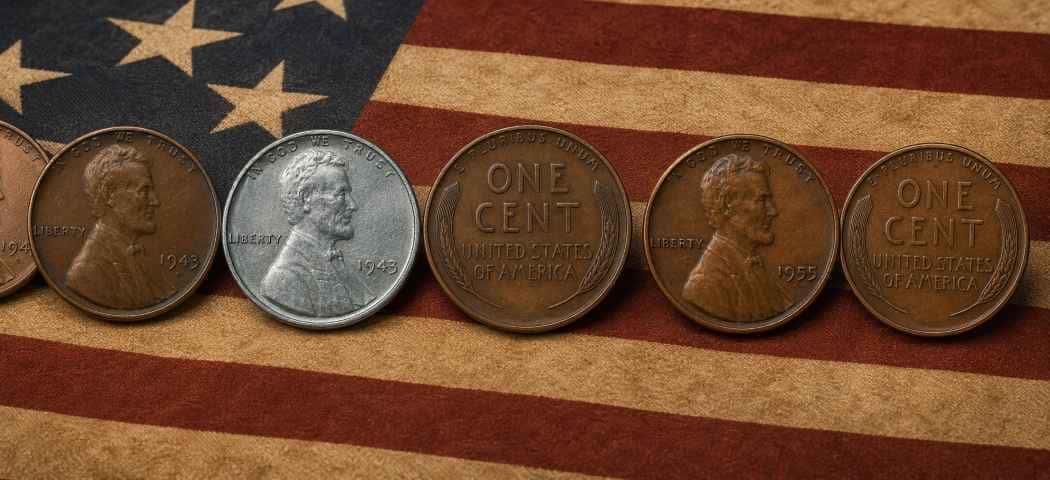
Since its debut in 1909, the Lincoln Cent has become one of the most widely collected coin series in U.S. history. Originally designed by Victor David Brenner to commemorate the 100th anniversary of Abraham Lincoln’s birth, this small copper coin has evolved through multiple reverse designs, each reflecting a different era of American history. The classic Wheat Penny design (1909–1958) was later succeeded by the Lincoln Memorial reverse by Frank Gasparro and ultimately the Union Shield design by Lyndall Bass, which serves as the final reverse of the Lincoln Cent series—each carrying the legacy of the coin forward through different eras of American history.

Now that the U.S. Mint officially discontinued the penny for circulation in November 2025, the Lincoln Cent has entered a new phase. What was once everyday pocket change is rapidly becoming a finite collectible category. As a result, collectors and investors are increasingly focusing on key dates, rare varieties, and high-grade examples, driving renewed demand across the market.

The End of the Penny: A Turning Point for Collectors

The discontinuation of the U.S. penny in November 2025 marks a historic shift in American coinage. Rising production costs and declining purchasing power ultimately led to the decision, but the impact on the collector market has been immediate.

With no new pennies entering circulation, the existing supply is now fixed. This change introduces a scarcity dynamic that has historically supported long-term value appreciation in collectible coins. Lincoln Cents—especially Wheat Pennies, key dates, and recognized error varieties—are now viewed through a different lens, as both nostalgic artifacts and finite assets.

For collectors, this moment represents a unique opportunity. Coins that were once overlooked are gaining attention, while higher-grade and rare examples are becoming increasingly competitive in the marketplace.

The 2026 Dual-Date Lincoln Cent: A New Collectible Era

Although the U.S. Mint discontinued the penny for general circulation in November 2025, the Lincoln Cent is not disappearing entirely. In 2026, the Mint will issue special dual-date 1776–2026 Lincoln cents as part of official collector sets, marking the nation’s 250th anniversary.

These coins will not enter circulation, making them strictly collectible releases. This distinction is important, as it reinforces the transition of the Lincoln Cent from everyday currency to a numismatic product. For collectors, this creates a new category of modern issues that combine historical significance with limited distribution.

The introduction of these dual-date cents also signals continued demand for the series, even as circulating production has ended. As a result, both historic Lincoln Cents and modern collectible-only releases are likely to see increased attention in the evolving market.

Top 50 Most Valuable Wheat Pennies for Collectors

  1. 1909-S VDB Lincoln Cent
    Estimated Value: $700–$2,500+
    Why It’s Valuable: This coin marks the first year of issue and was struck at the San Francisco Mint with designer Victor David Brenner’s initials prominently displayed on the reverse. Production was halted after just 484,000 coins due to public backlash over the large “V.D.B.” initials.
    Design Note: Obverse features Abraham Lincoln; reverse displays two wheat ears and the inscriptions “ONE CENT” and “UNITED STATES OF AMERICA.”

  2. 1914-D Lincoln Cent
    Estimated Value: $150–$2,000+
    Why It’s Valuable: With only 1.2 million struck in Denver, this is one of the lowest-mintage coins of the early series. Many circulated heavily, making high-grade examples rare.
    Design Note: Designed by Victor David Brenner, the wheat ears reverse continued to define the “Wheat Penny” look.

  3. 1922 No D Strong Reverse
    Estimated Value: $600–$4,000+
    Why It’s Valuable: A die polishing error removed the "D" mintmark from some Denver-minted coins. Collectors seek examples with strong reverse details and no mintmark.
    Design Note: Only Lincoln Cent from this era without a mintmark when all coins were struck at one mint.

  4. 1909-S Lincoln Cent (No VDB)
    Estimated Value: $90–$500
    Why It’s Valuable: The follow-up to the controversial VDB version, with a modest mintage of 1.8 million.
    Design Note: Same wheat reverse minus the VDB initials, making it slightly less rare but still sought-after.

  5. 1931-S Lincoln Cent
    Estimated Value: $75–$300
    Why It’s Valuable: Only 866,000 minted during the Great Depression. High-grade examples are rare.
    Design Note: Classic wheat design continues, often struck with sharper detail.

  6. 1911-S Lincoln Cent
    Estimated Value: $50–$250
    Why It’s Valuable: Low San Francisco mintage and popular among early series collectors.
    Design Note: Wheat ears reverse paired with a slightly more refined Lincoln portrait.

  7. 1910-S Lincoln Cent
    Estimated Value: $40–$200
    Why It’s Valuable: Limited output from the San Francisco Mint and harder to find in uncirculated condition.
    Design Note: Clear wheat lines and high relief are typical in better-struck examples.

  8. 1915-S Lincoln Cent
    Estimated Value: $35–$180
    Why It’s Valuable: Scarce in high grades, and in demand due to its early era production.
    Design Note: Strong vertical lines on wheat ears define quality examples.

  9. 1924-D Lincoln Cent
    Estimated Value: $55–$400
    Why It’s Valuable: Known for weak strikes and lower survival rate in higher grades.
    Design Note: Reverse often shows mushy or faded details.

  10. 1926-S Lincoln Cent
    Estimated Value: $45–$300
    Why It’s Valuable: Low mintage and often weakly struck, leading to fewer high-grade survivors.
    Design Note: Often displays incomplete detailing on the wheat ears and lettering.

  11. 1912-S Lincoln Cent
    Estimated Value: $35–$150
    Why It’s Valuable: A lower-mintage coin with limited availability in mint condition.
    Design Note: Collectors seek well-struck examples with sharp lettering.

  12. 1913-S Lincoln Cent
    Estimated Value: $30–$135
    Why It’s Valuable: Scarce due to poor striking and low survival rates.
    Design Note: Often features soft, uneven detail on the reverse.

  13. 1915-D Lincoln Cent
    Estimated Value: $25–$100
    Why It’s Valuable: Popular early Denver issue that circulated heavily.
    Design Note: Design mirrors earlier cents with a bolder "D" mintmark.

  14. 1916-S Lincoln Cent
    Estimated Value: $30–$125
    Why It’s Valuable: A common date made scarce in better grades.
    Design Note: Full lines on wheat ears help identify premium specimens.

  15. 1917-S Lincoln Cent
    Estimated Value: $20–$95
    Why It’s Valuable: Lower mintage and tough to find in XF or better.
    Design Note: Inconsistent strike depth on reverse is typical.

  16. 1918-D Lincoln Cent
    Estimated Value: $20–$85
    Why It’s Valuable: Many were poorly struck, making crisp examples desirable.
    Design Note: Slight diagonal lean to the mintmark is common.

  17. 1918-S Lincoln Cent
    Estimated Value: $20–$90
    Why It’s Valuable: Often overlooked but increasingly valued in better condition.
    Design Note: Finer points in lettering often worn down quickly.

  18. 1919-S Lincoln Cent
    Estimated Value: $15–$70
    Why It’s Valuable: While common, fully struck and high-grade examples are elusive.
    Design Note: Weak wheat kernels on reverse distinguish lower quality strikes.

  19. 1920-S Lincoln Cent
    Estimated Value: $20–$75
    Why It’s Valuable: Typically exhibits poor strikes, increasing value for high-detail pieces.
    Design Note: Die erosion often led to “blurry” wheat stalks.

  20. 1921-S Lincoln Cent
    Estimated Value: $25–$90
    Why It’s Valuable: Often circulated extensively, driving demand for mint condition coins.
    Design Note: Reverse details tend to be shallow even on nicer specimens.

  21. 1923-S Lincoln Cent
    Estimated Value: $25–$110
    Why It’s Valuable: Scarce in all grades and especially in full red uncirculated condition.
    Design Note: Reverse wheat lines often display softness or fade.

  22. 1925-D Lincoln Cent
    Estimated Value: $20–$95
    Why It’s Valuable: Difficult to locate with full detail and even color.
    Design Note: Crude minting led to inconsistent design clarity.

  23. 1926-D Lincoln Cent
    Estimated Value: $25–$110
    Why It’s Valuable: Rarity increases dramatically in mint state condition.
    Design Note: Red-brown and red finishes command strong premiums.

  24. 1927-S Lincoln Cent
    Estimated Value: $20–$85
    Why It’s Valuable: Often comes poorly struck, reducing the pool of strong examples.
    Design Note: Look for sharp separation between wheat grains and outer rim.

  25. 1930-S Lincoln Cent
    Estimated Value: $15–$65
    Why It’s Valuable: Scarce in top condition due to inconsistent die quality.
    Design Note: Strike quality improves over earlier S-mint coins.

  26. 1932-D Lincoln Cent
    Estimated Value: $15–$60
    Why It’s Valuable: Depression-era mintage figures were lower than average.
    Design Note: Crisp examples offer good color contrast and strike depth.

  27. 1933-D Lincoln Cent
    Estimated Value: $15–$55
    Why It’s Valuable: Relatively low survival rate in MS condition.
    Design Note: Distinctive Denver mintmark above date is sharply punched on strong examples.

  28. 1935-S Lincoln Cent
    Estimated Value: $10–$40
    Why It’s Valuable: High circulation makes pristine pieces tough to locate.
    Design Note: Reverse wheat details often degraded during use.

  29. 1936-D RPM Lincoln Cent
    Estimated Value: $40–$150
    Why It’s Valuable: Features a re-punched “D” mintmark, highly collectible as an error.
    Design Note: Close inspection reveals doubling on mintmark.

  30. 1937-D Lincoln Cent
    Estimated Value: $10–$40
    Why It’s Valuable: Affordable for beginners, rare in top grade.
    Design Note: Commonly used in circulated commerce, but has clean styling.

  31. 1939-S Lincoln Cent
    Estimated Value: $10–$35
    Why It’s Valuable: Slightly lower mintage and better value in red finish.
    Design Note: Well-centered strikes with strong luster are desirable.

  32. 1943 Bronze Lincoln Cent
    Estimated Value: $100,000–$350,000
    Why It’s Valuable: An extremely rare error; struck on a bronze planchet meant for 1942.
    Design Note: Appears brown rather than silver; will not be magnetic.

  33. 1943-S Bronze Lincoln Cent
    Estimated Value: $200,000+
    Why It’s Valuable: Only a few known, all struck at the San Francisco Mint by mistake.
    Design Note: Shares same bronze tone and non-magnetic properties as the 1943 bronze Philadelphia issue.

  34. 1944 Steel Lincoln Cent
    Estimated Value: $75,000–$175,000
    Why It’s Valuable: Transitional error using leftover steel blanks from 1943.
    Design Note: Magnetic coin with silvery appearance, rare post-1943.

  35. 1944-D Steel Lincoln Cent
    Estimated Value: $100,000+
    Why It’s Valuable: Even scarcer than the 1944 Philly version.
    Design Note: Only a handful authenticated by grading services.

  36. 1955 Doubled Die Lincoln Cent
    Estimated Value: $1,000–$15,000
    Why It’s Valuable: The most famous doubled die error in U.S. coinage.
    Design Note: Strong doubling visible on “LIBERTY” and “IN GOD WE TRUST.”

  37. 1958 Doubled Die Lincoln Cent
    Estimated Value: $100,000+
    Why It’s Valuable: Only a few examples known; an elite error coin.
    Design Note: Clear doubling on date and inscriptions; authenticated by only top grading firms.

  38. 1946-S Lincoln Cent
    Estimated Value: $5–$30
    Why It’s Valuable: Scarce in MS67+ grades with full red luster.
    Design Note: Sharply struck examples exhibit strong field contrast.

  39. 1950-D Lincoln Cent
    Estimated Value: $3–$20
    Why It’s Valuable: Low value in circulated grades, but rare in MS66+ red condition.
    Design Note: Look for crisp edges and minimal contact marks.

  40. 1951-D/S Overmintmark Lincoln Cent
    Estimated Value: $20–$75
    Why It’s Valuable: Collectible overmintmark hybrid; favored by error enthusiasts.
    Design Note: Dual mintmark effect visible under magnification.

  41. 1956-D RPM Lincoln Cent
    Estimated Value: $10–$40
    Why It’s Valuable: Popular re-punched mintmark variety; one of the easier errors to collect.
    Design Note: Doubling of “D” is best seen with a loupe.

  42. 1960 Small Date Lincoln Cent
    Estimated Value: $5–$30
    Why It’s Valuable: A modern variety with steady demand.
    Design Note: Shorter “0” and close “6” and “0” help ID this type.

  43. 1960-D Over D RPM Lincoln Cent
    Estimated Value: $15–$50
    Why It’s Valuable: Features a doubled mintmark; adds variety value.
    Design Note: “D” shows shadow-like doubling in specific light.

  44. 1970-S Small Date Lincoln Cent
    Estimated Value: $40–$250
    Why It’s Valuable: A key modern variety with visual differences from the large date.
    Design Note: “Liberty” often appears weakly struck.

  45. 1982-D Small Date Copper Lincoln Cent
    Estimated Value: $15,000+
    Why It’s Valuable: Rare transitional error as U.S. switched to zinc planchets.
    Design Note: Must weigh 3.1g to confirm copper composition.

  46. 1983 Doubled Die Reverse Lincoln Cent
    Estimated Value: $100–$300
    Why It’s Valuable: Strong doubling seen on reverse lettering.
    Design Note: Look closely at “ONE CENT” for doubling.

  47. 1984 Doubled Ear Lincoln Cent
    Estimated Value: $35–$150
    Why It’s Valuable: Clearly doubled earlobe makes this error easy to spot.
    Design Note: No magnification required to appreciate this dramatic variety.

  48. 1992 Close AM Lincoln Cent
    Estimated Value: $1,000–$5,000
    Why It’s Valuable: Rare variety where the “AM” in “AMERICA” nearly touches.
    Design Note: Reverse spacing reveals error to the naked eye.

  49. 1999 Wide AM Lincoln Cent
    Estimated Value: $400–$1,200
    Why It’s Valuable: Another reverse variety; spacing is visibly wide unlike typical close AMs.
    Design Note: Spot the gap between the “A” and “M” in “AMERICA.”

  50. 1995 Doubled Die Lincoln Cent
    Estimated Value: $50–$200
    Why It’s Valuable: A popular modern error with visible doubling on the obverse.
    Design Note: Bold doubling on “LIBERTY” and motto.

  • Note on Estimated Values

The values listed above are approximate estimates based on recent sales, current market trends, and collector demand as of early 2026. Actual prices can vary significantly depending on factors such as a coin’s condition, color designation (RD, RB, BN), strike quality, and whether it has been certified by a leading grading service like PCGS or NGC.

Uncirculated coins—particularly those with full “Red” (RD) surfaces and higher Mint State (MS) grades—can command substantial premiums compared to circulated examples. Conversely, coins that show signs of damage, corrosion, or cleaning may trade at a discount to the ranges provided.

Because these variables play such a critical role in determining value, accurate assessment is essential. This is where professional grading becomes especially important, providing both authentication and a standardized measure of quality in an increasingly competitive and evolving collector market.

How Professional Grading Impacts Lincoln Cent Value

As the Lincoln Cent transitions from everyday currency to a finite collectible, the importance of professional grading has never been greater. With no new pennies entering circulation, the market is increasingly focused on quality, authenticity, and condition—key factors that directly influence value.

Coins certified by leading grading services such as PCGS or NGC benefit from standardized evaluation, authentication, and encapsulation, which enhances both buyer confidence and resale potential. In particular, high-grade examples—especially those with “Red” (RD) designation—can command significant premiums compared to circulated or lower-grade coins.

For collectors who believe they may have a key date, error variety, or exceptionally well-preserved example, professional grading provides clarity and market recognition. In an environment where supply is fixed and demand is rising, properly graded Lincoln Cents are often the most competitive and desirable pieces in the marketplace.

Why Lincoln Cents Matter More Than Ever

The Lincoln Cent has always been a cornerstone of American numismatics, but its role is evolving in the post-circulation era. With the penny no longer being produced for everyday use, these coins are transitioning from common currency to collectible history.

This shift is already influencing market behavior, as collectors and investors seek to secure meaningful examples before availability tightens further. From rare Wheat Pennies to modern varieties and error coins, the series offers a wide range of opportunities for both new and experienced collectors.

As interest continues to grow, the importance of proper identification, preservation, and grading becomes even more critical. In a market defined by finite supply and rising demand, Lincoln Cents are no longer just small change—they are lasting pieces of American coinage history with increasing relevance in today’s collecting landscape.


Another article that may interest you:
5 Valuable Wheat Pennies You Could Still Find in a Coin Jar

35 Comments

Avatar
Dwight AlexanderNovember 09, 2025
Where do I contact to find the real value of coins? I have some on the top 50 list of the pennies.
Avatar
Bullion ExchangesNovember 10, 2025
Thank you for reaching out! The value of coins can vary significantly depending on their condition, mint mark, year, and rarity. We recommend researching recent auction results for similar coins to get an idea of current market trends. If you believe you’ve found a rare piece, bring it to a reputable dealer such as Bullion Exchanges for a professional assessment and guidance on whether it may be worth submitting to a grading service like NGC or PCGS. If you’re local to New York City, we invite you to visit our retail store at 30 West 47th Street, New York, NY 10036, where our experts can evaluate your coins in person and provide detailed insight.
Avatar
William RodriguezNovember 11, 2025
I believe I found 1922 no mint pretty worn out but mag glass that can shade the back you see barely one cent fade wheat must bury for long time found it with metal detector
Avatar
Bullion ExchangesNovember 12, 2025
Thank you for sharing your exciting discovery! All 1922 Lincoln Wheat Pennies were officially struck at the Denver Mint, meaning every genuine 1922 cent originally had a “D” mint mark. However, some coins are known as the 1922 “No D” variety—a result of the mint mark being weakly struck or filled with grease on the die, causing it to appear missing. These pieces are highly collectible error coins that hold a special place in U.S. numismatic history. Since it’s worn and corroded from burial, its numismatic value may be modest, but it still carries great historical and sentimental significance as a metal-detected find. We don’t recommend cleaning it, as doing so could reduce any collectible value. Instead, keep it in a dry, protective holder, and consider seeking the advice of a reputable dealer such as Bullion Exchanges, who can help you determine whether it might be worthy of professional grading.
Avatar
Robert DerasmoNovember 14, 2025
Excellent article on valuable Lincoln Pennies
Avatar
Bullion ExchangesNovember 14, 2025
Thank you so much for your feedback! We’re thrilled to hear you enjoyed our article on valuable Lincoln Pennies. These historic coins continue to captivate collectors with their rich history and hidden rarities. We appreciate you taking the time to read and share your thoughts — stay tuned for more numismatic insights and collector-focused features soon!
Avatar
Harvey GliddenNovember 17, 2025
I have a 1950 penny that I do not know if it is real or not. It has no mint mark.
Avatar
Bullion ExchangesNovember 20, 2025
Thank you for your comment! Your 1950 penny without a mint mark is most likely from the Philadelphia Mint, which did not use a mint mark that year. While it’s a genuine U.S. coin, it isn’t considered rare — millions were produced. However, if your coin is in exceptionally well-preserved, uncirculated condition, it may carry modest collector value. For the most accurate assessment, we recommend consulting a trusted coin dealer.
Avatar
MarioDecember 09, 2025
How do I sell some of my wheat pennies I have some pretty unique ones
Avatar
Bullion ExchangesDecember 09, 2025
Thank you for reaching out! If you believe your wheat pennies may have collectible value, we recommend having them certified by a professional grading service such as NGC or PCGS, as certification helps confirm authenticity and market value. Bullion Exchanges is happy to purchase wheat pennies through our Sell to Us program, but we can only accept certified coins. Please feel free to contact our Customer Service team for assistance or more information — we’re always here to help! https://bullionexchanges.com/contacts
Avatar
Julie RobinsonDecember 18, 2025
I have a nineteen sixty nine d lincoln memorial penny that appears to be struck on a dime planchet, which is off centered with a partial floating ceiling on the averse side. Any idea, what this could be worth it. Weighs spot on to a real silver dime planchet
Avatar
Bullion ExchangesDecember 18, 2025
Thank you for reaching out and for sharing those details — that’s an interesting coin you have. A 1969-D Lincoln cent struck on a silver dime planchet would be considered a major mint error, and if authentic, such errors can be quite valuable, depending on condition and confirmation. That said, coins described as being on the wrong planchet are frequently misidentified, so professional authentication is essential. We strongly recommend having the coin examined and certified by a leading grading service such as PCGS or NGC, which can verify the planchet, weight, metal composition, and strike characteristics. If you’re local to NYC, you’re welcome to bring the coin to Bullion Exchanges, where our experienced numismatists can take an initial in-person look and help guide you on next steps.
Avatar
Ralph Watts December 23, 2025
I need a book that gives values.
Avatar
Bullion ExchangesDecember 24, 2025
Thank you for your inquiry! If you’re looking for a reliable value reference, many collectors start with well-established price guides such as the Guide Book of United States Coins (the “Red Book”), which offers historical pricing, mintage data, and helpful context. It’s important to keep in mind that published values are estimates, and actual market prices can vary based on condition, demand, and timing. For the most accurate and current valuation, nothing compares to an in-person assessment by a reputable dealer or experienced numismatist such as Bullion Exchanges. Thanks again for reaching out—we’re always happy to help point you in the right direction.
Avatar
Donita counsellJanuary 05, 2026
1929 penny seems to be double struck on the front and back, how do I get it verified?
Avatar
Bullion ExchangesJanuary 05, 2026
Thank you for reaching out! A 1929 penny that appears to be double struck on both sides could be of interest, but determining this accurately requires a professional evaluation. We recommend bringing the coin to a reputable dealer such as Bullion Exchanges for confirmation of authenticity and guidance on the next steps. An experienced numismatist can examine the coin and advise whether professional grading through a service like NGC or PCGS may be appropriate.
Avatar
Sandy Williams January 15, 2026
I have a couple of 1944 one has an S or D in good condition
Avatar
April PhilipsFebruary 03, 2026
I have a 1958 D with DDO in great condition. I’ve had it for several years. Is this something you would be interested in looking at?
Avatar
Bullion ExchangesFebruary 03, 2026
Thanks for reaching out! A genuine 1958-D Doubled Die Obverse Lincoln cent can be a very collectible coin. We do have interest in Lincoln cents, but we require them to be authenticated and graded by a professional service like PCGS or NGC. Having it certified is the best way to confirm the variety and condition and helps ensure you get the strongest and most accurate market value. Once it’s graded, we’d be happy to take a look—feel free to reach out to our customer service team for personalized assistance or next steps. https://bullionexchanges.com/contacts
Avatar
Allan ThompsonMarch 05, 2026
I am going through my deceased son’s coin collection and I have many wheat Pennies as well as a few steel Pennies. I also found a 1906 indian head penny , which I’m wondering about. Would it be worth any value? Thanks.
Avatar
Bullion ExchangesMarch 06, 2026
Thank you for reaching out, and we are truly sorry for your loss. It’s wonderful that you’re taking the time to go through your son’s coin collection. Wheat pennies and steel pennies are popular among collectors, with some specific years and conditions having more value, especially in higher grades. The 1906 Indian Head penny can also be valuable, depending on its condition. In general, most circulated 1906 pennies are valued between $1 and $5, but if the coin is in uncirculated condition or possesses a sharp, original luster, it could be worth $20-$30 or more. To get a more accurate assessment, we recommend having your collection evaluated by a professional numismatist or a reputable coin dealer.
Avatar
Kimmie B.April 02, 2026
My grandma saved a roll of pennies from the year her grandkids were born. I finally opened my roll & found 23, 3.1 gram, 1982 pennies with the D mint mark & small date. There are several others without the mint mark as well but I am not sure what to do next. Any advice would really help! Thank you!
Avatar
Bullion ExchangesApril 02, 2026
Thank you for sharing this—what a great piece of family history to go through! Based on your description, 1982 pennies are especially interesting because that year included both copper (3.1g) and zinc versions, along with large and small date varieties, so you may have some collectible pieces. The 1982-D small date in copper is considered a key rarity, but it’s extremely uncommon, so it’s worth having your coins carefully weighed and examined by a numismatic expert to confirm. We recommend setting aside the 3.1g coins, avoiding cleaning them, and consulting a reputable coin dealer or submitting them to a grading service like PCGS or NGC for authentication.
Avatar
Mary CraneMay 13, 2026
Question…if I sell a coin for a good amount would it be taxable? If so how would I go about reporting it? Would I just contact the internal revenue department and let them know?…just wondering????????
Avatar
Bullion ExchangesMay 14, 2026
Thank you for your question! In the United States, profits from selling coins or precious metals can potentially be subject to capital gains taxes, depending on factors such as the amount of profit and whether the coin is considered a collectible by the IRS. In most cases, any taxable gain would typically be reported when filing your annual income tax return rather than by contacting the IRS separately at the time of sale. Because tax situations can vary significantly, we strongly recommend consulting a qualified tax professional or accountant who can help you understand the reporting requirements based on your specific circumstances. More info: https://bullionexchanges.com/blog/irs-reporting-rules-for-gold-and-silver-investors-explained
Avatar
Ed WoodsMay 15, 2026
I have a 1983 penny that weighs 3 grams. Does in have any value?
Avatar
Bullion ExchangesMay 18, 2026
Thank you for reaching out! A 1983 penny weighing around 3 grams is worth further inspection, because most 1983 Lincoln cents were struck on copper-plated zinc planchets that weigh about 2.5 grams. If your coin truly weighs closer to 3.0–3.11 grams, it may be a highly valuable, rare transitional error coin struck on a leftover copper planchet instead of the standard zinc planchet. Because these copper errors are incredibly rare, we recommend bringing the coin to a reputable local coin dealer or a numismatic expert at a regional coin show, where it can be examined in person. They can evaluate its weight, strike characteristics, and metal content, and advise whether it’s a strong candidate for professional grading through a trusted service like PCGS or NGC.
Avatar
Emmanuel FohtungMay 20, 2026
I have a lot of those coins.
Avatar
Bullion ExchangesMay 22, 2026
Thank you for your comment! If you have a lot of Wheat Pennies or Lincoln Cents, it may be worth checking them carefully for key dates, mint marks, errors, and overall condition. Some common cents are only worth a small premium, but rare varieties or higher-grade examples can be much more valuable to collectors. We recommend comparing your coins against the list, reviewing recent online auction activity, and considering professional evaluation for any that appear especially rare or unusual.
Avatar
Richard GoodnerMay 21, 2026
I have most of these coins listed minus like 5. So where do I start to get an estimated figure cause I have no use for them.
Avatar
Bullion ExchangesMay 22, 2026
Thank you for reaching out! If you have most of the coins listed, a good first step is to sort them by date, mint mark, condition, and any possible error varieties, then compare recent online auction activity to see what similar coins have actually sold for. We also recommend bringing any potentially valuable Wheat Pennies or Lincoln Cents to a reputable local coin dealer or a numismatic expert at a regional coin show, where they can examine the coins in person, evaluate strike characteristics and authenticity, estimate value, and advise whether any are strong candidates for professional grading through a trusted service like PCGS or NGC for the best valuation.
Avatar
memMay 25, 2026
I have a 1943 proof penny i think it's trash how much is it
Avatar
Bullion ExchangesMay 27, 2026
Thank you for your question! There were no official 1943 proof Lincoln cents issued by the U.S. Mint, since proof coin production was suspended during World War II. However, some 1943 steel cents can display highly reflective “prooflike” surfaces, and there are also altered or polished coins that may appear prooflike. If your coin is genuine and has unusual characteristics, it could still have collectible value depending on condition and authenticity. We recommend having it looked at by a reputable coin dealer or numismatic expert at a regional coin show, who can help determine exactly what you have and whether it may be worth professional grading.
Avatar
reba HamiltonMay 26, 2026
hi I have a lot of these I inherited but not graded I have from 1910 up till today how do I go about selling them does anyone know I'm new to coin world
Avatar
Bullion ExchangesMay 27, 2026
Thank you for your question, and welcome to the coin collecting world! If you inherited a collection ranging from 1910 to today, you may have some very interesting and potentially valuable coins. A great first step is to organize the coins by denomination and date, then visit a reputable local coin dealer or numismatic expert who can help identify key dates, metal content, and coins that may be worth professional grading. You do not necessarily need to grade every coin before selling, as an experienced dealer can often help determine which pieces may justify the added cost. Thank you again for reaching out to Bullion Exchanges, and best of luck with your collection!

Leave a comment

FAQs
The most valuable Lincoln pennies include key dates and rare errors such as the 1909-S VDB, 1914-D, 1922 No D, 1943 bronze cent, and the 1955 doubled die, all of which can command significant premiums.

Wheat Pennies gain value due to low mintages, historical significance, minting errors, and high-grade preservation, making certain coins rare and highly desirable to collectors.

Pennies are no longer produced for circulation as of November 2025, but special collector-only issues, such as the 2026 dual-date Lincoln cents, are still being released by the U.S. Mint.

Check the coin’s date, mint mark, condition, and any visible errors such as doubling or missing elements, as these factors can significantly impact its value.

The 1943 bronze Lincoln cent is considered one of the rarest and most valuable, with only a few known examples and values reaching well into six figures.

Yes, older pennies—especially those with limited supply or collector demand—can appreciate in value over time as fewer high-quality examples remain available.

“Red” (RD) refers to a coin that retains its original copper color, and these coins are typically more valuable than Red-Brown (RB) or Brown (BN) examples.

Professional grading is recommended for coins that may be rare, high-grade, or unusual, as it provides authentication and can significantly increase resale value.

Error pennies are valuable because they are uncommon and often visually distinct, with examples including doubled dies, off-metal strikes, and missing mint marks.