View Charts
Gold’s 1980 Peak and Collapse After the $850 Surge
 0
0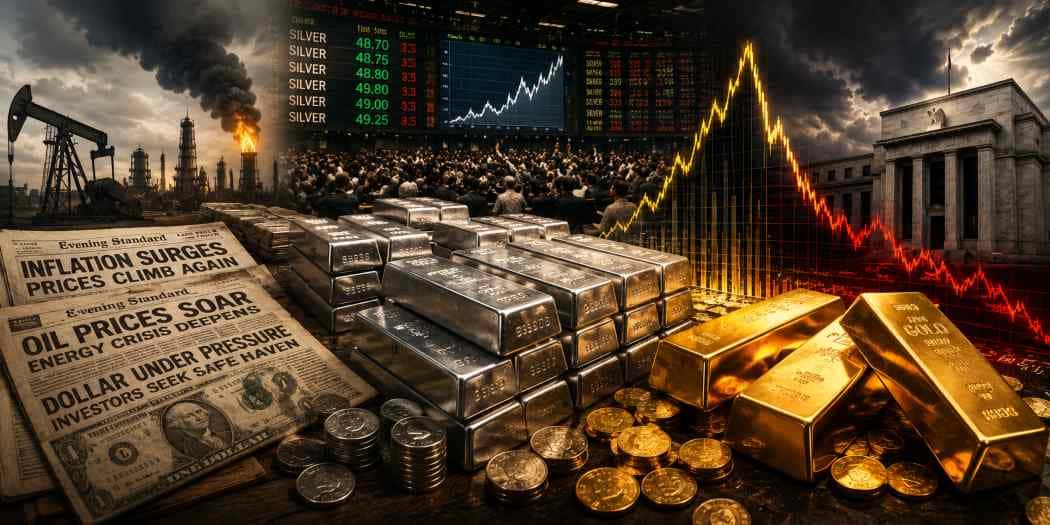
Inflation Fear and Silver Mania Created a Historic Precious Metals Bubble
The gold 1980 peak remains one of the most dramatic boom-and-bust cycles in financial history. In January 1980, gold spot prices surged to approximately $850 per ounce — a staggering move fueled by runaway inflation, geopolitical instability, collapsing confidence in paper currencies, and one of the largest speculative silver bubbles ever recorded. At the center of the silver frenzy were the Hunt brothers, whose attempt to dominate the global silver market helped intensify panic buying across the broader precious metals sector.
But the rally did not last. Within months, gold and silver prices collapsed sharply as Federal Reserve Chairman Paul Volcker aggressively raised interest rates, liquidity tightened, and speculative leverage unraveled across commodities markets. While gold’s rise to $850 became legendary, the speed and severity of the decline that followed became equally important, shaping how investors view precious metals bubbles and monetary policy even today.
The 1970s Created the Conditions for a Precious Metals Explosion
The road to gold’s historic 1980 peak began nearly a decade earlier during one of the most economically unstable periods in modern American history.
Several major developments transformed investor psychology throughout the 1970s:
-
the collapse of the Bretton Woods monetary system
-
the end of dollar convertibility into gold
-
oil embargoes and energy shortages
-
double-digit inflation
-
rising unemployment
-
weakening trust in fiat currencies
When President Nixon officially closed the gold window in 1971, gold prices were finally allowed to trade more freely after decades of government price controls.
Inflation accelerated rapidly throughout the decade, eroding purchasing power and pushing investors toward hard assets viewed as protection against currency debasement.
Gold, silver, oil, and commodities broadly became major beneficiaries of that environment.
Geopolitical Chaos Intensified Safe-Haven Buying
The final stage of the rally was driven heavily by global instability and fear.
Several geopolitical events sharply increased investor anxiety:
-
the Iranian Revolution
-
the Soviet invasion of Afghanistan
-
the Iran hostage crisis
-
Middle East oil disruptions
-
escalating Cold War tensions
At the same time, inflation continued spiraling higher while confidence in U.S. monetary policy weakened significantly.
Investors increasingly feared:
-
uncontrolled inflation
-
prolonged currency weakness
-
economic stagnation
-
further geopolitical escalation
Gold became a primary safe-haven asset because it was viewed as independent from government monetary systems and resistant to inflationary destruction.
Demand accelerated globally as institutional investors, retail buyers, and speculators all rushed into precious metals simultaneously.
The Hunt Brothers Fueled a Historic Silver Mania
While gold prices surged on macroeconomic fear, silver experienced an even more extreme speculative explosion due largely to the actions of Nelson Bunker Hunt and William Herbert Hunt.
The Texas oil billionaires aggressively accumulated:
-
physical silver bullion
-
silver futures contracts
-
massive leveraged commodity positions
At their peak, the Hunt brothers reportedly controlled an enormous percentage of the world’s deliverable silver supply.
Their aggressive buying created a supply squeeze that sent silver prices from under $10 per ounce to nearly $50 by January 1980.
The silver rally evolved into one of the largest speculative commodity manias ever recorded.
As silver prices exploded higher, speculative enthusiasm spilled into the broader precious metals complex, helping accelerate gold buying and reinforcing panic-driven momentum throughout the market.
Gold Reached $850 as Fear Turned Into Speculation
Gold ultimately peaked near $850 per ounce on January 21, 1980.
The move reflected a combination of:
-
inflation panic
-
geopolitical fear
-
speculative momentum
-
collapsing dollar confidence
-
commodity mania
-
safe-haven buying
Physical bullion demand surged worldwide.
Coin dealers experienced:
-
inventory shortages
-
widening premiums
-
delayed deliveries
-
long customer lines
-
aggressive speculative buying
The environment increasingly resembled a financial bubble where fear and momentum overtook rational valuation models.
Importantly, many investors buying near the peak believed prices would continue rising indefinitely because inflation and instability appeared uncontrollable at the time.
That assumption would soon prove catastrophic for many late-stage buyers.
Volcker’s Interest Rate Shock Triggered the Collapse
The collapse began shortly after Federal Reserve Chairman Paul Volcker implemented one of the most aggressive anti-inflation monetary tightening campaigns in modern history.
The Federal Reserve sharply increased interest rates, eventually pushing the federal funds rate near 20%.
That policy shift changed the entire financial environment almost overnight.
Higher interest rates:
-
strengthened the U.S. dollar
-
reduced inflation expectations
-
increased bond yields
-
tightened credit conditions
-
weakened speculative demand
Suddenly, investors could earn historically high returns holding cash and Treasury instruments rather than non-yielding metals.
Gold and silver prices began reversing sharply as speculative buying evaporated and leveraged positions started unwinding.
Silver Thursday Accelerated the Precious Metals Crash
Silver’s collapse intensified the broader selloff.
As silver prices surged, regulators and exchanges grew increasingly concerned about excessive speculation and market concentration tied to the Hunt brothers’ positions.
Exchanges implemented:
-
stricter margin requirements
-
trading restrictions
-
limits on speculative futures activity
Those changes triggered massive liquidation pressure.
The most infamous moment came on March 27, 1980 — later known as “Silver Thursday” — when silver prices crashed violently and the Hunt brothers faced enormous financial losses tied to leveraged positions.
The collapse shattered speculative confidence across the entire precious metals sector.
Gold prices fell sharply alongside silver as:
-
leverage unwound
-
panic selling emerged
-
liquidity disappeared
-
inflation fears cooled
-
monetary conditions tightened
Gold Lost More Than Half Its Value After the Peak
One of the most important — and often overlooked — aspects of the 1980 gold story is how severe the collapse became after the $850 peak.
Gold prices declined dramatically throughout the early 1980s as Volcker’s policies succeeded in reducing inflation and restoring confidence in the dollar.
By 1982, gold had fallen below $400 per ounce, losing more than half its peak value in just over two years.
The decline continued intermittently throughout much of the decade.
For investors who purchased near the top of the mania, the losses were devastating. In inflation-adjusted terms, gold would not sustainably reclaim its 1980 purchasing-power peak for decades.
This collapse became one of the clearest historical examples of how:
-
speculative excess
-
leverage
-
fear-driven momentum
-
tightening monetary policy
can rapidly reverse even the strongest commodity rallies.
The 1980 Cycle Still Shapes Modern Gold Psychology
The 1980 precious metals boom remains deeply influential because many of the same macroeconomic fears continue resurfacing in modern markets.
Investors today still compare current conditions to the late 1970s when discussing:
-
inflation risks
-
central bank credibility
-
sovereign debt
-
geopolitical instability
-
currency debasement
-
safe-haven demand
At the same time, the collapse that followed the 1980 peak remains equally important.
The cycle demonstrated that precious metals can experience:
-
parabolic upside moves
-
violent reversals
-
speculative bubbles
-
emotionally driven volatility
especially when monetary policy changes rapidly.
For modern bullion investors, the 1980 cycle serves both as a case study in gold’s defensive value during inflationary crises and as a warning about speculative excess during panic-driven rallies.
Gold’s Long-Term Monetary Role Survived the Crash
Although the 1980 bubble collapsed, gold’s role as a long-term monetary hedge ultimately survived intact.
Over the following decades, gold continued functioning as:
-
a reserve asset
-
inflation protection
-
a portfolio diversifier
-
a geopolitical hedge
-
a safe-haven store of value
Central banks worldwide still hold massive bullion reserves today, and many have expanded holdings significantly in recent years amid rising geopolitical fragmentation and sovereign debt concerns.
The broader forces that drove gold demand during the 1970s — inflation anxiety, monetary instability, and declining confidence in fiat systems — continue periodically resurfacing throughout global markets.
That enduring relevance explains why the gold 1980 peak and collapse remain among the most studied events in precious metals history.
Related reading you may find interesting:
Gold Panic of 1869: How Black Friday Shocked America
Gold in 2011: The Historic Rally Above $1,900