View Charts
Why Gold and Silver Are Falling Despite War in 2026
 0
0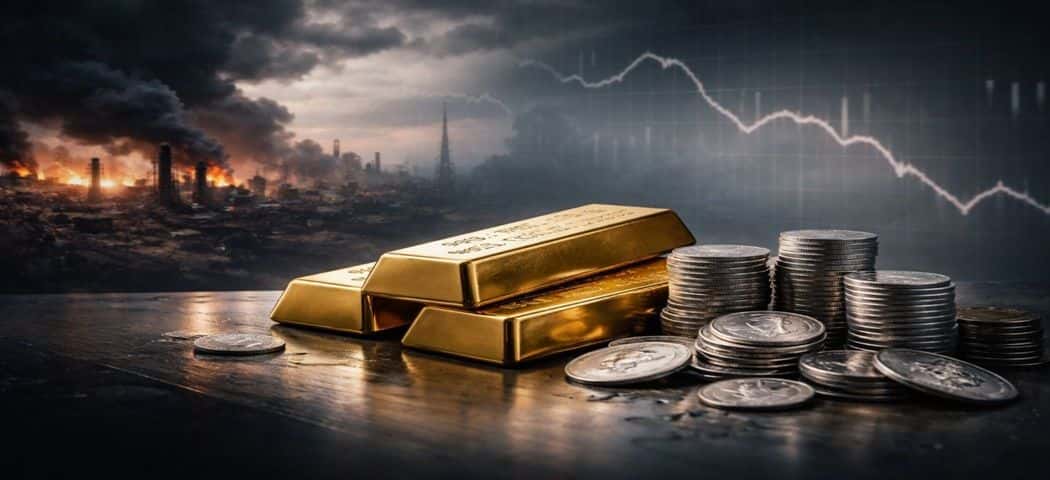
Gold Price Drop Explained: Is the Safe-Haven Narrative Changing?
Gold and silver have long been considered reliable safe-haven assets during times of geopolitical conflict. Yet in 2026, investors are facing a surprising reality: despite rising global tensions and ongoing conflict, both metals are declining. This unexpected move has left many questioning why the gold spot price and silver spot price are falling instead of rising. Understanding this shift requires a deeper look at modern market dynamics, where macroeconomic forces, liquidity flows, and investor positioning often outweigh traditional safe-haven behavior.
The “Broken” Safe-Haven Narrative Explained
Historically, war and geopolitical instability drove investors toward precious metals, pushing prices higher. However, today’s financial environment is far more complex. Instead of reacting purely to headlines, markets now respond to a broader mix of signals, including monetary policy, currency strength, and global liquidity conditions.
In the current cycle, the expected surge in gold has been muted. Rather than rallying, the gold market price is facing downward pressure, challenging long-held assumptions about how gold behaves during crises. This shift doesn’t mean gold has lost its safe-haven status entirely—but it does indicate that other forces are temporarily dominating price action.
A Stronger U.S. Dollar Is Pressuring Gold and Silver
One of the primary reasons behind the gold price drop in 2026 is the strength of the U.S. dollar. Because gold and silver are priced in dollars globally, a stronger dollar makes these metals more expensive for international buyers, reducing demand.
As the dollar index rises:
-
Gold becomes less attractive relative to cash holdings
-
Silver faces similar pressure due to currency dynamics
-
Commodity prices broadly experience downward momentum
This inverse relationship is one of the most consistent drivers of short-term movement in the precious metals spot prices and remains a key factor behind the current decline.
Rising Treasury Yields Are Competing With Precious Metals
Another critical factor influencing why gold is down today is the rise in U.S. Treasury yields. Unlike bonds, gold and silver do not generate interest or yield. When bond yields increase, they offer investors a more attractive alternative for capital allocation.
This creates:
-
Capital rotation out of gold into income-producing assets
-
Reduced demand for non-yielding safe havens
-
Increased downward pressure on the current gold price
As yields climb, even geopolitical uncertainty may not be enough to offset the appeal of higher returns in fixed-income markets.
Liquidity Selling and Market Positioning
In today’s highly interconnected financial system, large institutional players and hedge funds often drive short-term price movements. When markets experience volatility, investors may sell gold and silver—not because they’ve lost confidence, but because they need liquidity.
This phenomenon, known as liquidity-driven selling, can lead to:
-
Rapid declines in gold and silver prices
-
Temporary disconnects between fundamentals and price
-
Increased volatility across precious metals markets
In such environments, the metal prices may reflect broader market stress rather than traditional safe-haven demand.
Risk-On Sentiment and Crypto Competition
Adding to the complexity, investor sentiment has recently shifted toward a “risk-on” environment. Instead of seeking safety in metals, some capital is flowing into higher-risk assets like equities and cryptocurrencies.
Bitcoin and other digital assets are increasingly viewed as alternative hedges, drawing attention away from traditional safe havens. This shift contributes to:
-
Reduced inflows into gold and silver
-
Increased competition for capital allocation
-
Changing perceptions of what constitutes a safe-haven asset
As a result, the silver price falling alongside gold reflects not just macro pressure, but evolving investor preferences.
Industrial Demand and Silver’s Unique Position
While silver often follows gold, it also behaves differently due to its industrial applications. Demand from sectors such as solar energy, electronics, and manufacturing continues to influence its price.
However, in the short term:
-
Macroeconomic pressures outweigh industrial demand
-
Price movements can amplify broader market trends
This dual nature explains why silver prices may decline even when long-term fundamentals remain supportive.
Is This a Temporary Shift or a Structural Change?
The current divergence between geopolitical risk and precious metals performance raises an important question: is this a temporary anomaly or a lasting change?
Most analysts agree that:
-
Gold still functions as a long-term hedge against inflation and currency risk
-
Short-term movements are increasingly driven by macroeconomic factors
-
Safe-haven demand may return quickly if conditions worsen
In other words, the narrative isn’t broken—it’s evolving. Investors must now consider a wider range of variables when interpreting the gold market analysis and price direction.
Understanding Today’s Gold and Silver Market
The reason gold and silver are falling despite war lies in the interplay of multiple powerful forces: a strong dollar, rising yields, liquidity pressures, and shifting investor sentiment. While this challenges traditional expectations, it also highlights the growing complexity of global markets.
For investors tracking the gold spot price today or analyzing the silver price trend, the key takeaway is clear—precious metals no longer move based on a single narrative. Instead, they respond to a dynamic mix of economic, financial, and geopolitical influences.
Understanding these drivers not only explains today’s price action but also provides valuable insight into where gold and silver may be headed next.
Related reading you may find interesting:
Why Gold Is Falling as Oil Prices Surge in 2026