View Charts
Why Gold Is Falling as Oil Prices Surge in 2026
 0
0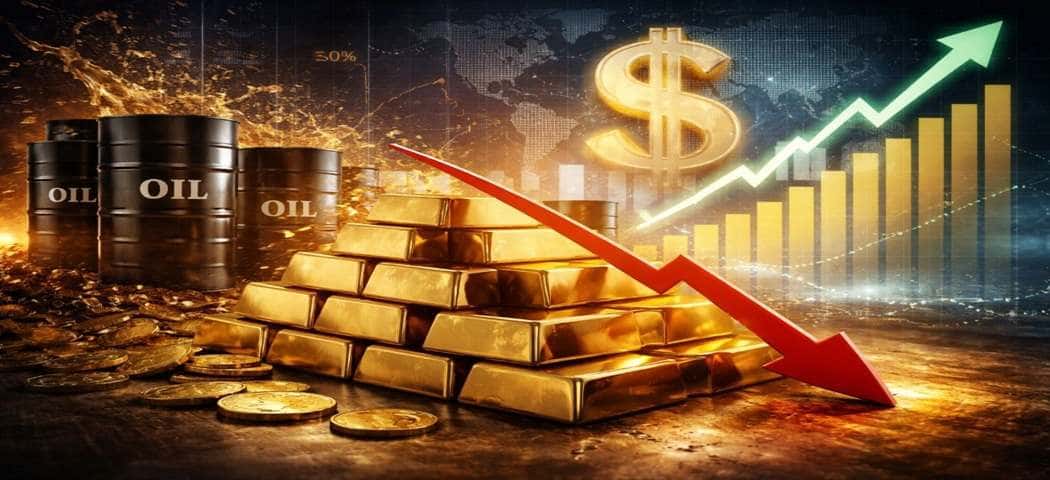
A Market Shift Redefining Gold’s Role
In a market environment where geopolitical conflict and rising energy prices would traditionally send gold soaring, 2026 is telling a different story. Investors searching why gold is falling are encountering a surprising contradiction: even as oil prices surge and global tensions intensify, the gold spot price has been trending lower. This shift reflects a deeper transformation in how macroeconomic forces influence precious metals.
Rather than reacting directly to geopolitical risk, markets are now responding to a chain reaction driven by energy costs, inflation, and central bank policy. Understanding this evolving relationship is critical for investors tracking both the spot price of gold and broader precious metals trends.
The New Macro Chain: Oil, Inflation, and Interest Rates
At the center of today’s market behavior is a powerful sequence of events:
Rising Oil Prices → Higher Inflation → Elevated Interest Rates → Gold Weakness
As oil prices climb—driven by supply disruptions and geopolitical instability—energy costs ripple through the global economy. Transportation, manufacturing, and consumer goods all become more expensive, pushing inflation higher.
In response, central banks—particularly the Federal Reserve—are forced to maintain or even raise interest rates to control inflation. This policy shift has become the dominant force influencing financial markets, outweighing traditional safe-haven demand for gold.
This evolving oil prices gold correlation is no longer direct. Instead of boosting gold, rising oil is triggering inflationary pressure that ultimately leads to tighter monetary conditions—pressuring gold prices downward.
Why Gold Is Falling in a High-Inflation Environment
Historically, gold has been viewed as a hedge against inflation. However, the current environment introduces a critical nuance. Inflation alone does not drive gold higher—it is the response to inflation that matters most.
When inflation leads to higher interest rates, gold becomes less attractive. Unlike bonds or savings instruments, gold does not yield interest. As rates rise, investors shift capital toward assets that generate returns, reducing demand for gold.
This dynamic explains why the gold spot price today can decline even as inflation remains elevated. The opportunity cost of holding gold increases, and capital flows toward yield-bearing alternatives.
The Role of the U.S. Dollar in Gold’s Decline
Another key factor contributing to gold’s weakness is the strength of the U.S. dollar. Rising interest rates attract global capital into dollar-denominated assets, increasing demand for the currency.
As the dollar strengthens, gold becomes more expensive for international buyers, which reduces global demand. This inverse relationship between the dollar and gold adds another layer of downward pressure on prices.
For investors tracking the spot price of gold, understanding currency movements is just as important as monitoring inflation or geopolitical risk.
Silver and the Broader Precious Metals Market
While gold is experiencing a decline, silver has often been falling even faster. The silver spot price is more sensitive to economic conditions due to its strong industrial demand.
As oil-driven inflation raises concerns about slowing economic growth, expectations for industrial activity weaken. This puts additional pressure on silver, which is heavily used in sectors like electronics, solar energy, and manufacturing.
At the same time, silver’s smaller market size and higher volatility amplify price movements, making declines more pronounced during periods of macroeconomic stress.
Why Geopolitics Is No Longer the Primary Driver
One of the most notable changes in today’s market is the reduced influence of geopolitical events on gold prices. Traditionally, conflict and uncertainty would drive investors toward safe-haven assets.
However, in 2026, markets are prioritizing interest rates and monetary policy over geopolitical risk. Even significant global events are being filtered through the lens of inflation and central bank response.
This shift marks a transition to what many analysts describe as a “rates over geopolitics” environment—where financial conditions, rather than headlines, dictate market direction.
Investor Takeaways: Navigating a Changing Market
For investors, this evolving landscape requires a new approach to analyzing precious metals. Key factors to watch include:
-
Federal Reserve policy and interest rate expectations
-
Oil price movements and their impact on inflation
-
Strength of the U.S. dollar
-
Industrial demand trends affecting silver
Understanding these drivers can provide better insight into short-term price movements and help investors make more informed decisions.
A New Era for Gold Pricing Dynamics
The current decline in gold prices during a period of rising oil and geopolitical tension highlights a fundamental shift in market behavior. The traditional relationship between crisis and gold demand has been disrupted by the powerful influence of interest rates and monetary policy.
As long as rising oil prices continue to fuel inflation—and central banks respond with tighter policy—the pressure on gold may persist. For investors, recognizing this new macro chain is essential to understanding where precious metals may head next in an increasingly complex global economy.