View Charts
What is BU - Defining Conditions
 0
0People confuse different coin conditions all the time. Whether you are a newbie to coin collecting/investing or a seasoned veteran, many conditional terms may confuse people. A coins condition is a vital aspect of the coin itself. In fact, a certain condition can add or devalue a coin of upwards to hundreds of dollars! This is why understanding all the terminology is crucial in the coin game. Conditional terms include uncirculated, BU, premium uncirculated, circulated, abrasions, cull, and “milky”. Throughout this article, we will discuss all of these conditions, how they differentiate from one another, and what they mean to your coins!
Uncirculated
The term Uncirculated defines a coin not intended for conventional circulation; such as modern pennies, nickels, dimes, and quarters. Within the uncirculated condition, we get derivative terms such as brilliant uncirculated (commonly known as BU) and premium uncirculated. Although these terms can at times be interchangeable, brilliant uncirculated and premium uncirculated have slight specifications that differentiate them from one another.
Brilliant Uncirculated
Brilliant Uncirculated (BU) acts as a sister term from the original uncirculated term. However, BU means something different for vintage and modern coins. For vintage coins, the BU condition separates into three segments: BU, Choice BU, and Gem BU. A vintage coin that’s in regular BU condition has a grading from MS 60 to MS 70. This grading is then further broken down by choice BU and gem BU. Choice BU usually grades around MS 63 and MS 64. Gem BU is generally known to be graded MS 65, up to a perfect grade of MS 70 (See Learning Center Article on Grading). For a modern coin, the BU condition does not specify a specific range of grades. BU for a modern coin just means the coin is in mint state with at most a few imperfections.
Premium Uncirculated
Premium uncirculated also acts as a sister term for a coin in uncirculated condition. The premium uncirculated term has been picked up by different mints, most popularly the South African mint, to describe the uncirculated condition of a coin. Premium uncirculated and brilliant uncirculated are not too different from one another but can be interchangeable by different mints.
Circulated
A circulated coin is described as a coin that has been distributed to the public such as modern pennies, nickels, dimes, quarters, and etc. The circulated term applies to any coin that has any type of wear. As coins get circulated, the luster deteriorates quickly due to them being touched by bare hands, dropped on the streets, and anything else that can happen to the loose change in your pocket. During a coins circulation cycle, they begin to show signs of other conditions such as abrasions, cull, and milk spots. A coin with scratches from everyday use has abrasions. Coins in cull condition are in very bad shape. Cull coins get graded around poor-1 since they are in such bad condition. This can happen to any coin, usually due to extensive environmental damage. What factors classify a coin as circulated or uncirculated? In the process of classifying a coin, there are two major factors that express the difference between each condition. The first condition is the quality of the mint luster on the coin. Another distinction that classifies a coin as circulated or not is if there is a trace of wear from everyday use. If a coin meets both these conditions then it will be classified as an uncirculated coin.
Got Milk?
Another condition a coin may come in is “milky”. A coin that is "milky" just means it has some white spots on it. Unfortunately, a coin having white spots does not determine whether it has been circulated or not. White spots can appear on any modern coin. The spots are believed to appear due to the planchets (the round disk that is struck into a coin) being washed. If not dried off completely, spots will form from the remnants of the solution. There is no way of knowing if a coin will develop white spots until they actually appear. Due to this, any coin bought runs the risk of becoming “milky”.
Premiums
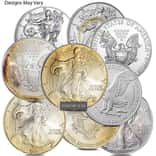
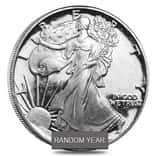
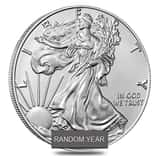
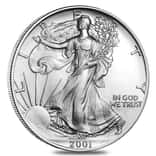
Every coins premium will reflect what condition it is in. Let's take the beloved Silver Eagle as an example. If one random year silver eagle comes in BU condition and a different random year silver eagle has abrasions, then the silver eagle in BU condition will have a higher premium to it. All condition types can raise or lower the premium of any coin. The amount a coin a appreciates or depreciates depends on what condition it is in, how severe any damage is, and of course every other factor besides the condition.
Other articles: Bitcoin Crashes, Rallies, Bullion Exchanges Exclusive Dragon Privy Silver Mouse Coin, Silver price and gold price, 2016 Silver Proof American Liberty Medals, Austrian Mint- 825th Anniversary Silver Coins.