View Charts
Silver vs Gold: Choosing the Right Metal for Your Portfolio
 0
0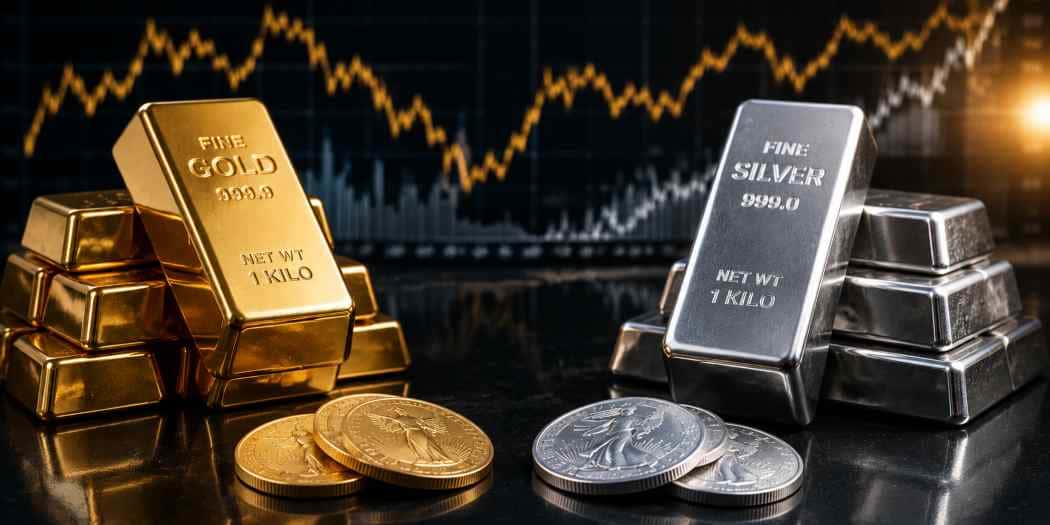
How Investors Are Reassessing Silver vs Gold in 2026
In 2026, the debate around silver vs gold has become more relevant than ever as investors navigate persistent inflation pressures, shifting real yields, and uneven global growth. Both metals serve as foundational elements in a precious metals portfolio, but they behave differently under macroeconomic stress. Gold is widely recognized as a monetary safe haven, while silver carries a hybrid identity driven by both investment demand and industrial consumption.
Understanding how these two metals respond to economic cycles, liquidity conditions, and supply constraints is essential for building a resilient investing metals strategy. As volatility returns across global markets, allocation decisions between gold and silver are increasingly shaping portfolio performance outcomes.
Market Forces Shaping Silver and Gold in Modern Cycles
The relationship between silver and gold is heavily influenced by macroeconomic forces such as interest rate expectations, inflation data, and U.S. dollar strength. Gold typically responds more directly to monetary policy expectations and geopolitical risk, while silver reacts more sharply to economic expansion and contraction cycles due to its industrial applications.
In periods of economic uncertainty, gold tends to outperform as investors seek stability. Silver, however, often lags initially but can experience sharper upside moves when industrial demand rebounds. This dynamic creates cyclical divergence between the two metals, making timing and macro awareness critical for portfolio allocation strategies.
Historical Performance and Volatility Divergence
Historically, silver has demonstrated significantly higher volatility than gold. While gold tends to move in steadier long-term trends, silver often amplifies both upside and downside price action. This is partly due to its smaller market size and dual role as both an industrial and monetary metal.
During major market disruptions, such as financial crises or inflationary spikes, gold typically leads initial safe-haven inflows. Silver may underperform during early stages but can outperform gold during recovery phases when industrial production and manufacturing activity accelerate. This performance asymmetry is a key consideration when evaluating portfolio allocation between the two metals.
Inflation Protection and Real Yield Sensitivity
Both gold and silver are widely viewed as inflation hedges, but their sensitivity to inflation and real yields differs. Gold generally reacts more directly to changes in real interest rates, as higher yields increase the opportunity cost of holding non-yielding assets.
Silver is influenced by the same macro variables but adds another layer of complexity due to its industrial demand exposure. When inflation rises alongside strong economic activity, silver may outperform gold due to increased manufacturing demand. However, in stagflationary environments or aggressive tightening cycles, silver can experience more pronounced downside pressure.
Supply Constraints and Industrial Demand Pressure
One of silver’s defining characteristics is its structural supply deficit, driven by consistent industrial consumption in electronics, solar panels, and medical technologies. Unlike gold, which is largely accumulated and stored, silver is frequently consumed and not fully recycled back into supply chains.
Gold, by contrast, is primarily driven by investment demand and central bank reserves. This fundamental difference means silver’s spot price is more sensitive to real-world industrial cycles, while gold is more responsive to macroeconomic uncertainty and monetary policy shifts.
Portfolio Allocation Strategies for Modern Investors
When constructing a precious metals portfolio, investors often use gold as the stabilizing core and silver as a higher-volatility growth component. A common approach is to maintain a higher allocation to gold during uncertain macro environments and gradually increase silver exposure during economic recovery phases.
This balancing strategy allows investors to benefit from gold’s stability while capturing silver’s cyclical upside potential. The ratio between the two metals—often tracked through the gold-to-silver ratio—serves as a key indicator for relative valuation and timing decisions.
The Gold-to-Silver Ratio: How Investors Measure Relative Value
The gold-to-silver ratio is one of the most widely used valuation tools in precious metals investing, showing how many ounces of silver are needed to purchase one ounce of gold. For example, if the gold spot price is at $4,300 per ounce and silver is trading at $70 per ounce, the ratio would be approximately 61:1. This relationship helps investors understand whether gold or silver is relatively expensive or undervalued at a given point in the cycle.
Historically, the ratio does not remain fixed and tends to move in long-term cycles driven by macroeconomic conditions, industrial demand, and investor sentiment. Over time, investors have broadly categorized the ratio into three practical zones:
-
High Ratio: 80:1 and above
Typically indicates silver is undervalued relative to gold. These levels often appear during economic uncertainty, recessions, or periods when gold outperforms due to safe-haven demand. -
Average Range: 50:1 to 70:1
Considered a more balanced equilibrium zone where both metals reflect mixed macro conditions and neither is strongly outperforming for extended periods. -
Low Ratio: 30:1 to 50:1
Often associated with strong silver performance, usually during economic expansions, inflationary growth phases, or periods of heightened industrial demand.
Investors use the gold-to-silver ratio as a strategic allocation and timing tool. When the ratio is elevated, some market participants increase silver exposure in anticipation of mean reversion, expecting silver to outperform gold over time. When the ratio compresses, investors may shift toward gold for relative stability and wealth preservation.
While not a precise forecasting instrument, the ratio is especially useful when combined with macroeconomic indicators such as inflation trends, Federal Reserve policy expectations, and industrial production data. In practice, it helps investors identify relative value opportunities between silver and gold, making it a core metric for portfolio allocation decisions in the precious metals market.
Institutional Flows and Market Structure Dynamics
Institutional participation plays a significant role in shaping both gold and silver markets. Central banks continue to accumulate gold as a reserve asset, reinforcing its long-term monetary role. Silver, however, is more influenced by ETF flows, industrial hedging, and speculative trading activity.
Exchange-traded funds provide liquidity access for both metals, but gold ETFs typically exhibit more stable inflows during risk-off environments. Silver ETFs tend to experience more volatility, reflecting broader risk sentiment and industrial demand expectations. Futures markets also amplify short-term price movements, particularly in silver due to its smaller liquidity base.
Risk Scenarios and Economic Cycle Sensitivity
Silver and gold respond differently to key risk scenarios. In recessionary environments, gold typically strengthens as capital shifts toward safe-haven assets. Silver may decline initially due to reduced industrial demand. In contrast, during expansionary phases or reflationary cycles, silver often outperforms due to rising manufacturing activity.
Geopolitical risk events also tend to favor gold more consistently, while silver reacts in a more delayed and amplified manner depending on broader economic implications. Understanding these behavioral differences is essential for managing downside risk and optimizing timing in precious metals exposure.
Long-Term Outlook for Silver vs Gold Allocation
Looking ahead, both silver and gold are expected to remain critical components of diversified investment strategies. Gold will likely continue serving as a monetary hedge against currency debasement and systemic risk, while silver maintains its dual role as an industrial and investment metal.
The long-term outlook suggests continued structural demand for silver driven by green energy transitions and technological applications, while gold retains its dominance in reserve assets and wealth preservation. Investors who understand the complementary nature of these metals may be better positioned to navigate shifting macroeconomic conditions.
Related reading you may find interesting:
The History of U.S. Silver Dollars and Their Investment Appeal
Silver ETFs vs Physical Silver in 2026: Investment Strategy Insights