View Charts
Silver Surges Toward $62: What’s Driving the Breakout?
 0
0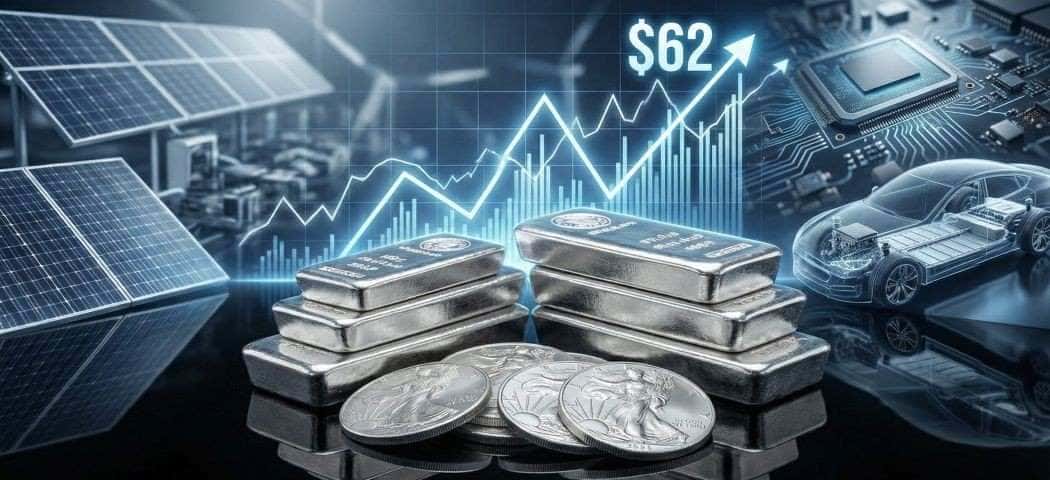
A New High for Silver as Momentum Builds
Silver is once again seizing the spotlight as prices surge toward $62 per ounce, marking one of the strongest rallies in modern precious-metals history. Once overshadowed by gold's record-setting ascent, silver is now breaking out with exceptional force — and investors are asking the same urgent question:
What is pushing silver to new highs, and could this be just the beginning of a larger move?
The price of silver has climbed steadily through the final months of 2025, gaining momentum from a mix of Federal Reserve policy shifts, tightening global supply, and escalating industrial demand. With silver outperforming nearly every major asset class, many analysts now believe the metal may be entering a structural bull market heading into 2026.
Why Silver Is Rocketing Toward $62 per Ounce
Silver’s rally is not the product of a single catalyst — it is the convergence of powerful economic, monetary, and industrial forces. The Fed’s recent rate cut may have sparked part of the move, but several underlying conditions were already building pressure beneath the market.
1. Reaction to the Federal Reserve Rate Cut
The December rate cut lowered the federal funds target range and immediately pressured real yields. As yields fall and the U.S. dollar weakens, non-yielding assets like silver become more attractive. Investors seeking inflation hedges and safe-haven protection often turn to silver when monetary policy shifts toward easing.
The Fed’s language, signaling potential further adjustments in 2026, amplified expectations for continued liquidity — a backdrop that historically supports higher silver prices.
2. Expanding Industrial Demand Across Key Sectors
Unlike gold, silver’s value is tied not only to investment sentiment but also to broad industrial use. Demand continues to accelerate in:
-
Solar and renewable energy technologies
-
Electric vehicles and advanced battery systems
-
Semiconductors and high-frequency electronics
-
Medical and antimicrobial applications
The solar sector alone is projected to increase silver consumption by double digits in 2026. As global electrification expands, silver's role as a critical industrial metal grows stronger.
3. Tightening Global Supply and Refinery Constraints
Silver mine output has struggled to keep pace with demand. Challenges include:
-
Declining ore grades
-
Reduced capital investment in exploration
-
Political and labor instability in major mining regions
-
Supply-chain bottlenecks affecting refiners and smelters
With demand rising and supply growth limited, the market is increasingly vulnerable to price spikes.
4. Retail and Institutional Investment Rising Together
For the first time in several years, both retail investors and institutional buyers are increasing their positions in silver simultaneously. ETF inflows, bullion demand, and futures participation all point to stronger confidence in silver’s long-term trajectory.
Is This the Beginning of Silver’s Next Major Bull Market?
Silver’s surge toward $62 reflects more than short-term enthusiasm — it mirrors structural trends often seen at the start of major multi-year rallies. Historically, silver has outperformed gold during easing cycles and inflationary environments, and many analysts believe the current environment resembles past periods of sustained upside.
The gold-to-silver ratio, while still elevated, is now compressing — a classic sign that silver is beginning to lead instead of follow.
If industrial demand accelerates and monetary conditions remain supportive into early 2026, silver could see additional breakouts beyond current highs.
What Should Silver Investors Do Now?
With silver making headlines, investors may wonder whether to buy, hold, or wait. While every portfolio is different, several strategic principles apply:
1. Treat Pullbacks as Opportunities
Silver’s volatility is well known — but historically, sharp dips in rising markets have been strong entry points for long-term accumulation.
2. Balance Physical Silver With Other Precious Metals
Owning physical silver bars, coins, or rounds provides a foundation, while supplementing with gold or platinum helps diversify risk.
3. Monitor Fed Signals and Real Yields
Silver responds strongly to real interest rates, liquidity trends, and currency shifts. Staying informed on policy direction is essential.
4. Consider Dollar-Cost Averaging
Gradual accumulation helps smooth volatility and builds long-term position strength as the market evolves.
5. Stay Aware of Industrial Trends
Tracking developments in solar, EV, and semiconductor sectors can offer early signals of demand surges.
Silver’s Path Into 2026: A Metal Ready for Its Moment
Silver’s rise toward $62 per ounce reflects a market undergoing profound change. With global demand expanding, supply tightening, and monetary policy shifting toward easing, silver is benefiting from a rare alignment of factors that could continue shaping the market well into 2026.
As the precious-metals landscape evolves, silver appears poised to play a central role — not just as a historical store of value, but as a foundation of new technological and economic systems.
For investors seeking growth, protection, and diversification, silver’s breakout may be more than a headline — it may be a preview of what lies ahead.
Related reading you may find interesting:
Could Silver Reach $300? The Global Electrification Shockwave