View Charts
Precious Metals Fall Sharply as Dollar Strengthens & Investors Take Profits
 2
2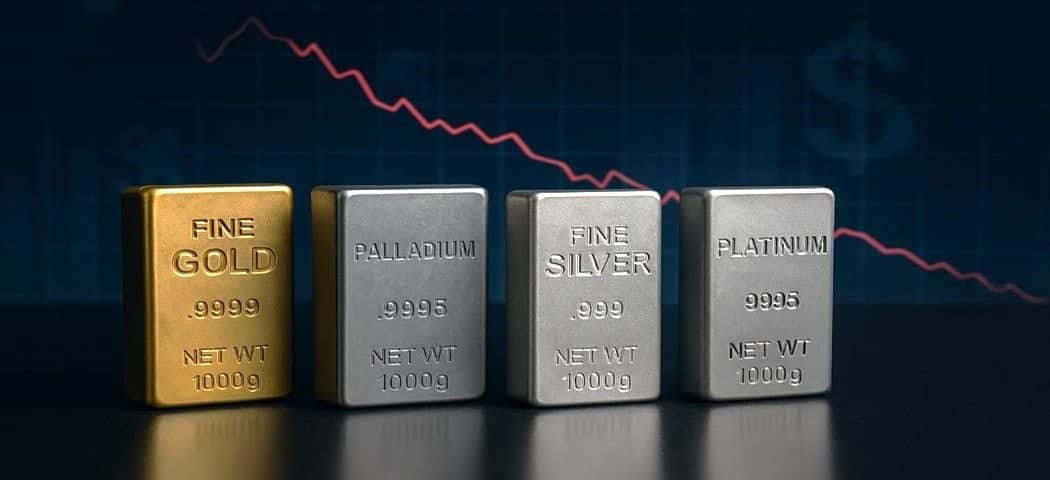
A Sudden Pullback Across the Metals Market
After weeks of upward momentum, gold, silver, platinum, and palladium prices are experiencing a sharp decline today, signaling a moment of recalibration in the global precious metals market. While such downturns can spark concern among investors, today’s pullback is largely rooted in macroeconomic shifts, profit-taking, and short-term dollar U.S. dollar strength rather than a fundamental change in the long-term outlook for bullion.
According to Reuters, gold’s record-breaking rally paused as the U.S. dollar strengthened, making dollar-denominated metals more expensive for buyers in other currencies. This, combined with recent gold price highs and renewed expectations surrounding U.S. Federal Reserve policy, has led investors to lock in profits and temporarily step back from the market.
Understanding the Key Drivers Behind Today’s Drop
-
U.S. Dollar Strength and Rate Expectations
A stronger U.S. dollar remains one of the most influential short-term forces affecting precious metals. When the dollar rises, it typically weighs on commodities priced in dollars, such as gold and silver bullion.Recent comments from Federal Reserve officials suggesting a “data-dependent” approach to rate cuts have created uncertainty in currency and bond markets. This environment has pressured metals, as higher real yields make non-yielding assets like physical gold and silver less immediately attractive to traders monitoring the gold price today.
-
Profit-Taking After Record Highs
Both gold and silver reached notable highs earlier this month, driven by geopolitical concerns, inflation resilience, and robust investor demand. Such peaks often lead to short-term corrections as institutional and retail investors take profits — a healthy and expected part of any bullish trend. -
Industrial Metals Under Pressure
While gold is primarily seen as a safe-haven asset, platinum and palladium are heavily tied to industrial demand — especially the automotive and green technology sectors.Recent data pointing to slower global manufacturing growth and muted demand from China has softened sentiment for these metals, amplifying today’s platinum and palladium price decline.
A Historical Perspective: Corrections Within Long-Term Bull Markets
Market corrections in precious metals are nothing new.
-
During the bull run of 2010–2011, gold reached an all-time high near $1,900 per ounce before falling nearly 20% in the following months — only to recover over the next decade as inflation and global uncertainty persisted.
-
Similarly, in 2020, gold rallied to a new record above $2,000 amid pandemic-related volatility, then retreated sharply as monetary tightening began — yet regained strength as investors sought long-term inflation protection.
These moments remind seasoned investors that short-term dips often precede longer-term strength, particularly when structural economic factors — like persistent inflation, fiscal deficits, and geopolitical risk — remain unresolved.
Industrial Demand and the Platinum Group Metals
Platinum and palladium, while part of the precious metals family, behave differently than gold and silver due to their industrial applications. Platinum is vital for catalytic converters, hydrogen fuel cell technology, and jewelry, while palladium remains essential to automotive emissions systems.
Economic slowdowns or shifts in production can temporarily suppress demand. However, the transition to cleaner energy and electrification continues to underpin the long-term investment case for both metals. As industrial demand rebounds, today’s weakness could create buying opportunities for long-term positioning in the platinum and palladium markets.
Investor Takeaways: Short-Term Volatility, Long-Term Value
Today’s selloff does not necessarily signal a bearish shift — rather, it underscores the interplay between monetary policy, currency strength, and investor sentiment.
-
A stronger dollar and interest-rate uncertainty have triggered near-term selling.
-
Profit-taking after recent record highs is a normal consolidation pattern.
-
Industrial softness affects platinum and palladium more directly but doesn’t undermine their strategic value.
For long-term investors, such corrections often open doors to buy gold bullion, silver coins, and platinum bars at more favorable prices. Historical data consistently shows that dips within bull markets tend to reward those with patience and conviction.
Looking Ahead: A Market in Transition
As 2025 progresses, attention will remain on the Federal Reserve’s next moves, global economic data, and industrial recovery trends. Should rate cuts resume later in the year, the U.S. dollar could weaken, providing renewed momentum for gold and silver bullion prices.
Meanwhile, the broader inflationary backdrop and geopolitical tensions continue to support the case for holding tangible assets like gold and silver. Investors seeking diversification may view today’s dip not as a retreat — but as a strategic pause in a continuing long-term gold bull market.
Shop Precious Metals at Bullion Exchanges
At Bullion Exchanges, we provide access to the finest gold, silver, platinum, and palladium coins and bars from globally recognized mints, including the Perth Mint, the Royal Canadian Mint, and the United States Mint. Whether you’re investing for wealth preservation or portfolio diversification, our wide selection and competitive pricing make it simple to navigate today’s dynamic precious metals market.
Explore our full catalog today and position your portfolio for the next chapter in the evolving story of global bullion markets.
Other articles that may interest you:
How the U.S. Dollar Impacts Gold and Precious Metals Prices
Gold & Silver Prices Plunge as Dollar Surge Sparks Market Shock
2 Comments