View Charts
Gold & Silver Prices Plunge as Dollar Surge Sparks Market Shock
 0
0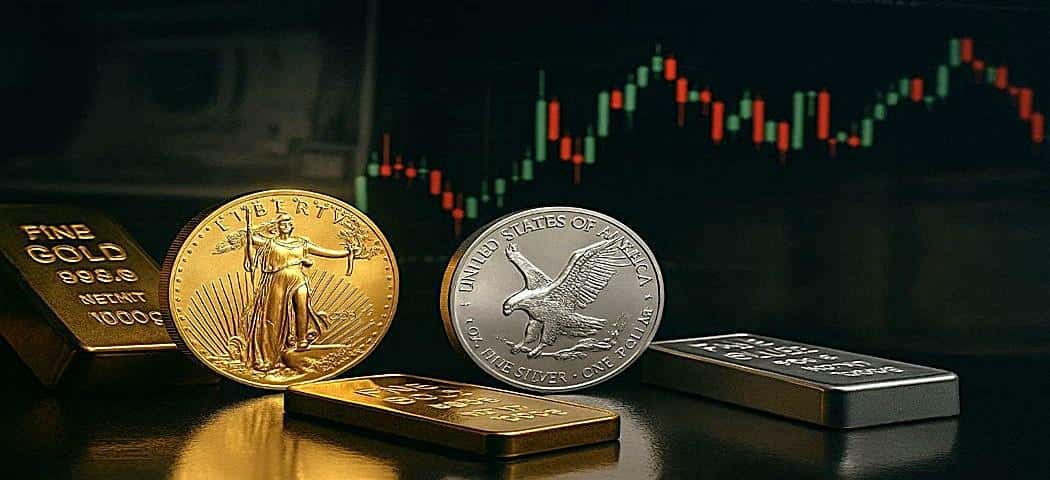
Historic Selloff Hits Precious Metals
In a dramatic market turn, gold, silver, platinum, and palladium prices all plummeted today as the U.S. dollar strengthened sharply and investors rushed to take profits following recent record highs.
By midday, the gold price today showed a steep 5.5% drop, while silver prices plunged more than 7.6%, marking one of the sharpest one-day declines in recent years. Platinum fell nearly 6%, and palladium slipped just over 5%, extending the precious metals market’s downturn.
While the sudden decline shook investors, analysts say the selloff reflects a mix of macroeconomic shifts, Federal Reserve policy signals, and profit-taking behavior, rather than a change in long-term fundamentals for precious metals investing.
Why Did Precious Metals Prices Drop Today?
Today’s selloff was driven by several key factors, led by U.S. dollar strength, rising Treasury yields, and changing expectations for interest rate cuts.
1. The U.S. Dollar’s Surge and Its Ripple Effect
The U.S. Dollar Index (DXY) soared to multi-month highs as traders reacted to stronger-than-expected U.S. economic data, including robust manufacturing and retail sales reports. The data suggested continued economic strength, pushing investors to scale back expectations for near-term Federal Reserve rate cuts.
A strong U.S. dollar often moves inversely to the gold and silver markets, since precious metals are priced in dollars globally. When the greenback rises, foreign investors must spend more of their local currency to buy gold, silver, platinum, or palladium — leading to lower global demand.
This dollar-driven pressure was amplified today, as investors quickly repositioned into cash and U.S. bonds, causing the gold price correction and the broader silver price drop.
2. Rising Treasury Yields and the Interest Rate Outlook
Alongside the dollar’s strength, Treasury yields climbed significantly as investors responded to the Federal Reserve’s latest comments about maintaining higher interest rates for longer. Higher real yields reduce the appeal of non-yielding assets like physical gold and silver bullion, while encouraging capital inflows into bonds.
The Federal Reserve’s rate policy remains a powerful driver of precious metals prices, as shifts in interest rate expectations can cause rapid inflows and outflows from gold and silver ETFs, futures, and physical holdings.
For investors who track both the U.S. dollar and gold price trends, today’s move highlights the importance of monitoring Fed statements and economic indicators closely.
3. Technical Selling Accelerates Market Pressure
In addition to macroeconomic drivers, today’s precious metals market selloff was intensified by technical factors. After gold’s recent record highs, traders had established tight stop-loss levels around key support zones. When prices broke below those thresholds, algorithmic and futures-based selling cascaded through the market, amplifying declines across the board.
While unsettling in the short term, this kind of technical correction is a normal part of bull markets. Similar patterns have occurred during previous gold rallies, including in 2011 and 2020, where steep selloffs were followed by strong recoveries.
The Federal Reserve’s Influence on Gold Prices
The Federal Reserve’s monetary policy remains at the heart of gold and silver volatility.
Recent remarks from Fed officials signaling a “higher for longer” interest rate environment have reshaped market sentiment. Investors now expect fewer rate cuts in early 2026, extending the U.S. dollar’s dominance and applying short-term pressure to gold and silver bullion prices.
However, this outlook also reinforces the long-term investment case for precious metals. Periods of high interest rates and a strong dollar have historically been followed by sharp rebounds once policy pivots toward easing.
For seasoned investors, such corrections often create strategic entry points to buy gold bullion and buy silver bars at lower prices before the next leg higher.
Industrial Metals Under Added Pressure
Beyond gold and silver, platinum and palladium also suffered as weaker demand from the automotive and industrial sectors weighed on sentiment. Both metals are heavily used in catalytic converters and green technology, making them sensitive to global manufacturing trends.
Recent data showing softer industrial production in China and Europe contributed to today’s drop, pushing the platinum price down 5.9% and the palladium price lower by 5.3%.
Still, as global manufacturing and clean energy investments recover, analysts see long-term upside for both metals.
Historical Perspective: Corrections Are Common
This isn’t the first sharp correction in the precious metals market, and it likely won’t be the last. During previous cycles — from the 2013 gold crash to the 2020 pandemic volatility — metals experienced swift selloffs before stabilizing and regaining strength as inflation and geopolitical risks persisted.
These historical patterns underscore that gold and silver investing remains resilient, especially during periods of economic uncertainty and currency fluctuations.
Investor Outlook: Turning Volatility Into Opportunity
While the steep gold and silver price decline may appear alarming, it has also reset valuations across the market — a development that long-term investors often view as an opportunity.
Sharp downturns like today’s frequently create attractive entry points to accumulate physical bullion for diversification and inflation protection. With demand for tangible assets expected to rise once inflationary pressures return, today’s prices could represent a favorable moment to buy gold and silver online at lower premiums.
Investors seeking stability may also find value in diversifying across platinum and palladium for industrial exposure and future growth potential.
The Bigger Picture: Market Confidence and Future Rebounds
In the broader context, today’s price drop reinforces how closely gold prices and U.S. dollar trends are intertwined. If the dollar’s rally fades or rate-cut expectations return, the metals market could rebound quickly.
Persistent geopolitical tensions, fiscal deficits, and inflation risks remain key long-term drivers supporting the precious metals outlook for 2025 and beyond.
Resilience in the Face of Volatility
The U.S. dollar’s surge may have triggered today’s steep selloff, but it hasn’t altered the enduring fundamentals that make gold and silver essential pillars of wealth preservation. Historically, such market downturns have been temporary pauses in broader long-term uptrends, especially when inflationary pressures, fiscal uncertainty, and shifting monetary policies remain in play.
Periods of short-term volatility often serve as moments of recalibration — opportunities for perspective rather than panic. Gold, silver, platinum, and palladium continue to offer stability amid changing market conditions, serving as both tangible stores of value and strategic portfolio hedges against currency fluctuations.
As the markets digest this week’s volatility, patient investors have an opportunity to reassess and buy gold bullion, silver coins, platinum, and palladium while prices remain low. History shows that resilience in the precious metals market has often rewarded those who act with patience, conviction, and a focus on long-term value.
Another article that may interest you:
Gold Prices Face Crosswinds: Can the Bull Market Hold?