View Charts
Philadelphia Mint Strikes 250 Silver July 4 Declaration Quarters
 4
4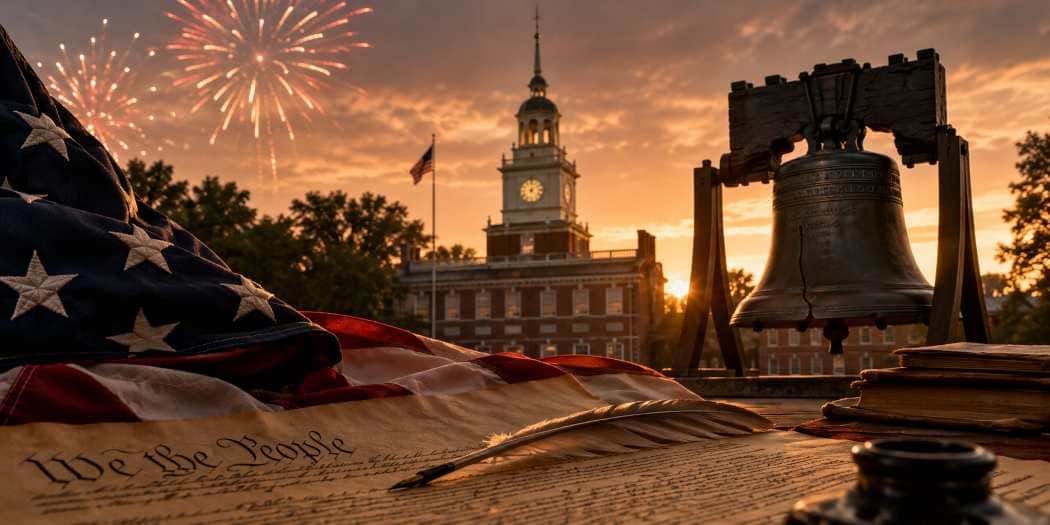
America's Semiquincentennial Quarter Program Just Became Even More Exclusive
The United States Mint's Semiquincentennial quarter program has already sparked nationwide excitement by releasing 250,000 Declaration of Independence quarters with a special "July 4" privy mark into circulation, sending collectors to banks and pocket change in search of one of America's most anticipated modern circulation finds. Now, the Mint has revealed another chapter in the celebration—one designed not for circulation, but for history.
On July 6, 2026, the United States Mint announced that it struck 250 special 2.50-ounce silver Declaration of Independence quarters on Independence Day itself, creating what may become one of the most distinctive collectibles of the nation's 250th anniversary. Unlike their circulating counterparts, these pieces were produced exclusively for future public auction, with each coin individually edge numbered from 1 through 250.
While the circulating July 4 privy mark quarters invite millions of Americans to participate in a nationwide coin hunt, these silver editions represent the opposite end of the collecting spectrum. Produced in an extraordinarily limited quantity and struck specifically to commemorate the Semiquincentennial, they were created as lasting keepsakes of one of the most significant anniversaries in American history.
Why Philadelphia Matters
The Mint's decision to strike these coins at the Philadelphia Mint adds another layer of historical significance.
Philadelphia occupies a unique place in the American story. It was there that delegates to the Second Continental Congress adopted the Declaration of Independence on July 4, 1776, establishing the birth of the United States. Exactly 250 years later, the same city became the birthplace of these commemorative silver quarters, creating a symbolic connection between the nation's founding and its Semiquincentennial celebration.
Although the modern Philadelphia Mint is no longer housed in its original eighteenth-century location, it remains one of the country's most important coining facilities and continues a tradition that stretches back to the nation's earliest years. Producing these special quarters in Philadelphia reinforces their historical connection in a way that few other mint locations could.
The coins themselves also carry symbolism beyond their design. Each contains 2.50 troy ounces of silver, a deliberate weight that reflects America's 250th anniversary. Rather than selecting a conventional one-ounce or five-ounce format, the Mint chose a specification that directly commemorates the Semiquincentennial, making the metal content itself part of the story.
For collectors, those details distinguish these pieces from a simple silver version of the circulating quarter. Their significance lies not only in their limited mintage, but also in the thought behind when, where, and how they were produced.
What Makes These Silver Quarters Different?
Although both coins share the same Declaration of Independence–themed design featuring Founding Father Thomas Jefferson, the principal author of the Declaration of Independence, along with the Liberty Bell, the "P" mint mark, and the distinctive "July 4" privy mark, the similarities largely end there.
The circulating quarters were created to encourage public participation in the Semiquincentennial celebration. With 250,000 examples entering circulation through banks and financial institutions, collectors must rely on patience, timing, and a bit of luck to discover one in pocket change or bank rolls. Their appeal comes from the excitement of the hunt as much as from the coin itself.
The new silver editions, by contrast, were never intended to circulate. Each was struck on July 4, 2026, bears no mint mark, and has been individually laser-numbered on its edge from 1 through 250, creating a level of exclusivity rarely seen in modern U.S. Mint products. Rather than rewarding persistence in circulation, these pieces will be available only through a future Mint auction, with the sale date expected to be announced later.
That distinction gives collectors two very different ways to participate in the Semiquincentennial. One celebrates the thrill of discovery, while the other emphasizes rarity, craftsmanship, and historical preservation.
A Modern Collectible With Historic Symbolism
The Mint's decision to produce only 250 examples reflects more than simple scarcity. Nearly every aspect of these quarters appears designed to reinforce the significance of America's 250th anniversary.
The coins were struck on Independence Day, at the Philadelphia Mint, using a 2.50-ounce silver format that mirrors the nation's 250-year milestone. Even the edge numbering transforms each coin into an individually identifiable artifact rather than one example from a larger production run.
Unlike traditional commemorative releases sold directly through the Mint's online catalog, these pieces will be offered at auction. That approach recognizes their unusual status and allows the market to determine their ultimate value while preserving their exclusivity. Because no retail price has been announced, collectors will have to wait until the auction is scheduled to learn what level of interest these historic issues generate.
While it is too early to predict future values, several characteristics already distinguish these quarters from typical modern Mint products: an exceptionally low mintage, a meaningful strike date, individualized numbering, and a direct connection to one of the most important anniversaries in American history.
Two Coins, One Historic Celebration
Taken together, the circulating July 4 privy mark quarter and the new 2.50-ounce silver edition demonstrate two very different approaches to commemorating the Semiquincentennial.
The circulating quarter invites Americans to experience the excitement of discovery by searching everyday change for a coin that could easily pass unnoticed. The silver version preserves that same design in a format intended to become a permanent reminder of the nation's 250th birthday. One is meant to circulate through commerce; the other is meant to be preserved for generations.
That thoughtful balance may ultimately become one of the defining achievements of the Mint's Semiquincentennial program. By creating both an accessible circulating collectible and an ultra-limited silver counterpart, the U.S. Mint has given collectors of every level an opportunity to participate in the celebration of America's founding.
As anticipation builds for the future auction, these 250 silver quarters already stand apart as more than commemorative coins. Struck on July 4, 2026, in the city where the Declaration of Independence was adopted, individually numbered, and containing 2.50 troy ounces of silver in honor of the nation's 250th anniversary, they represent a unique intersection of history, craftsmanship, and modern numismatics—one that is likely to remain among the most memorable collectibles of the Semiquincentennial era.
4 Comments