View Charts
Is Gold Finite? Understanding the World’s Limited Supply
 0
0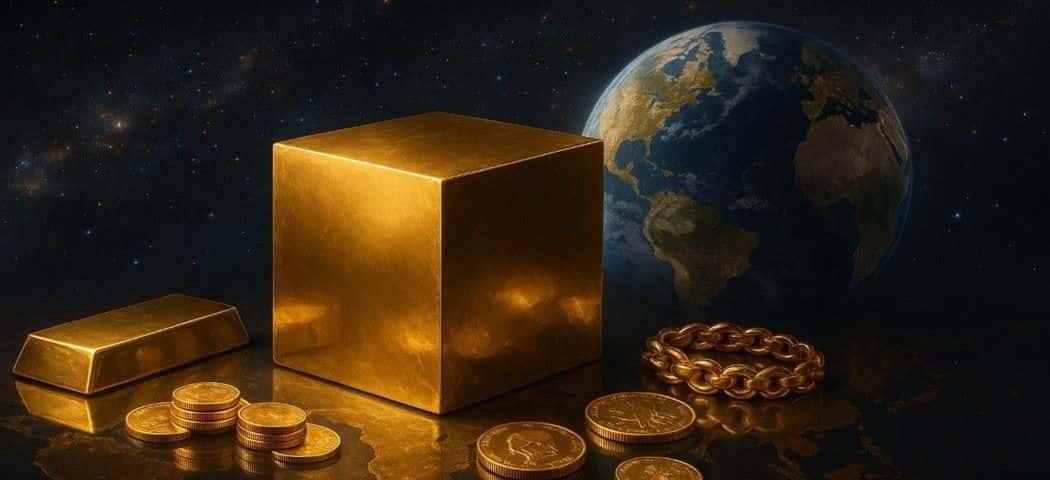
The Enduring Allure of a Rare Element
Gold has captivated humankind for thousands of years — not only for its beauty but for its scarcity. As investors and collectors continue to seek refuge in this timeless metal, one question often arises:
Is there a finite amount of gold in the world?
The answer is yes. Gold is a non-renewable natural resource, meaning every atom of gold on Earth was created billions of years ago, long before our planet formed. There is no natural process on Earth that creates new gold. Every coin, bar, or piece of jewelry we hold today was forged in the aftermath of ancient stellar explosions — making gold both cosmic and irreplaceable.
Gold’s Origins: Born in the Stars
Unlike most metals, gold wasn’t born in the Earth’s crust but in supernovae and neutron star collisions, cataclysmic events that scattered heavy elements across the universe. When the Earth formed, those gold atoms became trapped within its crust and mantle.
That ancient origin story explains why gold is so limited in quantity — it’s literally a relic of the stars. Every ounce mined, traded, or worn today is part of that same, unchanging celestial supply.
How Much Gold Exists in the World?
According to the World Gold Council (2024), roughly 213,000 metric tons of gold have been mined throughout human history. To visualize this, imagine a single cube of gold measuring only 23 meters (about 75 feet) on each side — small enough to fit inside an ordinary building.
This may sound like a lot, but when compared to global population and demand, it’s astonishingly little. Gold’s rarity — coupled with its lasting luster and resistance to corrosion — is what has preserved its role as the foundation of wealth and stability for millennia.
Gold Yet to Be Mined
Geologists estimate that about 50,000 metric tons of gold remain in the Earth’s crust that could be mined profitably with current technology. However, new large-scale gold discoveries have become increasingly rare.
Much more gold exists deeper underground, in the Earth’s core, and even dissolved in seawater — but extracting it would require technologies far beyond what’s economically viable.
This growing scarcity underscores gold’s enduring value: it is limited by nature and increasingly difficult to obtain.
Where the World’s Gold Resides
All the gold ever mined still exists today in some form. Because gold doesn’t rust, corrode, or decay, it’s essentially indestructible. The global above-ground stock is distributed roughly as follows:
-
46% in Jewelry: The largest share, reflecting gold’s dual role as adornment and cultural wealth.
-
22% in Private Investment: Gold coins, bars, and ETFs held by individuals and institutions.
-
17% in Central Bank Reserves: Strategic holdings used as financial backstops and inflation hedges.
-
15% in Technology and Industry: Used in electronics, aerospace, and medical devices for its conductivity and durability.
This distribution shows that while much of the world’s gold is ornamental, a substantial portion remains deeply tied to monetary and industrial systems.
Recycling: Gold’s Infinite Lifespan
Gold’s near-indestructibility means that almost every ounce ever mined is still in circulation. When old jewelry, coins, or industrial components are recycled, the gold can be refined and reused indefinitely without losing purity.
This makes gold one of the few truly sustainable natural resources, constantly re-entering the global economy. In times of scarcity or high demand, recycled gold plays a vital role in balancing supply without depleting the planet’s remaining reserves.
Why Gold’s Finite Nature Matters to Investors
The reality that gold is finite — and becoming harder to mine — is one of the key reasons it remains a powerful safe-haven asset and store of value. Its supply grows at a slow, predictable pace (about 1.5–2% annually) while demand continues to expand through jewelry, technology, and central bank reserves.
For investors, that limited supply supports long-term stability and price resilience. Unlike paper currencies, which can be printed endlessly, gold’s rarity ensures that it retains purchasing power over generations.
When analyzing the gold price today, it’s important to remember that behind every price movement lies a fundamental truth: gold’s scarcity is what gives it enduring worth.
The Future of Gold: Innovation and Exploration
While gold is finite, the ways we access it continue to evolve. Advances in mining efficiency, refining technology, and recycling innovation are helping meet demand sustainably. Some scientists have even proposed the possibility of asteroid mining, since certain asteroids contain high concentrations of precious metals — though such ventures remain speculative and decades away.
For now, the Earth’s supply is effectively capped, making gold’s rarity one of the most reliable constants in global finance.
A Finite Treasure in an Infinite Universe
In a world driven by digital currencies and endless production, gold stands apart as a tangible constant — finite, ancient, and enduring. Every ounce we hold is part of a legacy that predates humanity and will outlast every modern technology.
Its scarcity, beauty, and permanence make gold not just a commodity, but a testament to stability and value across civilizations.
For those looking to own a piece of this cosmic rarity, Bullion Exchanges offers a wide selection of gold coins, bars, and investment-grade bullion — each representing a timeless store of wealth in a finite world.
Explore our collection today and invest in the world’s most enduring asset — gold.
Leave a comment
Jewelry (46%)
Private investment in coins, bars, and ETFs (22%)
Central bank reserves (17%)
Technology and industry (15%)
Its versatility contributes to steady demand across different sectors.