View Charts
Gold’s Stellar Origins: How the Universe Created the Precious Metal We Treasure Today
 0
0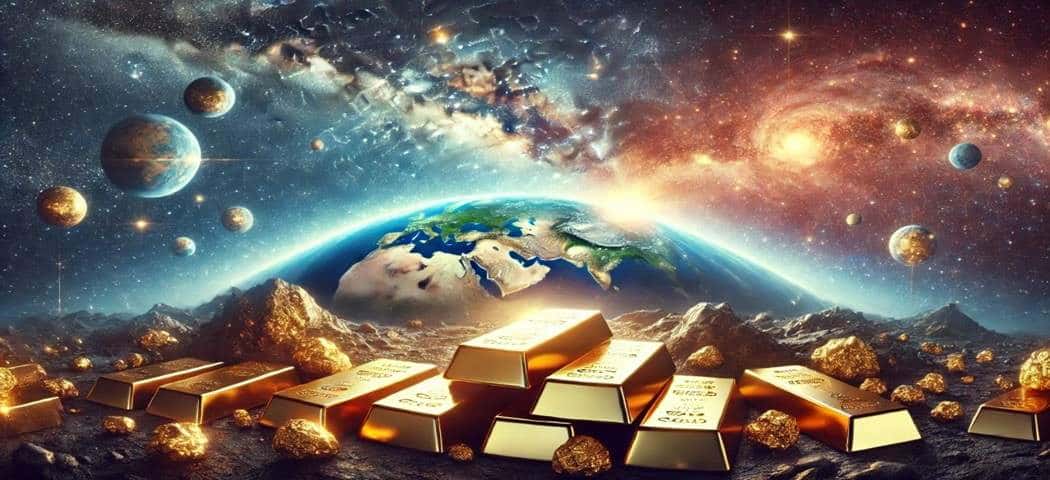
Where Does Gold Come From?
Gold is one of the most valued and sought-after elements on Earth, prized for its beauty, rarity, and utility. But have you ever wondered where this extraordinary metal truly comes from? Its origins are not only ancient but also cosmic, tied to some of the most powerful and violent events in the universe. Let’s explore how gold formed billions of years ago and why its celestial beginnings make it so exceptional.
The Formation of Gold in Supernovae
Gold’s journey begins in the hearts of dying stars during supernova explosions. When massive stars exhaust their nuclear fuel, they collapse under their own gravity, triggering an enormous release of energy. In these extreme environments, lighter elements like hydrogen and helium undergo nucleosynthesis, fusing into heavier elements, including gold.
These stellar explosions scatter the newly formed gold into space, enriching the interstellar medium with this rare metal. This process explains why gold is not only scarce but also found in relatively small quantities on Earth.
The Role of Neutron Star Collisions
Another fascinating source of gold is the collision of neutron stars, which are the ultra-dense remnants of massive stars. When these stars merge, they release incredible amounts of energy, creating conditions ideal for the formation of heavy elements like gold.
In 2017, astronomers confirmed this theory when gravitational waves from a neutron star collision were detected, accompanied by a gamma-ray burst. This discovery demonstrated that such cosmic events significantly contribute to the universe’s supply of gold.
How Gold Arrived on Earth
While gold formed billions of years ago in space, its journey to Earth was far from straightforward. During the planet’s formation, most of the heavy elements, including gold, sank to the core. The accessible gold we mine today arrived later, delivered by meteorites during a period known as the Late Heavy Bombardment, around 4 billion years ago.
These meteorites deposited gold into Earth’s crust, making it possible for humans to access this precious metal. This celestial delivery is why gold is often described as a gift from the stars.
Where Is Gold Found on Earth?
The gold we mine today is found in specific regions where geological processes concentrated this precious metal over millions of years. The highest concentrations of gold are typically located in:
1- Primary Deposits (Lodes): Gold in its natural form is found in veins or lodes, embedded within quartz rocks or sulfide minerals. These deposits are usually located in regions with significant geological activity, such as mountain ranges.
2- Secondary Deposits (Placer Gold): Weathering and erosion transport gold from its primary source, depositing it in riverbeds, alluvial plains, and coastal sediments. Placer gold is easier to extract due to its proximity to the surface.
3- Global Hotspots:
- South Africa: Home to the Witwatersrand Basin, which has produced nearly half of the gold ever mined.
- Australia: Known for its massive reserves in the Super Pit and Kalgoorlie mines.
- China: The world’s largest gold producer today, with major mining operations in Shandong Province.
- Russia: Rich gold reserves in Siberia and the Far East regions.
- United States: Nevada’s Carlin Trend is one of the most prolific gold-mining regions in the world.
Gold deposits are scattered globally, but these regions account for a significant portion of the metal’s extraction.
Modern Gold Mining Techniques
Extracting gold today involves a combination of advanced technology and traditional methods. Modern mining focuses on efficiency and sustainability, with techniques tailored to different types of deposits:
-
Open-Pit Mining: Used for large, near-surface deposits, this technique involves removing vast amounts of soil and rock to access gold-bearing ore. Mines like the Super Pit in Australia exemplify this method.
-
Underground Mining: For deeper deposits, miners dig shafts and tunnels to extract gold ore. This is commonly seen in South African gold mines, where operations often extend several kilometers below the surface.
-
Placer Mining: This method is used to extract gold from alluvial deposits, typically through panning, sluicing, or dredging. It remains popular for small-scale operations and hobbyists.
-
Cyanide Leaching: A chemical process used to extract gold from low-grade ore. Gold is dissolved in a cyanide solution and then recovered through precipitation or electrolysis. This method is highly effective but requires strict environmental controls.
-
Biomining: An emerging technique where microorganisms are used to leach gold from ore, offering a more sustainable and environmentally friendly alternative to traditional methods.
Advancements in technology, like automated machinery and drone mapping, have improved mining safety and efficiency, while sustainability practices aim to minimize environmental impact.
These processes ensure that gold continues to be accessible, supporting its role as a valuable asset for investment, industry, and cultural heritage.
The Unique Properties of Gold
Gold’s extraordinary cosmic origins give it qualities that make it both valuable and indispensable:
-
Rarity: One of the Earth’s rarest elements, gold owes much of its scarcity to its formation in stellar events like supernovae and neutron star collisions.
-
Durability: Gold’s resistance to corrosion and ability to retain its luster over time make it ideal for lasting applications.
-
Malleability: Its softness allows it to be shaped into intricate designs, making it perfect for fine jewelry and artistic creations.
-
Conductivity: Gold’s exceptional ability to conduct electricity and heat makes it crucial in fields such as electronics and aerospace.
These remarkable traits, paired with its celestial origins, have established gold as a symbol of wealth and longevity.
Why Gold Is So Highly Valued
Gold has captivated civilizations for millennia, not just for its physical attributes but also for its broader significance:
-
Scarcity Across the Universe: Formed in rare cosmic events, gold is inherently valuable due to its limited availability on Earth and in the universe.
-
Historical and Cultural Importance: Revered for centuries as a marker of prosperity, power, and divinity, gold’s legacy spans from ancient Egyptian artifacts to modern reserves.
-
Timeless Beauty: Gold’s untarnished brilliance and radiant appearance have made it a sought-after material for jewelry, art, and decoration.
-
Modern Utility: Its application in technology, medicine, and aerospace underscores its versatility and relevance in contemporary industries.
Gold’s scarcity, unmatched durability, and enduring cultural and economic significance solidify its role as a cornerstone of wealth preservation.
Gold’s Cosmic Connection to Investment
Understanding gold’s origins adds a deeper appreciation for its value—not just as a physical asset but as a remnant of the universe’s most spectacular events. When you invest in gold bullion, such as the American Gold Eagle, the 2025 1 oz PAMP Suisse Good Luck Koi Fish Gold Bar, or the 100 Gram Rand Refinery Gold Bar, you’re holding a piece of cosmic history that has journeyed billions of years to reach your hands.
Gold is more than just a commodity; it’s a timeless connection to the stars. Its stability and rarity make it a perfect hedge against economic uncertainty, while its universal appeal ensures its place as a cornerstone in any investment portfolio.
A Precious Metal with a Stellar Legacy
Gold’s journey from supernovae and neutron star collisions to Earth underscores its extraordinary origins and enduring allure. As an investor or collector, owning gold is not only a way to secure your wealth but also a chance to connect with the universe’s ancient processes. Explore Bullion Exchanges’ collection of gold bullion and bring a piece of the stars into your portfolio today.