View Charts
GOLD, SILVER, AND BITCOIN PRICES, DAILY MARKET NEWS. OCTOBER 2023.
 0
0U.S. Treasury Boosts I Bond Interest to 5.27% Amid Inflation Concerns
By: Michael Figueroa
Oct. 31, 2023

Source: Canva
In response to the ongoing inflationary pressures, the U.S. Department of the Treasury has made a significant move by adjusting the interest rates for Series I savings bonds.
Starting from November 1, investors purchasing I bonds will benefit from an annual interest rate of 5.27% for the next six months, a considerable increase from the previous rate of 4.3%. This shift signals the Treasury's proactive approach to offering Americans a more advantageous investment option that keeps pace with inflation.
Investors eager to hedge against inflation can lock in this attractive rate, which stands as the fourth-highest since the inception of I bonds in 1998, by purchasing I bonds between November 1 and the end of April 2024. This comes after the rate peaked at an unprecedented 9.72% in May 2022 before dropping to 6.89% in November of the same year.
The I bonds can be conveniently purchased online through the TreasuryDirect platform, with individuals having the opportunity to invest up to $10,000 each calendar year.
Additionally, there's the option to acquire an extra $5,000 worth of paper I bonds through federal tax refunds, further extending investment capabilities.
Understanding I bond rates involves two components: a fixed rate and a variable rate that adjusts according to inflation. The U.S. Treasury reviews and potentially modifies these rates every six months, in May and November.
While the fixed rate remains constant for the duration of the bond once purchased, the variable rate is subject to change every six months from the purchase date, not the Treasury's announcement date.
As of the latest update, the variable rate stands at 3.94%, with a fixed rate of 1.30%, culminating in the announced combined yield of 5.27% for bonds purchased within the specified timeframe.
Financial experts recognize the new fixed rate as a particularly advantageous move for long-term investors, highlighting the strategic benefit of these bonds in a diversified portfolio, especially during times of economic uncertainty.
For existing I bond holders, the upcoming rate change will apply differently based on the initial issue date of the bonds. The rate resets occur semi-annually from the bond's purchase month.
Consequently, the impact of the new headline rate will vary for each investor, depending on the fixed rate locked in at the time of their bond's acquisition.
This initiative by the U.S. Treasury offers a silver lining for savers seeking shelter from inflation's eroding effects, providing a secure and beneficial avenue to preserve and grow their investments in an uncertain economic landscape.
Today in precious metals, gold prices fell 0.54% to $1,984.93 per ounce. Silver slumped 1.91% to $22.83 per ounce. Platinum increased by 0.43% to $931.50 per ounce, while Palladium dipped by 0.35% to $1,123.00 per ounce. Bitcoin jumped 0.05% to $34,523.00.
U.S. Q3 GDP Growth Surpasses Expectations Amid Challenges
By: Michael Figueroa
Oct. 26, 2023

Source: Canva
In the face of numerous economic challenges, the U.S. economy displayed remarkable resilience as its Gross Domestic Product (GDP) growth surged past expectations in the third quarter.
The Commerce Department reported that the GDP, which measures the total output of goods and services in the U.S., grew at a seasonally adjusted rate of 4.9% annually from July to September. This pace eclipsed the previous quarter's 2.1% growth rate and outperformed the 4.7% projection by economists surveyed by Dow Jones. The growth trajectory is the most robust since Q4 of 2021.
Several factors contributed to this surge:
- Consumer Spending: Accounting for a colossal 68% of the Q3 GDP, consumer spending rose by 4%, a significant leap from the mere 0.8% in the second quarter. Both goods and services observed heightened consumer interest with growth rates of 4.8% and 3.6%, respectively.
- Inventories, Investments, and Government Spending: Inventory contributions added 1.3 percentage points to the GDP growth. Meanwhile, gross private domestic investments skyrocketed by 8.4%, and government spending and investments grew by 4.6%.
The steady GDP growth has come as a surprise to many who predicted a possible recession. However, consumers continue to spend robustly, drawing from their savings and increasing credit card usage. Notably, the personal saving rate dipped to 3.8% in Q3 from 5.2% in Q2.
The Federal Reserve's policy, marked by the swiftest rate hikes since the 1980s, hasn't deterred this growth. While the central bank aims to curb inflation, currently surpassing its 2% annual target, its measures have yet to hinder economic growth. The chain-weighted price index, an inflation gauge accounting for consumer shopping pattern shifts, witnessed a rise of 3.5% in Q3, a substantial increase from Q2's 1.7%.
Despite this optimistic economic landscape, challenges loom on the horizon. Elevated gas prices, the impending resumption of student loan payments, and geopolitical tensions, including conflicts in Israel and the war in Ukraine, cast shadows of uncertainty.
Michael Arone, Chief Investment Strategist for U.S. SPDR Business at State Street Global Advisors, encapsulated the sentiment, stating that while consumers and the government had been spending robustly, this might be the peak GDP figure for the upcoming quarters.
Nevertheless, Matthew Ryan, Head of Market Strategy at Ebury, expressed confidence in the U.S. economy's resilience, emphasizing that no recession appears imminent, and the Federal Reserve can maintain higher interest rates without causing an economic downturn.
Are the Chinese Trading U.S. Dollar Assets for Gold?
By: Michael Figueroa
Oct. 25, 2023

Source: Canva
Recent financial patterns suggest that China might be leaning more towards gold than U.S. dollar-denominated assets. In just August, Chinese investors offloaded a considerable $21.2 billion in U.S. assets, mostly U.S. Treasury bonds, while the country's central government has been regularly buying gold. What's behind this shift?
Deciphering the Shift
Two primary motivations can be identified behind China's movement away from U.S. assets:
-
Empowering the Yuan: China's currency, the yuan, hasn't been performing well against the dollar, primarily due to the soft Chinese economic landscape. By selling dollar-linked assets and acquiring yuan, China can potentially elevate its currency's standing.
-
Towards De-dollarization: China's move also indicates an interest in reducing its reliance on the U.S. currency. This inclination is multifaceted, rooted in both economic and geopolitical concerns. From an economic perspective, China would naturally be cautious about the escalating U.S. debt situation, with a deficit of $1.7 trillion in fiscal 2023 and a national debt surpassing $33.5 trillion. The geopolitical angle stems from the U.S.'s past strategy of employing its reserve currency status to influence other countries' foreign policies.
The dwindling confidence in the U.S. dollar, compounded by the U.S.'s excessive borrowing, spending, and strategic utilization of the dollar for political ends, is driving countries to seek alternatives. For China, wanting to distance itself from the dollar-centric global financial system, gold emerges as an attractive option due to its liquidity.
China's Gold Strategy
The aggressive stance of the People’s Bank of China towards gold is hard to miss. Up to the end of August, the bank has been on a ten-month spree, securing its position as the top central bank gold purchaser of the year. Since the previous year, the bank has expanded its reserves by 217 tons, holding an official 2,165 tons of gold, approximately 4% of its complete reserves.
Historically too, China's affinity for gold is evident. Between 2002 and 2019, the bank added a significant 1,448 tons of gold to its reserves. While there was a brief pause in reporting for over two years, it resumed last year, sparking speculations that the country might have discreetly increased its gold reserves during this interlude.
Suspicions have always lingered that China possesses more gold than it publicly acknowledges. Rumors suggest that China might be stashing gold away from the public eye within a separate entity, the State Administration for Foreign Exchange (SAFE).
Last year's surge in central bank gold holdings, without reported sources, has further fueled such speculations. Especially since significant banks like China and Russia often withhold such information. Many market watchers believe that China is the undisclosed entity, amassing gold to decrease its dollar exposure.
However, it's worth noting that China often favors a gradual approach in its financial strategies. The implications of its recent shift from U.S. dollar assets will only be fully realized in time. Observers anticipate that if China indeed ramps up its gold reserves, it could have a positive impact on gold prices in the near future.
Bitcoin Soars Past $35,000 in 2023: A Deeper Dive into the Rally
By: Michael Figueroa
Oct. 24, 2023

Source: Canva
Bitcoin has made headlines once more, demonstrating its notorious volatility and resilience. In 2023, the digital currency took a triumphant stride, briefly breaching the $35,000 threshold, a feat not seen since May of the previous year. This article seeks to shed light on the factors contributing to Bitcoin's latest bull run.
The Role of Short Liquidations
A prominent driving force behind Bitcoin's latest surge is the spate of short liquidations. Bitcoin faced significant short liquidations on consecutive days, with a hefty amount being liquidated within a short span. These figures, backed by data from reputable crypto data sources, highlight the unexpected momentum the crypto market can sometimes experience.
Optimism Around ETFs and the SEC's Stance
The financial landscape for Bitcoin ETFs (Exchange Traded Funds) saw a positive twist recently. The U.S. Securities and Exchange Commission's (SEC) decision not to contest a particular ruling generated hope for the forthcoming approval of a Bitcoin-related ETF. The introduction of a Bitcoin ETF can offer investors a structured means to capitalize on Bitcoin's price dynamics without the need to hold the cryptocurrency.
Financial Titans Advocate for Bitcoin ETFs
Prominent financial institutions, including BlackRock, Invesco, Fidelity, and Grayscale, have been ardently pushing for the inception of Bitcoin ETFs. They position these prospective assets as more stabilized investment channels when compared to the more unpredictable direct crypto investments. Furthermore, key players in the cryptocurrency arena, such as Coinbase, remain optimistic about the SEC greenlighting a Bitcoin ETF.
A Year of Ups and Downs in the Crypto World
The cryptocurrency domain has witnessed a roller-coaster of events in recent times. This includes the unraveling of high-profile cases like the bankruptcy of FTX and accusations levied against companies such as Terraform. Bitcoin itself had a wild ride, peaking at an impressive valuation in November 2021, only to see a sharp decline a year later amidst market turmoil.
The SEC's stance towards certain crypto entities has been another focal point. Legal confrontations between the regulatory body and crypto giants like Coinbase and Ripple underscore the evolving regulatory landscape. The murkiness of crypto regulations in the U.S. has often led to outcries from industry participants, with some contemplating moves to more accommodating jurisdictions.
In Conclusion
Bitcoin's ascent beyond the $35,000 mark in 2023 has reignited discussions and analyses on the cryptocurrency's potential trajectory. With evolving regulations, heightened institutional interest, and market dynamics at play, Bitcoin's path is closely watched by both seasoned investors and newcomers to the crypto space.
Market Event Insights: GDP & Earnings Analysis
By: Michael Figueroa
Oct. 23, 2023

Source: Canva
The Federal Reserve’s media blackout this week serves as a brief pause after a frenetic week filled with statements and resultant market fluctuations.
Last Thursday, Chairman Powell's remarks stirred the market, significantly affecting rates and the curve. This raises questions about the Federal Reserve’s next move, the duration of their current standstill, and what these signify for the broader market.
Last week witnessed the 2s10s and 2s30s steepening notably. Jim Reid of Deutsche Bank (DB) highlighted the challenges in pinpointing the exact reason for such a dramatic movement.
Speculation suggests factors such as the long end being influenced by supply, concerns about the U.S. fiscal situation, potential extra funding for Israel, and oil price fluctuations.
Reid also voiced concerns about high yields, especially in the U.S. Considering the past decade where low to negative yields ruled due to Quantitative Easing (QE) to manage the global debt, a rapid surge in yields could pose risks.
This week, while there might be a lull in macroeconomic data, significant events are still in play.
Notably, earnings reports from big tech giants like Microsoft, Alphabet, Meta, and Amazon will take center stage. With these companies having a combined market cap of over $6tn and accounting for nearly 17% of the S&P 500, their performance will be keenly watched.
The recent 15.58% dip in Tesla’s share price is also noteworthy, as are the expectations for AI-focused stocks like Microsoft.
On the data front, Friday's U.S. core PCE reading will be in the spotlight. The preliminary Q3 GDP report, with economists projecting a 4.3% annualized growth compared to 2.1% in Q2, will also be of interest.
Other key data points include durable goods orders, advanced goods trade balance, new home sales, and the University of Michigan's consumer confidence numbers.
Globally, the European Central Bank (ECB) meeting on Thursday might not grab many headlines, but any discussion on further balance sheet reductions will be critical. With the Bank of Canada’s rate decision due on Wednesday and the global flash Purchasing Managers’ Index (PMI) releases scheduled, investors have a lot to monitor.
Europe’s economic sentiment will be gauged with consumer confidence metrics for the Eurozone, Germany, and France. Germany's business sentiment will also be assessed with the Ifo survey. The UK will focus on labor market data, and Japan's attention will be on Tokyo’s Consumer Price Index (CPI) and the services Producer Price Index (PPI).
In the earnings sector, aside from U.S. tech giants, a slew of companies across various industries are set to release their reports.
For the U.S. in particular, Goldman Sachs highlights the advance release of Q3 GDP and the durable goods report on Thursday, as well as the core PCE inflation report on Friday, as key events.
In summary, while there might be a temporary respite in Fed statements this week, the market has plenty to digest. From earnings of tech giants to macroeconomic data releases and central bank meetings, it promises to be another week filled with critical financial and economic insights.
Today in precious metals, gold prices fell 0.34% to $1,974.10 per ounce. Silver slumped 1.27% to $23.05 per ounce. Platinum increased by 0.17% to $896.50 per ounce, while Palladium grew by 3.07% to $1,133.00 per ounce. Bitcoin jumped 4.10% to $31,238.00.
Safe-Haven Assets: Gold and Silver Gain Traction Amid Rising Tensions
Oct. 20, 2023

Source: Canva
Amid escalating tensions in the Middle East and uncertainty pervading the global economic landscape, safe-haven assets like gold and silver are witnessing a robust demand.
Recent trends show investors are leaning towards these precious metals to hedge against rising geopolitical risks and financial market volatility.
Early U.S. trading on Friday highlighted this trend with gold prices surging. December gold prices touched a significant 2.5-month peak and are inching closer to the coveted $2,000.00 mark, last seen trading at $1,989.00, marking an increment of $8.40.
Meanwhile, December silver also gained ground, registering an increase of $0.244 to settle at $23.275.
Several factors contribute to this upward trajectory in gold and silver prices. The primary trigger appears to be the growing geopolitical tension in the Middle East.
Recent reports underscored this fact with the revelation of a U.S. warship having to deflect missiles aimed at it from Yemen.
The global stock market too reflects the effects of these tensions. Asian and European stock markets reported subdued activity with most stocks trading lower. Predictions suggest a mellow start for the U.S. stock indexes as the New York day trading session commences.
Another noteworthy point from Thursday was the address by Federal Reserve Chairman, Jerome Powell, to the Economic Club of New York.
Powell reaffirmed the concerns about the persistently high U.S. inflation rates and hinted at the need for a more muted economic growth trajectory to counterbalance it. However, these observations weren't groundbreaking, resulting in a muted market response.
External market dynamics also offer some interesting insights. The U.S. dollar index remains relatively stable, while Nymex crude oil prices are on an upward curve, hovering around $90.50 per barrel.
Meanwhile, the yield on the U.S. Treasury 10-year note has caught attention, touching 4.948%, a notable rise from its earlier mark of 5.0% on Thursday.
In the absence of any significant U.S. economic data release scheduled for Friday, the focus remains firmly on the performance of gold and silver.
From a technical analysis perspective, gold futures are demonstrating promising signs. The current momentum is skewed in favor of the bulls with prices consistently rising as indicated on the daily bar chart.
The immediate challenge for the bulls is to breach the resistance at $2,000.00 for December futures.
On the flip side, the bears aim to drive the prices below the support level of $1,900.00. Pertinent resistance and support levels are pegged at $1,997.60/$2,000.00 and $1,980.20/$1,968.90, respectively.
Silver's technical performance mirrors gold to an extent. While the bulls have a marginal edge in the near term, the price movement on the daily bar chart underscores an upward trend.
For December futures, the bulls target a closure above the technical resistance of $24.00.
Conversely, the bears have set their sights on driving prices below the $22.00 support level. The immediate resistance and support parameters stand at $23.49/$23.80 and $23.00/$22.785, respectively.
In conclusion, the global landscape characterized by geopolitical tensions, market predictions, and technical analyses points towards a sustained demand for gold and silver as safe-haven assets.
Investors and market participants would do well to keep a close watch on these precious metals as they navigate the uncertainties that lie ahead.
Addressing Persistent Inflation: Powell's Stance on Economic Growth
Oct. 19, 2023

Source: Canva
Federal Reserve Chairman Jerome Powell's recent remarks at the Economic Club of New York have drawn considerable attention.
While there have been some positive signs indicating cooling inflation, Powell maintained that these initial data points do not establish a definitive trend. He stressed the Federal Reserve's unwavering dedication to the set 2% inflation mandate.
The backdrop of these comments is the broader economic environment that continues to grapple with inflationary pressures.
Although there have been promising indicators in recent months, Powell underlined the importance of not rushing to conclusions based on limited data. He believes that the current inflation rate is still too elevated, and there is a long road ahead to ensure a sustainable move towards the target.
The unpredictability of economic factors means that there is a level of uncertainty about how long the present lower inflation readings will last or where the inflation rate will find its equilibrium in the upcoming quarters.
Central to Powell's address was the emphasis on the collective vision of the Federal Reserve. Despite potential hurdles and uncertainties, the aim remains clear: achieving a sustainable inflation rate of 2 percent. It is a commitment that he and his colleagues stand united on.
An intriguing aspect of his insights was the relationship between economic growth and the labor market in the context of inflation. Powell suggests that to consistently hit the 2% inflation target, the economy might need a period of slowed growth. This is especially pertinent when considering the labor market.
When the labor market thrives, it can exert upward pressures on wages, which might contribute to inflation. On the other hand, easing pressures within the labor market can mitigate those inflationary factors.
This approach is holistic, taking into account various economic aspects. It isn't just about adjusting interest rates, but a more nuanced understanding of the interplay between economic growth and labor market conditions.
In summary, Powell's insights provide a comprehensive look into the challenges of the current economic landscape, with inflation being a primary concern. The journey to a sustainable inflation rate is a multifaceted one, requiring a balance between economic growth, labor market dynamics, and central banking mechanisms.
As the Federal Reserve continues its mission, the focus remains on achieving long-term stability through a meticulous and data-centric approach.
Gold Prices React to Strong U.S. Retail Sales Performance
Oct. 17, 2023
Source: Canva
Gold prices experienced a slight decline in the wake of robust U.S. retail sales figures for September. The numbers surpassed market predictions, adding another layer of complexity to the economic recovery narrative.
In September, U.S. retail sales displayed a notable rise of 0.7%, as per the recent data disclosed by the U.S. Commerce Department. This growth followed an upwardly revised surge of 0.8% from the initial 0.6% in August.
It's worth noting that September's performance outstripped the economists' consensus, which had estimated a more modest increase of 0.3%.
Diving deeper into the components, core sales, which exclude vehicle sales, rose by 0.6% last month, doubly exceeding the market's forecast of 0.2%.
An essential element of the report, the control group, which provides a clearer picture by excluding autos, gas, building materials, and food services, marked a 0.6% advance. This came after a 0.3% rise in August, highlighting the sustained strength of consumer spending amid ongoing economic challenges.
However, the gold market exhibited sensitivity to these figures. Spot gold observed a dip from $1,926.58 just moments before the data's 8:30 a.m. EDT release, falling to $1,920.46 shortly afterward.
Nevertheless, it made a mild recovery, last trading at $1,923.70, reflecting a 0.18% ascent for the day.
This movement underscores the intricate relationship between economic indicators and precious metal markets. Stronger economic data often diminishes the allure of gold as a safe-haven asset.
As investors keep an eye on economic releases in the coming months, it will be intriguing to observe how gold prices maneuver in response to the evolving economic landscape.
Bitcoin's Brief Surge on False ETF News
Oct. 16, 2023
Source: Canva
The cryptocurrency landscape, known for its volatility, saw another dramatic turn as Bitcoin's price shot up on Monday. This swift ascent was in response to an inaccurate report suggesting that the SEC had greenlighted a spot bitcoin exchange-traded fund (ETF).
In a short time span, Bitcoin's price touched the $29,900 mark, showcasing a remarkable 10% increase. However, this sudden spike could have been more sustainable, with the currency shedding most of its newly acquired value. By day's end, Bitcoin had managed to hold onto a 4% increase, as per data from FactSet.
The frenzy was traced back to a post by Cointelegraph, a leading name in crypto news. Shared on social platform X, this post—later deleted—wrongly indicated that the Securities and Exchange Commission (SEC) had approved BlackRock’s iShares for a spot bitcoin ETF.
Addressing the oversight, Cointelegraph expressed regret over the unintentional spread of false information about BlackRock's Bitcoin ETF.
Through a statement on social media, the company acknowledged the error and mentioned its initiation of an internal probe to understand the root of the mix-up. Emphasizing its dedication to transparency, Cointelegraph assured that the results of the investigation would be shared with the public promptly, within a projected timeframe of three hours.
Reacting to the sequence of events, a representative from BlackRock clarified the real status of the iShares Bitcoin ETF to MarketWatch. The representative confirmed that, contrary to the misleading information, the ETF's application remains "under review by the SEC."
Up to this point, there has been no official comment from the SEC regarding the incident.
The unfolding of this episode underscores the crypto market's extreme sensitivity to news. It also emphasizes the critical responsibility news agencies bear in ensuring the accuracy of the information they share, especially in today's digital age where news spread is instantaneous.
Today in precious metals, gold prices fell 0.51% to $1,922.47 per ounce. Silver dropped 0.27% to $22.64 per ounce. Platinum increased by 1.72% to $894.47 per ounce, while Palladium dropped by 0.02% to $1,148.52 per ounce.
U.S. Wholesale Inflation Exceeds Expectations in September
Oct. 11, 2023

Source: Canva
U.S. wholesale prices demonstrated a greater-than-anticipated increase in September, hinting at persistent inflationary pressures within the nation's economy.
As reported by the Labor Department on Wednesday, the producer price index (PPI), which assesses the cost of finished goods for producers, witnessed a 0.5% rise in September, outstripping the Dow Jones' projection of a 0.3% ascent. This growth, however, is less than August's 0.7% climb.
Excluding energy and food, the core PPI observed a 0.3% uptick, compared to the anticipated 0.2%. When setting aside food, energy, and trade services, the index aligned with the expected increase of 0.2%.
Markets displayed a subdued response to the PPI announcement. Stock futures experienced a marginal dip, while the majority of longer-duration Treasury yields remained negative despite a slight rebound from their previous lows.
A significant portion of the inflationary pressure stemmed from the final demand for goods, which soared by 0.9% within the month. This surge was largely attributed to gasoline prices, which leaped by 5.4%.
Regarding services, costs escalated by 0.3% for final demand services, excluding trade, warehousing, and transportation. Moreover, the price of deposit services at commercial banks skyrocketed by 13.9%.
Year-over-year, the headline PPI rose by 2.2%, marking the most substantial surge since April. Though the rate had declined to a mere 0.2% in June, it has been progressively increasing since.
The PPI is perceived by markets as a precursor to inflation, as it evaluates the costs of intermediary goods that transition to consumer items.
A more scrutinized inflation metric, the consumer price index, will be disclosed by the Labor Department on Thursday, and it's projected to reveal a marginal decrease in inflation rates.
The Federal Reserve consults both indices when formulating policy decisions. In its bid to curb inflation, the central bank has been assertively increasing interest rates.
Lately, officials from the central bank have implied that the need for further hikes might be unnecessary, given the self-initiated sharp rise in Treasury yields. This realization has assuaged market concerns, positively impacting stock performance this week.
The Federal Reserve has set an annual inflation target of 2% but predicts that this rate won't be achieved for a few more years. Current market predictions suggest that the central bank will likely halt its rate increases in this cycle, even though one more hike is anticipated by the year's end.
Today in precious metals, gold prices grew 0.86% to $1,875.41 per ounce. Silver rose 0.93% to $22.02 per ounce. Platinum increased by 0.34% to $885.00 per ounce, while Palladium dropped by 0.13% to $1,168.00 per ounce. Bitcoin dipped 2.54% to $26,703.00.
Malaysia Pivots Towards Local Currencies in International Trade
Oct. 10, 2023

Source: Canva
In a significant move towards financial autonomy, Malaysia is actively reducing its reliance on the US dollar for trade. Prime Minister Anwar Ibrahim revealed that Malaysia would be boosting settlements in local currencies, particularly with its primary trading partners.
The drive to shift away from the US dollar is gaining traction in Southeast Asia. Malaysia has already brokered agreements with Indonesia, Thailand, and China - its largest trading collaborator - to prioritize the use of local currencies in trade and investment ventures.
This strategic transition is set against the backdrop of the Malaysian ringgit's declining value against the dollar. Currently, the ringgit hovers near its all-time lows, having lost nearly 7.6% of its value against the US dollar this year.
Economic observers in Southeast Asia have noted the region's growing inclination to adopt national currencies in international trade, marking a clear departure from the entrenched dominance of the US dollar.
Many believe that relying solely on the US dollar and its affiliated financial institutions might not be as relevant in the contemporary global economic landscape.
Malaysia's decision to leverage its local currency in international trade mirrors a broader sentiment across Southeast Asia. These nations aim to establish a more stable financial ecosystem, less susceptible to the volatility of the US dollar.
The implications of this pivot could reshape regional trade dynamics and potentially influence global financial frameworks in the coming years.
Israeli Shekel Hits Eight-Year Low Amid Escalating Violence
Oct. 9, 2023
Source: Canva
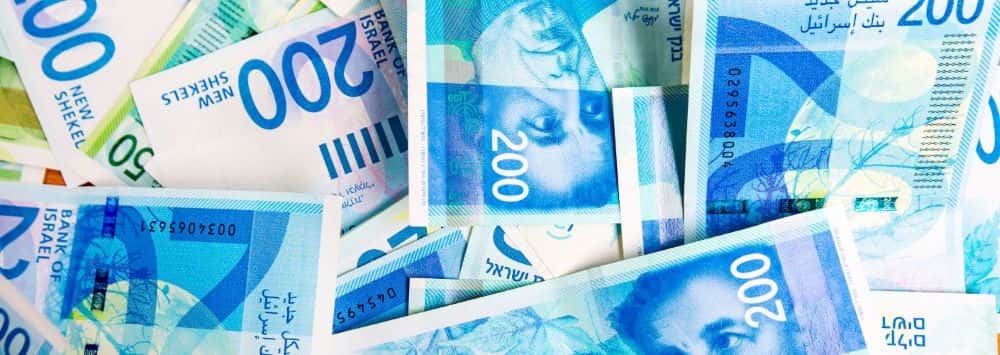
In the wake of intensified violence following an attack by Hamas, the militant group, the Israeli shekel plummeted to its lowest in eight years. On Monday, the shekel's value decreased by 3% against the US dollar, trading at over 3.96.
This escalation in tensions between Israel’s security forces and Palestinian armed groups based in Gaza has raised alarms in the financial market, not just in Israel, but across the Middle East. Following the currency's dip, Israel’s benchmark TA-35 stock index saw a drop of 0.3% on Monday, which comes after a significant 6.5% decline from the previous day.
Middle Eastern stock markets also experienced a negative impact from the unrest. Dubai's primary index declined by 2.8%, Egypt's EGX 30 went down by 0.6%, and Saudi Arabia’s Tadawul All Share Index decreased by 0.55%. These declines across the board reflect the growing concerns about the possibility of the conflict extending beyond its current boundaries.
The situation intensified over the weekend when Hamas launched thousands of missiles targeting Israel and sent militants to breach Jewish settlements near the Gaza border. In retaliation, Israeli authorities initiated 'Operation Iron Swords'. Since the conflict's inception, there have been reports of hundreds of casualties on both the Israeli and Palestinian sides.
To counteract the economic ramifications of this conflict and provide support to the weakening shekel, the Bank of Israel has declared its intentions. It plans to release up to $30 billion in foreign exchange sales, a notable move since the regulator allowed the shekel to operate freely in the market. In addition to this, the bank is also proposing to channel up to $15 billion through swap mechanisms.
The regulator has expressed its commitment to maintaining a close watch on the evolving situation. It has assured stakeholders of its readiness to employ necessary measures using available tools if circumstances demand.
In summary, the current unrest in Israel has sent shockwaves through its financial market, causing significant drops in both its currency and stock index. The Bank of Israel, recognizing the gravity of the situation, is taking proactive steps to stabilize the economy.
Argentina: The New Hub of 'White Gold' Lithium Mining
Oct. 6, 2023

Source: Canva
Argentina, once overshadowed by its neighbor Chile in the lithium mining realm, is now garnering significant attention.
Analysts predict that Argentina may soon parallel or even surpass Chile as Latin America's top lithium producer by 2030, primarily driven by the world's soaring demand for this 'white gold'. This shift places Argentina at the forefront of the global transition to renewable energy sources.
Often termed as 'white gold' due to its light hue and high value, lithium stands as an indispensable component for electric vehicles, laptops, cell phones, and other rechargeable batteries.
With the green revolution gaining momentum, the significance of lithium cannot be overstated.
Yet, the flourishing trajectory of Argentina's lithium industry is not without its uncertainties. Political risk consultancy Eurasia Group cites the forthcoming presidential elections and potential macroeconomic changes as pivotal influences on the industry's future.
If Argentina's lithium production is stifled, the repercussions could impede the global shift to electric vehicles, given the anticipated lithium supply-demand dynamics in the coming years.
As per the International Energy Agency, Latin America is responsible for nearly 35% of the global lithium supply. Of this, Chile contributes 26% and Argentina 6%. Yet, Argentina’s latent potential is immense, holding 21% of global lithium reserves, a figure higher than Chile's 11%.
Currently, Argentina boasts two active lithium extraction projects located in the northern provinces of Catamarca and Salta. Expected to double their output by 2024, these are just the vanguard, with ten more projects underway.
The burgeoning lithium demand and Argentina’s assertive response indicate a production surge - with a fivefold increase expected next year and an approximate tenfold expansion by 2027, as projected by Eurasia Group.
Pricing dynamics are another aspect to consider. With the rise in demand, lithium prices could skyrocket. Mariano Machado, a principal analyst at Verisk Maplecroft, notes that Argentina's wealth in untapped resources could rival Chile's prominence in the sector.
The influx of investors from diverse regions like Russia, Canada, China, and America underscores Argentina's potential.
However, Chile's recent political decisions, including a shift towards a quasi-nationalized lithium industry, have cast shadows over its dominance. These policy changes contrast Argentina's progressive stance, making the latter an attractive hub for lithium investors.
Yet, Argentina's path is fraught with challenges. The country's northern provinces have experienced protests stemming from environmental concerns, water accessibility, and indigenous rights conflicts.
August 2022 saw indigenous activists from Jujuy province marching in Buenos Aires, asserting their rights against legislative changes favoring lithium mining enterprises on their lands.
China's involvement in Argentina's lithium sector is pivotal. Western producers might hold sway in the long run, but China is the immediate significant player. However, political dynamics, especially the rise of far-right libertarian economist Javier Milei, might reshape this landscape.
Milei's recent primary win and his stance against "communist" nations could redefine Argentina's partnership with Beijing.
In conclusion, while Argentina's lithium prospects shine bright, the road ahead is intricate. Navigating political changes, ensuring sustainable mining practices, and forging international partnerships will determine whether Argentina can truly emerge as the new 'Chile' in the 'white gold' rush.
Russia Ramps Up Gold and Foreign Currency Purchases
Oct. 5, 2023

Source: Canva
In a recent announcement, Russia's Finance Ministry announced its intention to invest 398.72 billion rubles (equivalent to $4 billion) in gold and foreign currencies from October 6 through November 7. The daily purchase rate is 18.12 billion rubles, or $182 million.
The Ministry had previously halted such purchases, but on August 7, resumed them. This move came after a break since the Russian invasion of Ukraine in February 2022. Upon resumption in August, the volume was initially set at 1.8 billion rubles ($18 million) daily, reaching an overall amount of 40.5 billion rubles by September 6.
A subsequent increase on September 7 saw daily acquisitions climb to 12.6 billion rubles, or $130 million, aiming for a total of 276.16 billion rubles ($2.7 billion) by October 5.
While the Finance Ministry is aggressively amassing gold and foreign currencies, the Central Bank of Russia (CBR) has chosen a different path. It announced no intention to mirror these buying patterns from August 10 through the end of 2023.
This decision aims to maintain stability and reduce volatility in the financial markets. However, the regulator did hint at potential deferred purchases starting in 2024, once they resume mirroring the regular purchase patterns.
Further expectations from the Finance Ministry include an additional 513.48 billion rubles ($5.1 billion) being added to the federal budget in October from oil and gas revenues. This optimism is even after the Ministry's acknowledgment of having received 114.76 billion rubles ($1.1 billion) less from oil and gas in September than anticipated.
In other noteworthy updates, the International Monetary Fund (IMF) reported that Russia’s central bank augmented their gold reserves in August, bringing them back to early 2023 levels. Krishan Gopaul, a senior analyst at the World Gold Council, mentioned in a tweet that Russia's gold reserves had risen by 3 tonnes in August, settling at 2,333 tonnes.
The emphasis on accumulating gold reserves is seen as a strategy by Russia to cushion itself against Western economic sanctions, particularly due to the Ukraine conflict. Nonetheless, to settle international transactions and address budgetary deficits, Russia has had to dip into these gold reserves.
In fact, a significant gold sale happened in May when Russia's central bank parted with four tonnes of gold and 2.59 billion yuan (approximately $365 million USD) from the National Wealth Fund (NWF) to cover their budget deficit. A deficit of 3.4 trillion rubles ($42 billion) was recorded in the first four months of this year, primarily due to dwindling energy revenues.
Additionally, the World Gold Council, in March, indicated that the Russian central bank had sold 3.1 tonnes of gold. This divestment happened during a significant uptick in gold's market performance.
The Council also released previously withheld data on Russia's monthly gold holdings, starting from the onset of the Ukraine conflict in February 2022, revealing a growth of 28 tonnes in gold reserves during that timeframe.
Private Payrolls in September Fall Short of Expectations, Reveals ADP Report
Oct. 4, 2023

Source: Canva
Private payrolls witnessed a stark drop in September, with growth slowing down notably, as revealed by a report from ADP on Wednesday. This data contrasts with other indicators suggesting a robust labor market.
For September, job growth reached a mere 89,000, a figure well below the 160,000 projected by Dow Jones economists. This number is also a significant reduction from the revised 180,000 reported in August.
This slowdown in private payroll growth indicates a possible shift in the historically rigid labor market, which might prompt the Federal Reserve to reconsider its stance on interest rate hikes. Adding to concerns, ADP highlighted that the growth in annual wages decelerated to 5.9%, marking a year-long trend of consecutive monthly declines.
While the ADP data provides vital insights, it's essential to note that there can be significant discrepancies between these figures and the official numbers released by the government. The latter's report, expected this Friday, projects a 170,000 increase in nonfarm payrolls for September. This prediction is a slight decline from the 187,000 growth seen in August.
A breakdown of the ADP data shows that job growth is predominantly driven by the services sector, contributing 81,000 to the overall number. The lion's share of this growth comes from the leisure and hospitality sector, boasting an addition of 92,000 jobs.
Other notable contributions came from sectors like financial activities, construction, and education and health services. However, sectors like professional and business services, trade, transportation and utilities, and manufacturing reported job losses.
ADP's chief economist, Nela Richardson, expressed concern, stating that there's a sharp decline in job growth this month, further compounded by a consistent drop in wages over the past year.
The ADP report's release follows a recent announcement from the Labor Department, which highlighted an unexpected surge in job openings in August. This data from the Job Openings and Labor Turnover Survey stirred the financial markets, heightening concerns about the Federal Reserve's measures to curb inflation.
Yet, there's a silver lining: the number of individuals deemed unemployed by the department saw a considerable increase, which brought down the ratio of job openings to available workers.
Interestingly, ADP's data revealed that companies with less than 50 employees experienced the most robust job growth, adding 95,000 jobs. On the flip side, companies boasting 500 or more employees reported a decline, shedding 83,000 positions.
August Job Openings Surpass Expectations, Highlighting a Resilient Labor Market
Oct. 3, 2023

Source: Canva
The U.S. labor market showcased its vigor in August, with job openings reaching an astounding 9.61 million, surpassing the Dow Jones estimate of 8.8 million. This unexpected surge indicates that the employment landscape remains robust, notwithstanding the Federal Reserve's measures to temper the economy.
This latest figure, unveiled by the Labor Department's monthly Job Openings and Labor Turnover Survey (JOLTS) on Tuesday, reflects an increase of almost 700,000 from July's numbers. Interestingly, the hiring rate witnessed a more subdued rise. Hires for the month totaled 5.857 million, marking a slight increase of 35,000 from the previous month.
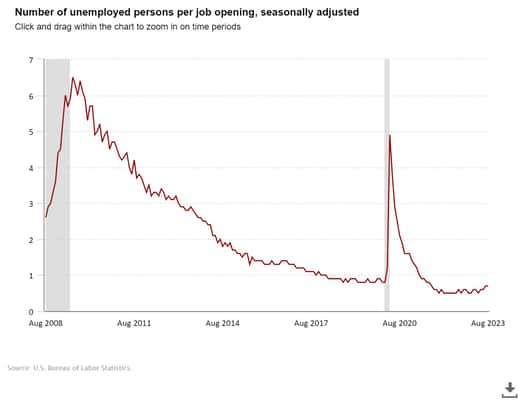
A significant portion of this uptick in job openings can be attributed to the professional and business services sector, which saw a remarkable surge of 509,000.
Today's precious metals prices saw fluctuations, with gold and silver witnessing a mild uptrend. Historically, precious metals, especially gold, have been considered a hedge against economic uncertainties.
The recent surge in job openings and the robust state of the labor market could signal a strengthening economy, which may have influenced investor sentiment and had an inverse effect on precious metals as safe-haven assets.
The release of the report had a noticeable impact on the stock market. Concerns about a tightening labor market possibly urging the Fed to sustain elevated interest rates resulted in stocks taking a dip.
The Dow Jones Industrial Average recorded a decline of over 260 points following the announcement, while precious metals prices seemed to react in tandem, indicating a correlation between job market data and investor confidence.
The Federal Reserve scrutinizes the JOLTS report intensively, viewing it as a barometer of the labor market's health.
It's worth noting that job openings have been experiencing a downtrend in recent months. This was perceived as a sign that the central bank's hikes in interest rates were beginning to influence a labor market previously characterized by a prominent supply-demand disparity.
Previously, job openings had outnumbered accessible workers by a ratio of 2 to 1. This has now decreased to a 1.5 to 1 ratio, a shift resulting from a rise in the number of individuals classified as unemployed in August.
The timing of the JOLTS report is significant, appearing just before the release of the department's nonfarm payroll data for September. Market analysts and economists, as surveyed by Dow Jones, anticipate this forthcoming report, scheduled for release on Friday, to reveal an employment boost of 170,000.
In the backdrop of these figures, the "quits" metric, indicating workers' confidence in securing a new job after vacating a prior position, remained largely unchanged. Similarly, the total separations and layoffs also exhibited no significant variation.
In conclusion, the August job openings data presents an optimistic picture of the U.S. labor market's resilience, emphasizing the ongoing