View Charts
The Postpandemic Economic Landscape: Peeling Back the Layers
 0
0
Source: Canva
The Inflation Illusion and Global Financial Dynamics
In the aftermath of the global pandemic, as nations grapple with economic recovery, deciphering inflation rates becomes paramount.
At first glance, the decreasing consumer price index (CPI) inflation in both the US and Europe might hint at a successful monetary tightening by their respective central banks.
However, a closer inspection reveals that this reduction is less about monetary policies and more about natural market adjustments, reflecting the post-pandemic supply scenario.
A Deep Dive into Price Dynamics
In an ideal monetary ecosystem, average consumer prices, indicated by the CPI, should have reverted to pre-pandemic levels. The current scenario, however, presents a different narrative.
Despite the Federal Reserve receiving accolades for ostensibly curbing inflation, the significant decline in the dollar's purchasing power remains a looming concern.
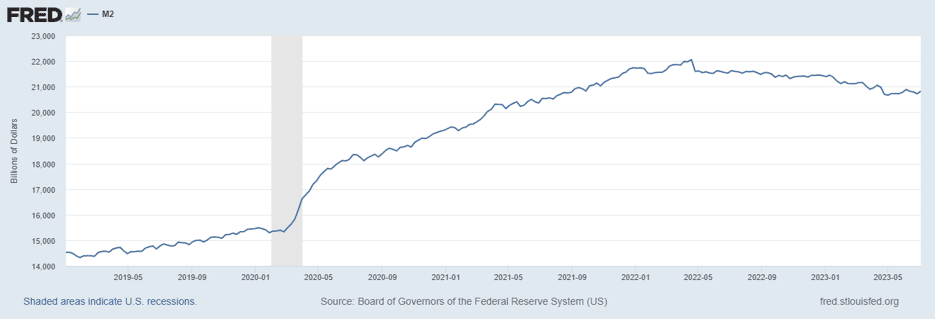
Monetary inflation, a phenomenon where central banks continuously increase the money supply, invariably leads to both asset inflation and a veiled rise in goods and services prices.
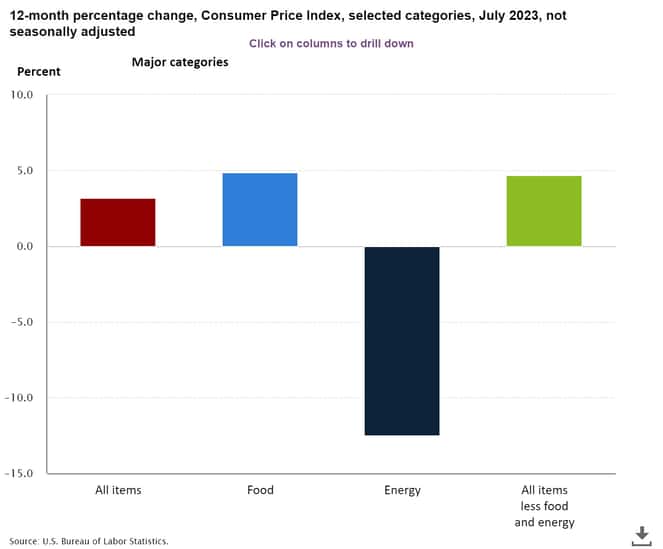
Various factors, including the alleviation of supply chain issues, post-conflict recoveries, or sudden surges in productivity, can effectively mask this subtle inflation, making it harder to detect and address.
Monetary Mechanisms: Interest Rates vs. Base Money
The role of interest rates in this landscape is also worth dissecting. Since the summer of 2022, the Federal Reserve has hiked interest rates substantially. However, the conventional wisdom that rising interest rates automatically denote monetary tightening may be misleading.
Other factors, such as declining confidence in money retaining its purchasing power or growing credit demand, can also elevate interest rates.
Source: FRED
In lieu of interest rates, many economists advocate for a monetary aggregate, like base money, to gauge the true nature of monetary policies.
Yet, the significance of this indicator has dwindled over time due to factors like the payment of interest on reserve deposits at the Federal Reserve, rendering base money less effective as a singular metric.
Potential Economic Outcomes: Inflation and Deflation Scenarios
By mid-2023, monetary inflation could still be in full swing. If post-pandemic supply chain adjustments culminate, the resurfacing of overt inflation could be on the horizon.
The political landscape, with impending elections, further complicates any potential timely response from the Federal Reserve.
Source: Canva
However, the narrative doesn’t stop here. The recent surges in nominal interest rates have ignited tensions in several sectors, particularly those heavily leveraged.
This tension, if unchecked, could catalyze a switch from asset inflation to asset deflation.
Factors that could drive this shift are multifarious:
- The exhaustion of speculative narratives that had previously propelled markets.
- Mounting credit defaults in sectors burdened with high leverage.
- The accruing effects of dominant monopolies in the market landscape.
- Changes in consumer behavior, are influenced by perceived future prospects and existing liabilities.
The Role of Global Currency Dynamics
There's an intricate dance between global currencies and the sustainability of asset inflation. While there’s a robust demand for high-yield and speculative ventures funded by the yuan and yen, global asset inflation can't be supported solely by these demands.
The linchpin, undeniably, remains the Federal Reserve.
Navigating a Multi-faceted Economic Tapestry
In essence, the post-pandemic financial narrative isn’t linear. It's a confluence of nuanced factors, from inflation intricacies to the unpredictable behavior of the global financial system.
As nations traverse these multifaceted challenges, a holistic comprehension of these layers is imperative for long-term stability and growth.
Given the potential transition from asset inflation to asset deflation, combined with the intricate dance of global currencies, how might gold, traditionally seen as a safe-haven asset, respond to these economic fluctuations?
As monetary inflation persists and the true value of traditional currencies becomes increasingly uncertain in the post-pandemic economic landscape, could gold experience a resurgence in demand as both individuals and institutions seek more stable stores of value?
FAQs Regarding the Economic Landscape and Gold
1. How does the reported decline in consumer price index (CPI) inflation relate to the actions of major central banks?
- The decline in reported CPI inflation is more aligned with a natural downturn in prices due to fading pandemic supply constraints rather than the efforts of central banks such as the Federal Reserve, ECB, and Bank of England.
2. Why might celebrations of the Fed’s “victory” over inflation be premature?
- The dollar's purchasing power has seen a decline of more than 15% since before the pandemic, despite the U.S. CPI inflation falling. The true economic picture might be more complex than what the falling inflation rates suggest.
3. How do central banks typically react to natural decreases in prices historically?
- Historically, central banks have often responded to natural price drops with monetary inflation, leading to a mix of asset inflation and hidden goods and services inflation. This hides the real effects of monetary inflation for a time.
4. What are the signs of asset inflation in the post-pandemic period?
- Notable indications include prosperity in the private equity sector, speculation in major global equity markets, and rising home market prices.
5. Why are interest rates unreliable indicators of monetary policy's tightness or ease?
- Interest rates can increase without any monetary tightening, especially when confidence in the currency's purchasing power drops or when there's a rise in credit demand. A focus on monetary aggregates, like base money, is more insightful.
6. How might gold react in the face of speculated asset inflation and potential deflation?
- Traditionally, gold is seen as a safe-haven asset, which means its demand and value may increase during economic uncertainties. As the value of traditional currencies becomes unpredictable due to ongoing monetary inflation, gold might witness heightened demand as a more stable store of value.
7. What role does the carry trade business play in the current economic scenario?
- Carry trade, especially in currencies with zero or negative interest rates like the yen and yuan, plays a significant role. Demand from these areas contributes to why asset inflation has been sustained, especially in the U.S. However, this could change if these investors reach their risk tolerance threshold.
8. What global factors might exacerbate the risk of an economic downturn?
- Factors such as shrinking world trade, rising geopolitical tensions, particularly with escalating conflicts involving the U.S. and Russia in Ukraine, and the looming threat of national bankruptcies can amplify economic risks.
9. How does gold usually respond to geopolitical risks and uncertainties?
- Historically, during periods of heightened geopolitical tensions and economic uncertainties, gold has been considered a refuge for investors, leading to increased demand and, often, higher prices.