View Charts
Cleaning Coins Can Destroy Their Numismatic Value
 0
0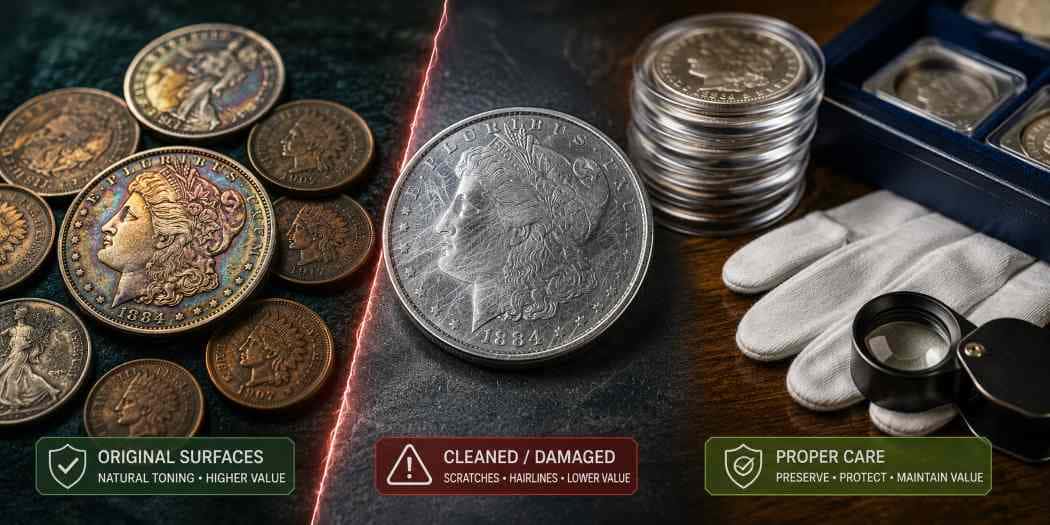
One Mistake Can Turn a Rare Coin Into a Problem Coin
Cleaning coins may seem harmless, especially when a piece looks dirty, dark, spotted, or old. But in numismatics, original surfaces often matter more than shine. A coin’s natural toning, luster, patina, and tiny surface details help establish authenticity, condition, and collector appeal. Once those surfaces are rubbed, polished, dipped incorrectly, or chemically altered, the damage is usually permanent. That is why experienced collectors, dealers, and grading services consistently warn against casual coin cleaning.
The issue is especially important today because rare coins, bullion coins, and historic U.S. coinage continue to attract buyers seeking tangible assets, inflation protection, and long-term collectible value. A silver dollar, gold coin, proof issue, key-date cent, or inherited collection may be worth far more than its metal content. Cleaning can erase that premium quickly, turning a desirable collectible into a discounted “details” coin that buyers approach with caution.
Original Surfaces Are Part of the Coin’s Value
A coin is not valued only by its date, denomination, and metal content. Collectors also evaluate the quality of the surface. Original mint luster, natural color, toning patterns, strike sharpness, and contact marks all help determine grade and desirability. Even when a coin has circulated, honest wear is often more acceptable than artificial brightness.
This is where many beginners make a costly mistake. A dark coin may look unattractive to the untrained eye, but that color could be natural toning. A lightly worn silver coin may still have collector value if its surfaces are original. A copper coin with old brown patina may be more desirable than one stripped to an unnatural orange color. In numismatics, “clean” does not always mean better.
Cleaning coins changes the evidence collectors use to judge originality. Abrasives can create hairline scratches. Polishing can flatten fine details. Chemical dips can remove toning and leave surfaces lifeless. Even wiping a coin with a soft cloth can drag tiny particles across the metal, leaving marks visible under magnification. The damage may not be obvious at first, but trained graders and experienced buyers usually notice.
Why Grading Services Penalize Cleaned Coins
Professional grading services evaluate coins according to condition, authenticity, eye appeal, and surface preservation. When a coin has been improperly cleaned, it may no longer qualify for a standard numerical grade. Instead, it may receive a details designation, which identifies the coin as genuine but impaired by a surface problem.
That distinction matters because the market treats numerically graded coins and details coins very differently. A coin with a straight grade can be compared more easily against auction records, price guides, and population reports. A details coin requires more judgment because the severity of the cleaning affects value. Light old cleaning may be less damaging than harsh polishing, but both can reduce buyer confidence.
NGC specifically notes that improperly cleaned coins, along with coins that are scratched, holed, or otherwise impaired, may be excluded from standard numeric grading and placed into details grading. PCGS also emphasizes that conservation is a professional process intended to preserve a coin without damaging its aesthetic value, not a do-it-yourself attempt to make a coin look newer. For collectors, the message is clear: cleaning can change how the coin is certified, marketed, and priced.
Bullion Coins and Rare Coins Require Different Thinking
The damage from cleaning depends partly on what type of coin is involved. A common bullion coin with no numismatic premium may be valued mainly for its gold or silver content. Even then, cleaning can make it less attractive and harder to resell at the best premium. But for rare coins, proof coins, key dates, vintage silver dollars, early copper, commemoratives, and certified pieces, cleaning can be far more destructive.
A bullion buyer may care mostly about weight and purity. A numismatic buyer cares about originality. That difference is essential. A one-ounce gold bullion coin with scratches may still trade close to melt value, but a rare gold coin with similar cleaning damage may lose a substantial portion of its collectible premium. The same applies to silver. A common silver round may not suffer much from handling, while a high-grade Morgan dollar can lose serious value from a single improper wipe.
This is why inherited collections require caution. Many people discover old coins in albums, jars, envelopes, or boxes and assume cleaning will make them easier to sell. In reality, the best first step is usually identification, not improvement. The coin should be evaluated as found before any attempt is made to alter its appearance.
Toning Is Not Dirt, and Patina Is Not Damage
Natural toning is one of the most misunderstood parts of coin collecting. Silver can develop shades of gold, blue, gray, violet, charcoal, or rainbow color depending on storage conditions and exposure. Copper can turn brown, red-brown, or darker over time. Gold is less reactive, but even gold coins can show subtle color changes from alloy content, storage, or handling.
Collectors often value attractive natural toning because it supports originality and can improve eye appeal. Removing it may make the coin brighter, but brightness alone does not equal value. In fact, an unnaturally bright old coin may raise suspicion. If a coin from the nineteenth century looks freshly polished, buyers may wonder what was done to it and what surface problems the cleaning was meant to hide.
Patina also helps tell the coin’s story. A coin that has aged naturally may show its history honestly. Once that surface is stripped, the coin cannot return to its original state. Artificial retoning rarely restores lost value and may create additional concerns. The safest assumption is simple: if the toning is natural and stable, leave it alone.
Common Cleaning Methods That Cause Permanent Harm
The most damaging cleaning methods are often the ones people believe are gentle. Toothpaste, baking soda, jewelry polish, vinegar, lemon juice, metal cleaner, erasers, brushes, and household chemicals can all harm coin surfaces. Even water can be risky if the coin is rubbed afterward or if minerals leave spots during drying.
Abrasive cleaning is especially destructive because it cuts into the surface. Hairlines from wiping or polishing may appear as fine scratches under light. Chemical cleaning can be just as harmful. Harsh dips may remove original skin, weaken luster, or create unnatural color. Copper coins are particularly vulnerable because their surfaces can react unpredictably to moisture and chemicals.
Ultrasonic cleaning is also not a simple solution for collectible coins. While it may be useful for some objects, coins require specialized judgment. A method that is safe for jewelry or hardware can be inappropriate for a rare coin. The value of a collectible coin often depends on microscopic surface preservation, and aggressive cleaning can permanently alter that surface.
Professional Conservation Is Not the Same as Cleaning
There is an important difference between amateur cleaning and professional conservation. Cleaning usually means trying to make a coin look shiny or new. Conservation means carefully stabilizing or removing harmful substances when doing so can preserve the coin without damaging original surfaces.
Professional conservation may be appropriate in specific cases, such as PVC residue, active corrosion, adhesive, certain contaminants, or improper storage damage. Even then, the decision should be made carefully. Not every coin benefits from conservation, and not every surface problem can be fixed. The goal is preservation, not cosmetic improvement.
This distinction matters because collectors sometimes hear that grading services or experts “clean” coins and assume home cleaning is acceptable. That is not the case. Professional conservation uses specialized techniques, experience, and judgment. It is performed only when the potential benefit outweighs the risk. For most collectors, the best approach is to avoid cleaning entirely and seek expert advice before doing anything irreversible.
Handling and Storage Protect More Value Than Cleaning
The safest way to improve a coin collection is not to clean it, but to store it correctly. Handle coins only by the edges. Avoid touching the front or back surfaces, because skin oils can leave fingerprints that become permanent over time. Use cotton gloves or clean hands when necessary, and work over a soft surface to prevent damage if a coin is dropped.
Proper holders also matter. Archival flips, capsules, coin tubes, albums, and certified holders can protect coins from scratches, moisture, and contaminants. Avoid soft PVC flips for long-term storage because they can leave residue that damages surfaces. Keep coins away from humidity, extreme heat, household chemicals, and unstable storage materials.
For valuable coins, certification may be worth considering. A professional holder can protect the coin physically while also establishing authenticity and grade. Even if a coin is not submitted for grading, keeping it untouched and properly stored gives future buyers more confidence. Preservation usually adds more value than any attempt to brighten the coin.
When a Coin Looks Dirty, Slow Down First
A dirty-looking coin should be evaluated before any action is taken. The first question is whether the coin has numismatic value. Check the date, mint mark, denomination, metal, variety, and condition. A common circulated coin may be worth little, but a key date, error coin, high-grade example, or scarce type may be valuable even with discoloration.
The second question is whether the substance is harmful or simply natural aging. Stable toning, patina, and circulation grime may be better left alone. Active corrosion, PVC residue, or sticky contamination may require professional guidance. The difference is not always obvious, especially to a beginner.
The third question is whether cleaning would improve marketability or reduce it. In most cases, cleaning reduces it. Buyers prefer coins that have not been altered. Dealers and grading services are trained to identify surface changes. If the coin is potentially valuable, the safest move is to leave it as found, photograph it, store it safely, and consult a reputable numismatic professional.
Value Preservation Starts With Restraint
The strongest collectors are often the most patient. They know that a coin’s originality cannot be recreated once it is lost. Cleaning coins may produce a short-term visual change, but it can destroy long-term value by removing luster, altering color, creating hairlines, and reducing grading potential. A coin does not need to look new to be valuable. In many cases, looking naturally old is part of what makes it desirable.
For buyers, sellers, and heirs, the practical rule is clear: do not clean coins before identification or appraisal. Protect them, document them, and handle them carefully. If a coin has residue or possible contamination, seek professional advice before attempting treatment. If it is rare, certified, toned, proof, high grade, or historically important, do nothing that changes the surface.
Coins are small historical objects. Their surfaces carry evidence of minting, circulation, storage, and survival. Preserving that evidence is central to preserving value. The best way to protect a coin’s future market potential is often the simplest: leave it original.
Related reading you may find interesting:
Colonial American Gold Coins Before the U.S. Mint
Sheldon Grading Scale Explained From PO1 to MS70