View Charts
Colonial American Gold Coins Before the U.S. Mint
 0
0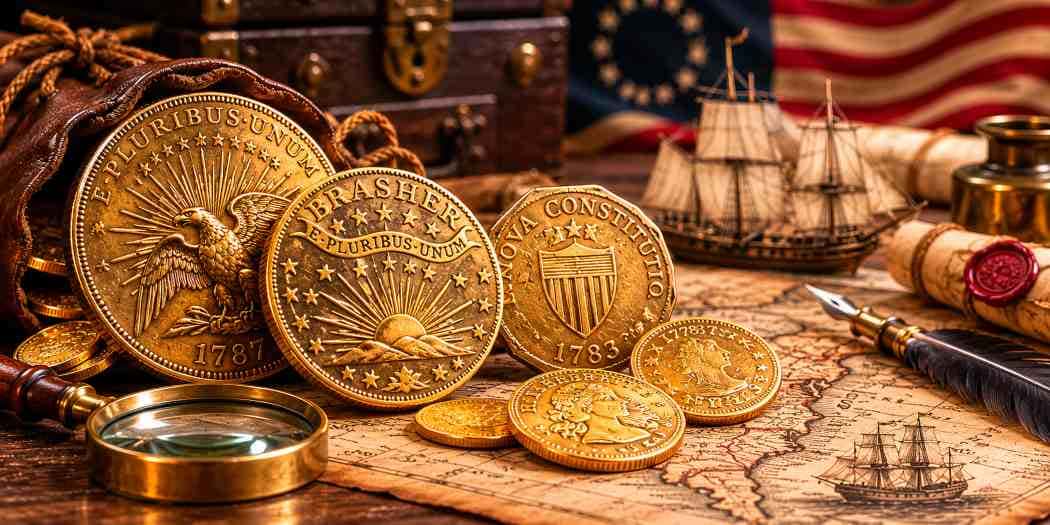
How Colonial American Gold Became America’s First Hard Currency
Long before the United States Mint opened in 1792, colonial America faced a severe shortage of reliable money. Foreign coins circulated unevenly, barter remained common, and economic instability often made trade difficult across the colonies. In response, private goldsmiths, merchants, and regional entrepreneurs began striking early American gold and copper coinage to support commerce and establish trusted stores of value. Today, these pre-federal issues represent some of the most historically significant and collectible pieces in American numismatics.
Interest in early American coinage has grown sharply as investors and collectors increasingly seek tangible assets tied to U.S. history, monetary scarcity, and hard-asset preservation. Rising gold spot prices, inflation concerns, and renewed demand for historically important bullion-related collectibles have pushed attention toward colonial-era pieces that predate the formation of the modern U.S. financial system.
Private Colonial Mints Filled America’s Monetary Vacuum
Before the Coinage Act of 1792 created a national minting system, the colonies relied heavily on foreign currency, including Spanish reales, Portuguese gold coins, Dutch ducats, and British sovereigns. This fragmented monetary structure created persistent pricing inconsistencies and shortages of usable small-denomination money.
Private mints emerged as a practical solution. Wealthy merchants, goldsmiths, and silversmiths began producing locally trusted coinage backed by metal content rather than government authority. These privately issued coins circulated regionally and often reflected local economic conditions, trade needs, and metal availability.
Unlike modern sovereign bullion coins, colonial pieces were not standardized nationally. Weight, purity, and design varied significantly depending on the issuer, location, and intended use. That variability is one reason why surviving examples remain highly desirable among collectors today.
The Brasher Doubloon Changed Early American Coinage Forever
No discussion of pre-1792 American gold coinage is complete without the Brasher Doubloon. Created by New York goldsmith Ephraim Brasher in 1787, the coin is widely considered one of the most important privately minted gold coins in U.S. history.
Brasher, a respected jeweler and neighbor of George Washington, struck the doubloon during a period when the young nation lacked a unified currency system. His coins were produced in high-purity gold and featured distinctly American imagery, including the rising sun and state-related symbolism that reflected early national identity.
Today, the Brasher Doubloon occupies legendary status in numismatics. Surviving specimens regularly command multi-million-dollar auction results due to their rarity, historical significance, and connection to America’s earliest monetary development.
Collectors often view the coin as the symbolic bridge between colonial commerce and federally issued U.S. gold coinage.
Early American Gold Coins Were Valued by Metal, Not Face Value
Modern investors often think of coins in terms of legal tender status or government-backed denominations, but colonial-era gold functioned differently. Most early American pieces circulated primarily according to intrinsic metal value rather than stated monetary value.
In practice, merchants weighed coins, tested purity, and accepted pieces based on gold or silver content. This system resembled bullion trading more than modern fiat currency circulation. As a result, trust in the issuer’s reputation became critically important.
This metal-first valuation model continues influencing today’s bullion market psychology. Investors buying gold bars, rare coins, or sovereign bullion products still prioritize purity, scarcity, and market trust above face value.
That historical continuity helps explain why colonial gold coins remain especially attractive during periods of inflation, currency instability, or broader financial uncertainty.
Why Pre-Federal Gold Coinage Remains Exceptionally Scarce
Authentic colonial American gold coins are extraordinarily rare because mintages were tiny compared to later federal coin production. Many pieces were melted, exported, lost, or heavily circulated during the late eighteenth century.
Unlike modern gold bullion programs that produce millions of coins annually, colonial private mint operations often created only limited quantities intended for local use. Recordkeeping was inconsistent, and survival rates remain extremely low across most series.
Scarcity is further amplified by institutional ownership. Museums, historical societies, and elite private collections control many of the finest known examples, reducing supply available to the open market.
For advanced collectors, rarity is only part of the appeal. Colonial gold combines several powerful market drivers simultaneously:
-
Historical significance
-
Gold content
-
Early American provenance
-
Limited surviving population
-
Strong auction demand
-
Institutional-grade collectibility
That combination gives the category enduring long-term strength within the rare coin market.
Colonial Gold and the Rise of American Monetary Independence
Pre-1792 coinage also represents something larger than numismatic rarity: the economic beginnings of American independence.
During the colonial and post-Revolutionary period, distrust of foreign monetary control became increasingly important politically and economically. Private minting reflected a broader push toward domestic financial autonomy before the federal government possessed the infrastructure to support it officially.
The eventual establishment of the U.S. Mint helped standardize coinage nationally, but colonial-era issues laid important groundwork by demonstrating the need for trusted American-produced hard currency.
This institutional evolution remains highly relevant today as modern investors debate central bank policy, currency stability, digital assets, and the long-term role of gold within the global financial system.
Bullion Demand Has Increased Interest in Historic Gold Coins
Modern precious metals investors are increasingly crossing into numismatics, especially as gold prices remain elevated and physical gold ownership demand strengthens globally.
While bullion products focus primarily on metal value, historically important gold coins can offer an additional scarcity premium tied to collector demand. Colonial American pieces occupy a unique position because they combine both hard-asset exposure and foundational U.S. historical importance.
That does not mean colonial coins function like traditional bullion investments. Liquidity, pricing, authentication, grading, and rarity all influence value significantly. However, for collectors seeking diversification within precious metals ownership, early American gold offers a category few modern coins can replicate.
Growing demand from high-net-worth collectors, family offices, and institutional buyers has also increased visibility for ultra-rare pre-federal coinage in recent years.
Authentication and Provenance Matter More Than Ever
Because colonial American gold coins are so valuable and rare, authentication remains essential. Counterfeit examples, altered pieces, and replicas exist throughout the market, particularly for famous issues like the Brasher Doubloon.
Professional grading services such as PCGS and NGC play a major role in verifying authenticity, condition, and provenance. Auction pedigree can also dramatically impact value, especially when coins trace back to historically important collections.
Collectors entering the colonial market should prioritize:
-
Certified authentication
-
Proven auction history
-
Established dealer reputation
-
Original surfaces and preservation
-
Verified historical attribution
These factors help protect long-term value while reducing acquisition risk.
America’s Earliest Gold Coins Continue Attracting Modern Investors
Colonial American gold occupies a rare intersection between bullion history, national identity, and numismatic scarcity. These coins were born from economic necessity during a time when the colonies lacked centralized monetary authority, yet they ultimately helped shape the foundation of the American financial system.
As modern investors continue searching for tangible stores of value amid inflation concerns, geopolitical uncertainty, and evolving monetary policy, historically important gold coins remain increasingly relevant. Pre-federal issues stand apart because they represent more than precious metal ownership alone — they reflect the origins of American hard currency itself.