View Charts
5 Facts Most Investors Don’t Know About Gold
 0
0
Gold Is More Than a Safe-Haven Trade
Gold is often described in simple terms: a hedge, a safe haven, or a store of value. Those descriptions are accurate, but incomplete. The more interesting story is that gold has remained financially relevant while nearly every monetary system around it has changed. It has moved from coinage to central bank reserves, from jewelry workshops to ETF vaults, and from ancient trade routes to modern portfolio strategy without losing its global recognition.
That staying power is not accidental. Gold occupies a rare position in finance because it is both emotionally familiar and institutionally important. It is bought by families, collectors, sovereign wealth managers, central banks, and investors who may disagree on almost everything except one point: gold carries value beyond any single currency, government, or market cycle.
These five gold facts help explain why the metal continues to attract attention from investors who want more than a short-term price trade.
1. Most of the Gold Ever Mined Still Exists
Unlike oil, grain, or many industrial commodities, gold is not consumed in the traditional sense. Once mined, it usually remains above ground in some form: jewelry, coins, bars, central bank reserves, private holdings, or recycled material. Estimates vary, but the World Gold Council and U.S. Geological Survey place total above-ground gold in the range of roughly 200,000 metric tons, with jewelry, investment products, and official reserves accounting for the largest known categories.
That permanence makes gold unusual. A gold coin struck generations ago can still be melted, refined, assayed, and returned to the market as investment-grade bullion. This high recyclability supports liquidity, but it also reinforces gold’s reputation as a long-duration asset. Gold does not disappear after one use; it changes form while retaining its identity.
2. Central Banks Still Treat Gold as Strategic Money
Gold is no longer the foundation of the international monetary system, but central banks have not abandoned it. In fact, official-sector demand has been one of the most important forces in the gold market in recent years. The World Gold Council reported that central bank gold buying exceeded 1,000 metric tons in 2024 for the third consecutive year, while the European Central Bank noted that gold’s share of global official reserves rose sharply as prices climbed and central banks diversified reserve assets.
That buying is not nostalgia for the gold standard. Central banks hold gold because it is liquid, globally recognized, and not the liability of another government. In a world shaped by sanctions risk, currency volatility, and shifting geopolitical alliances, gold offers reserve managers something paper assets cannot fully replicate: an asset with no issuer.
3. Gold Is Surprisingly Rare in Everyday Products
Gold is often associated with jewelry and investment bars, but its unique physical properties make it valuable in industries far removed from the bullion market. It is an exceptional conductor of electricity, highly resistant to corrosion, and remarkably malleable, making it ideal for use in electronics, aerospace components, medical devices, and telecommunications equipment. Nearly every smartphone, computer, and satellite contains small amounts of gold because few materials perform as reliably in demanding environments.
Despite these industrial applications, technology accounts for only a modest share of total annual gold demand. Unlike silver, platinum, or copper, gold's market is driven primarily by investment, jewelry, and official-sector purchases rather than manufacturing. That distinction helps explain why economic slowdowns don't always affect gold the same way they influence other metals. While industrial demand can fluctuate with the business cycle, investment demand often strengthens during periods of economic uncertainty, giving gold a market dynamic unlike most commodities.
4. Gold's Scarcity Is More Predictable Than Many Investors Realize
Gold is rare, but its scarcity is defined less by how little exists than by how slowly new supply enters the market. Global mine production typically adds only about 1% to 2% to the existing above-ground gold supply each year, making annual supply growth remarkably stable compared with many other commodities.
That slow growth is not simply the result of limited mining activity. Discovering new deposits has become increasingly difficult, permitting timelines are often measured in years, and developing a new mine can take a decade or longer from exploration to commercial production. Even when gold prices rise significantly, miners cannot quickly increase global output in the same way that manufacturers can expand production of many consumer goods.
This predictable supply profile has helped reinforce gold's long-term reputation as a store of value. Unlike fiat currencies, whose supply can expand through monetary policy, the world's gold supply grows gradually through a lengthy and capital-intensive mining process. That doesn't make gold immune to price volatility, but it does make its long-term supply characteristics fundamentally different from those of paper money.
5. Physical Gold Remains Relevant in a Digital Investment World
Today's investors have more ways than ever to gain exposure to gold. Exchange-traded funds (ETFs), mining stocks, futures contracts, and digital gold platforms have made the metal more accessible than at any point in history. Each serves a different investment objective, whether it's liquidity, leverage, convenience, or portfolio diversification.
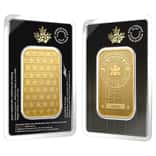
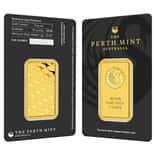
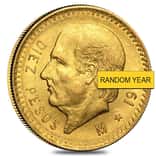
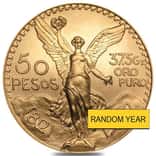
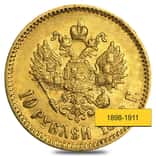
Even so, physical bullion continues to occupy a unique position. Unlike paper-based investments, a gold coin or bar is a tangible asset with no counterparty risk. Its value does not depend on the financial health of an issuer, a brokerage firm, or a clearinghouse. That characteristic has long appealed to investors seeking an asset that exists outside the traditional financial system while remaining globally recognized and highly liquid.
Physical ownership also gives investors direct control over their holdings. Whether stored at home, in a secure vault, or through an allocated storage program, bullion represents ownership of the metal itself rather than a claim on someone else's obligation. For many long-term investors, that distinction remains one of gold's most compelling attributes.
Looking Beyond Gold's Price
Gold's daily price movements often dominate headlines, but they reveal only part of the story. The metal's enduring appeal stems from characteristics that have changed very little over thousands of years: scarcity, durability, universal recognition, and an ability to retain value across changing monetary systems.
Those qualities help explain why gold continues to occupy such a unique place in the global economy. It is held by central banks as a reserve asset, sought by investors during periods of uncertainty, and recognized worldwide regardless of language, borders, or political systems. Few assets can claim that combination of history and relevance.
For investors, understanding these lesser-known characteristics provides a broader perspective than simply following the gold spot price. Gold is not just another commodity responding to supply and demand. It is a financial asset shaped by history, global confidence, institutional ownership, and long-term scarcity. That combination helps explain why, despite centuries of economic change, gold continues to earn a place in diversified investment portfolios and remains one of the world's most closely watched assets.
Related reading you may find interesting:
FIFA World Cup™ Trophy: Gold Content, Weight, and Value Explained
Costco Gold Bars vs. Online Bullion Dealers: Which Is the Better Buy?
7 Common Gold Investing Myths Debunked