View Charts
FIFA World Cup™ Trophy: Gold Content, Weight, and Value Explained
 0
0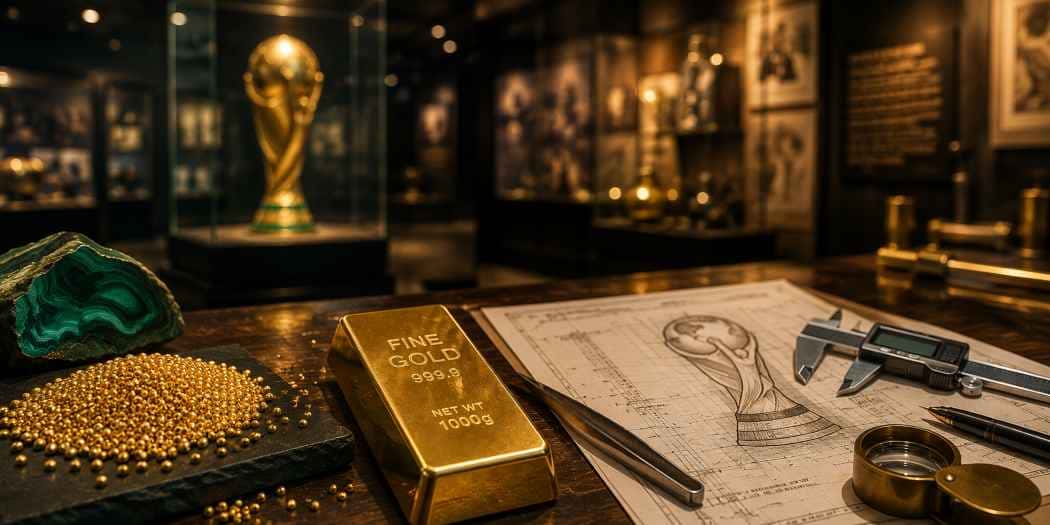
Why the World's Most Famous Trophy Is Worth More Than Its Gold
Every four years, billions of viewers watch the champions of the FIFA World Cup™ lift one of the most recognizable trophies in sports. The celebration lasts only moments, yet the gleaming gold prize has become an enduring symbol of athletic achievement, national pride, and sporting history. While many fans assume the trophy is simply a solid block of gold, its design tells a far more sophisticated story.
From a precious metals perspective, the FIFA World Cup Trophy is an intriguing blend of metallurgy, engineering, and symbolism. Rising gold spot prices have renewed interest in the intrinsic value of famous gold objects, prompting questions about how much gold the trophy actually contains, why it isn't solid, and whether its material value comes close to its cultural significance. The answers reveal that the trophy was never designed to maximize gold content. Instead, every aspect of its construction balances durability, practicality, and prestige, ensuring it remains both a work of art and one of the most coveted prizes in international sport.
Gold Gives the Trophy Its Prestige, but Engineering Makes It Possible
The current FIFA World Cup Trophy has been awarded since 1974, replacing the Jules Rimet Trophy after Brazil permanently retained the earlier prize by winning three World Cups. Italian sculptor Silvio Gazzaniga won the international design competition with a concept depicting two athletes triumphantly lifting the globe—a dynamic sculpture intended to represent the universal nature of football rather than a conventional cup.
Its appearance suggests a solid gold sculpture, yet the reality reflects practical engineering. The trophy stands approximately 36.5 centimeters (14.4 inches) tall and weighs about 6.175 kilograms (13.6 pounds). Rather than being cast from pure gold, it is manufactured from 18-karat gold, meaning the alloy contains 75 percent gold and 25 percent strengthening metals.
That composition serves an important purpose. Pure 24-karat gold is exceptionally soft and would be vulnerable to dents, scratches, and deformation after decades of presentations, transport, and exhibition. By choosing 18-karat gold, designers preserved the rich color associated with high-purity bullion while significantly improving structural durability. The decision mirrors practices used in fine jewelry and luxury watchmaking, where appearance and longevity must coexist.
The green malachite bands incorporated into the trophy's circular base provide another distinctive touch. Beyond adding visual contrast, the semi-precious stone reinforces that the trophy was conceived as an artistic sculpture rather than simply an expensive object made from precious metal.
Why the Trophy Is Hollow—and Why That's a Good Thing
One of the most persistent misconceptions surrounding the FIFA World Cup Trophy is that it consists entirely of solid gold. The misunderstanding is understandable; the trophy's polished exterior projects an unmistakable sense of weight and permanence. In reality, its hollow interior is an intentional design feature.
If the sculpture were cast as a completely solid piece of 18-karat gold, estimates suggest it would weigh roughly 70 kilograms, or more than 150 pounds. Such a trophy would be virtually impossible for players to lift above their heads during one of sport's defining celebrations.
The hollow construction dramatically reduces the overall weight while preserving the appearance of a substantial gold sculpture. It also lessens stress on the narrow supporting figures that form the trophy's central design, improving long-term structural stability. What appears effortless during the victory ceremony is actually the product of careful engineering that allows generations of players to share the same celebratory moment without compromising the trophy itself.
Gold content remains impressive despite the hollow design. Based on its total weight and 18-karat composition, the trophy contains the equivalent of roughly 4.6 kilograms of pure gold. At today's elevated bullion prices, that represents a significant intrinsic metal value. Yet even this substantial amount of precious metal accounts for only a small fraction of what the trophy is ultimately worth.
More Than a Gold Object, It Is an Irreplaceable Cultural Artifact
When media reports estimate the FIFA World Cup Trophy's value at more than $20 million, they are not describing the value of its gold alone. The melt value of its precious metal content is only a small component of its overall worth.
Like historically significant coins or museum-quality artifacts, the trophy derives most of its value from provenance, rarity, and symbolism. There is only one original FIFA World Cup Trophy currently in circulation, and its association with nearly every legendary player and championship since 1974 makes it effectively irreplaceable. No amount of gold could reproduce its historical significance.
This distinction is familiar to collectors of rare coins and numismatic treasures. A historic gold coin may contain only a modest amount of precious metal, yet command hundreds of thousands—or even millions—of dollars because of rarity, historical importance, or exceptional preservation. The World Cup Trophy operates under the same principle. Its cultural value has grown with every tournament, every iconic photograph, and every championship celebration witnessed by billions around the globe.
Champions Lift the Trophy, but FIFA Keeps the Original
One of the most surprising facts about the FIFA World Cup Trophy is that the winning nation does not take permanent possession of the original. During the trophy presentation, players celebrate with the authentic trophy, creating one of the defining images in global sport. Once official ceremonies and promotional obligations conclude, however, the original returns to FIFA's custody.
Since 2006, World Cup-winning teams have instead received the FIFA World Cup Winners' Trophy—a gold-plated bronze replica that closely resembles the original but remains clearly distinguishable to preserve the integrity of the authentic prize. This policy reflects lessons learned from football history. The original Jules Rimet Trophy, permanently awarded to Brazil after its third World Cup victory in 1970, was stolen in Rio de Janeiro in 1983 and is widely believed to have been melted down.
That loss fundamentally changed how football's greatest prize is protected. Rather than allowing the current trophy to circulate indefinitely among national associations, FIFA maintains strict control over its handling, transportation, and public appearances. Security protocols are extensive, and opportunities to view the original outside official FIFA events are relatively rare.
For collectors of precious metals and historical artifacts, this approach is familiar. Museums, central banks, and major auction houses routinely restrict access to irreplaceable objects, recognizing that their historical significance far exceeds their intrinsic material value. The World Cup Trophy belongs firmly within that category. Although fashioned from gold, it is ultimately treated as an international cultural treasure.
Why the Trophy's Value Continues to Grow Beyond the Gold Market
The value of the FIFA World Cup Trophy has increased over time, but not simply because gold prices have risen. Bullion markets influence its intrinsic metal value, yet its broader significance expands with every tournament, every generation of players, and every unforgettable championship moment.
Unlike investment-grade bullion, whose value closely follows the spot price of gold, iconic cultural objects appreciate through accumulated history. Each World Cup adds another chapter to the trophy's legacy, connecting it with new champions while reinforcing memories of legendary teams and defining moments that resonate across continents. That evolving narrative continually strengthens its intangible worth.
Its design has also proven remarkably timeless. Silvio Gazzaniga's sculpture avoided national symbols or references to a specific era, instead portraying two athletes lifting the globe in a gesture that remains universally recognizable. More than five decades after its introduction, the trophy still feels contemporary, demonstrating how thoughtful artistic design can transcend generations.
For precious metals enthusiasts, the trophy offers an important reminder that gold's value is not measured solely by weight or purity. Throughout history, some of the world's most celebrated gold objects—from royal regalia to museum masterpieces—derive their greatest worth from craftsmanship, provenance, and cultural significance rather than melt value alone. The FIFA World Cup Trophy stands among those rare examples where precious metal serves as the foundation for something far more enduring: a symbol recognized by billions as the pinnacle of the world's most popular sport.
Editorial Note:
FIFA®, FIFA World Cup™, and the FIFA World Cup Trophy are trademarks and intellectual property of the Fédération Internationale de Football Association (FIFA). They are referenced in this article solely for editorial and informational purposes. This article is not affiliated with, endorsed by, authorized by, or sponsored by FIFA.