View Charts

Jefferson Nickel (1938-Present)
After the Buffalo Nickel was in circulation for 25 years (the minimum time span for a coin to bear the same design), the US Mint began producing the Jefferson Nickel. First struck by the U.S. Mint in 1938 with 75% Copper and 25% Nickel, the Jefferson Nickel was later produced with a different composition from 1942 to 1945 to preserve nickel for the war effort. The wartime nickel was composed of 56% Copper, 35% Silver, and 9% Manganese. After the war, the US Mint returned to using the original composition, but the designs have been modified several times until present day. The Jefferson Nickel is currently the 5-cent piece used in circulation today.
Jefferson Nickel History
According to PCGS, the types of Jefferson Nickels produced throughout history can be split up into five categories:
Type 1 - Original Design, Vintage,
Type 1 - Original Design, Modern,
Type 2 - Silver Alloy,
Type 3 - Westward Journey, and
Type 4 - Return to Monticello.
Type 1: Original Design (Vintage) Minted from 1938-1964
When the time came to replace the Buffalo Nickel in January, 1938, the US Mint decided to host a design competition that was open to the public. The only requirements were that Thomas Jefferson should be depicted on the obverse while Monticello, Jefferson’s famous home, should be depicted on the reverse. German born American sculptor Felix Schlag beat out 390 competitors to win the contest along with the $1,000 reward. His design was selected by Nellie Tayloe Ross, the Director of the US Mint and previously the governor of Wyoming. Before the coin was put into production, a few design changes were requested in early May. The proposed changes included adjusting the view of Monticello from the corner perspective to a head-on view. Schlag was busy with other projects by that time and took a few months to complete the alterations. While the coin’s production began in October 1938, the designer’s initials were first added onto the nickel much later, in 1966.
Type 1: Original Design (Modern) Minted from 1965-2003
Jefferson Nickels minted from 1965 until 2003 provided a continuation of the original nickel design, making the distinction between the “Vintage” and “Modern” categories admittedly arbitrary. The split happens to coincide with the removal of silver from Dimes, Quarter Dollars, and Half Dollars in American coinage from 1964-1965.
Type 2: Silver Alloy (Wartime Nickel) Minted from 1942-1945
At the start of World War II, Nickel became an incredibly important metal for the war effort, and therefore could not be used temporarily for coin production. During this time, the US Mint replaced the composition with an alloy containing 56% copper, 35% silver, and 9% manganese. In order to signify this change, a large mint mark was inscribed above Monticello on the reverse. This was notably the first time the “P” mint mark representing Philadelphia was used on American coinage. These silver nickels are commonly known as “War Nickels”.
Type 3: “Westward Journey” Designs Minted from 2004-2005
In June 2002, the upcoming bicentennial of the Lewis and Clark expedition inspired Mint officials to seek a redesign of the nickel in honor of the brave explorers. Virginia Representative Eric Cantor expressed concerns about removing Monticello, located in his home state, off the nickel permanently. His office subsequently sponsored legislation that allowed the Mint to strike different designs from 2003 through 2005, with a switch back to the Monticello design in 2006. The resulting “American 5-Cent Coin Design Continuity Act of 2003” was signed into law in April 2003. It mandated that after 2006, every five cent coin would feature Jefferson and Monticello.
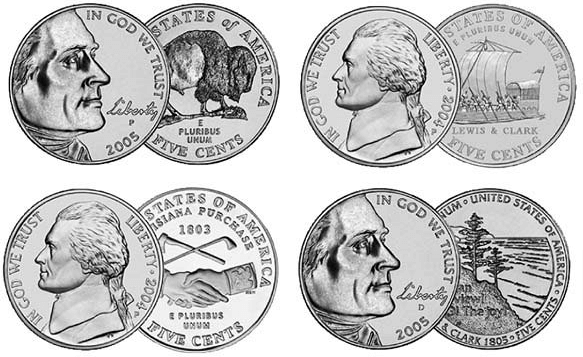
The four designs commemorating Lewis and Clark’s expedition all featured Jefferson on the obverse with varying images on the reverse. These images included the 2004 Peace Medal, the 2004 Keel Boat, the 2005 Bison, and the 2005 Western Waters.
Type 4: Return to Monticello Design (Minted from 2006 until present day)
In 2006, the Mint switched the reverse design back to Jefferson and Monticello. However, Jefferson’s bust was redesigned by artist Jamie Franki, who has previously designed the obverse for the 2005 Westward Journey Bison Nickel. This version of the Jefferson Nickel is still used today.
Jefferson Nickel Design Varieties
The obverse of the Jefferson Nickel features the bust of the USA’s third president: Thomas Jefferson. The reverse of the nickel (excluding years 2004-2005) showcases Monticello, Jefferson’s home in Virginia.
Throughout the years, many types and varieties were produced. Because there are so many different varieties and strikes that do not greatly impact the price of the coin, only the main categories/types of Jefferson Nickel are included below:
Type 1: Original Design (1938 - 1964)
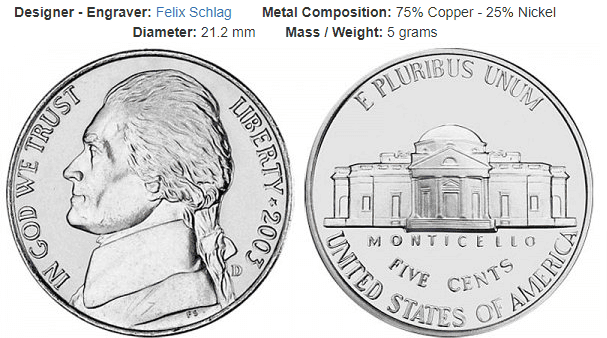
Image source: https://www.usacoinbook.com
Type 2: Wartime Nickel/Silver Alloy (1942 - 1945)
(1942 P Jefferson Nickel used as example)
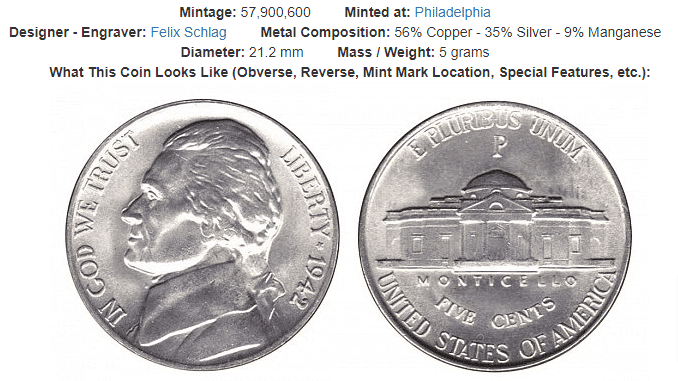
Image source: https://www.usacoinbook.com
Type 3: Westward Journey Series (2004 - 2005)
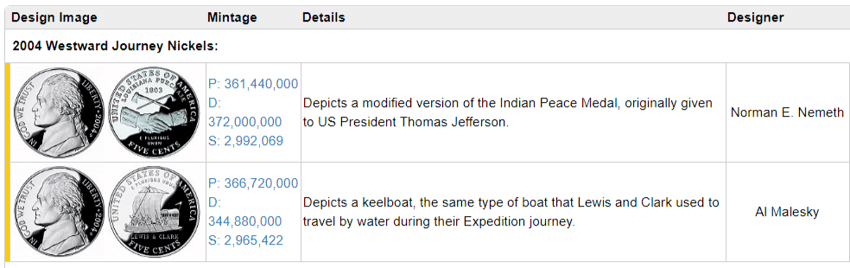
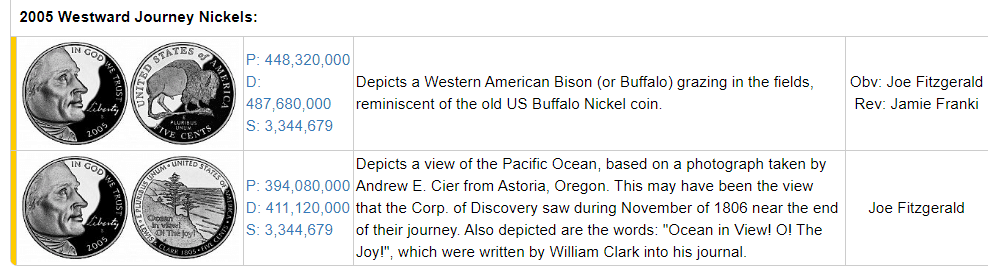
Images source: https://www.usacoinbook.com
Type 4: Return to Monticello (2006 - Present)
Redesigned obverse by Jamie Franki
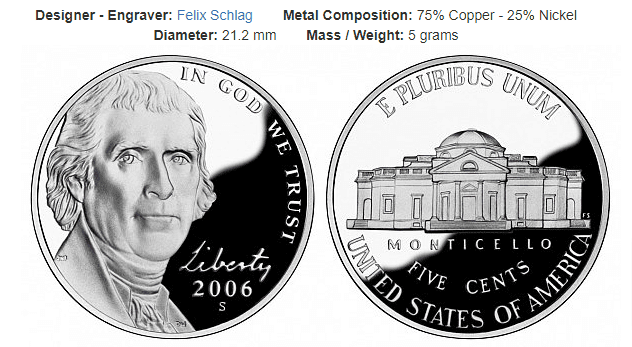
Image source: https://www.usacoinbook.com
Jefferson Nickel Value
Jefferson Nickels are admittedly one of the less-popular US collectibles due to their widespread availability and current production. The Jefferson Nickel typically ranges in price from just $0.10 to around $10, while a few rarer varieties can be worth $100 or more in MS or Proof condition. Only seven varieties of Jefferson Nickel have been valued over $500 (in certain conditions), and only two of those seven are worth over $1,000.
1939 Jefferson Nickel: Double Monticello
Value: Between $30 and $1,080, depending on condition
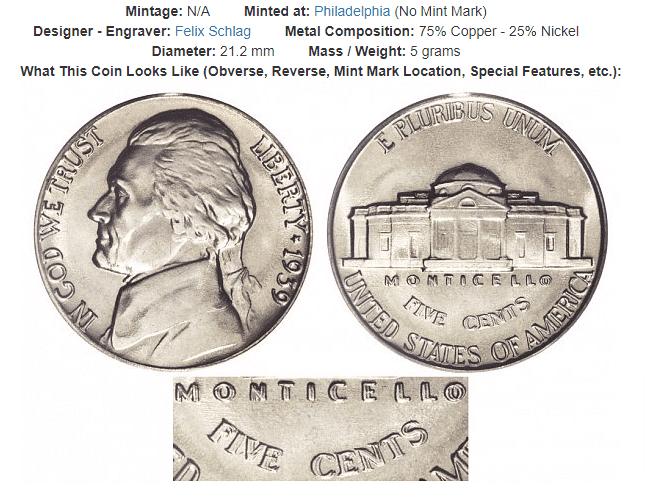
Image source: https://www.usacoinbook.com
1942 D Jefferson Nickel: D Over Horizontal D
Value: Between $35 and $10,500, depending on condition
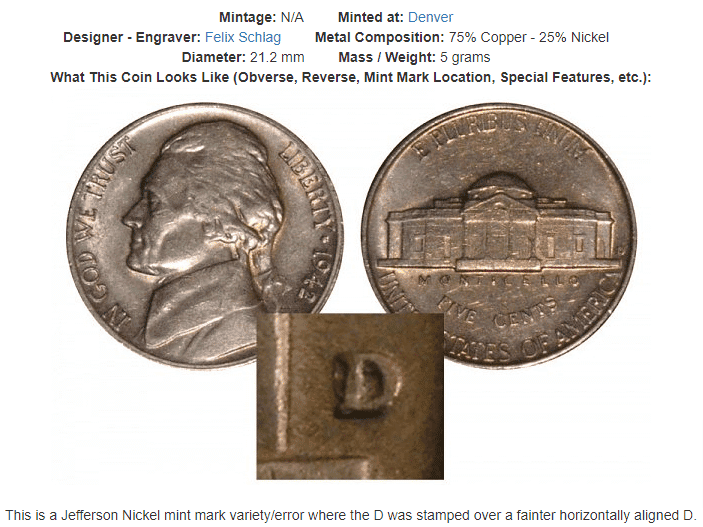
Image source: https://www.usacoinbook.com
1943 Jefferson Nickel: 3 Over 2
Value: Between $20 and $745, depending on condition
“3 Over 2” on left, normal on right for comparison
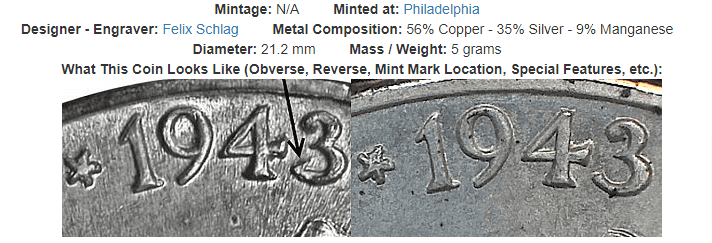
Image source: https://www.usacoinbook.com
1943 Jefferson Nickel: Doubled Eye
Value: Between $20 and $685, depending on condition
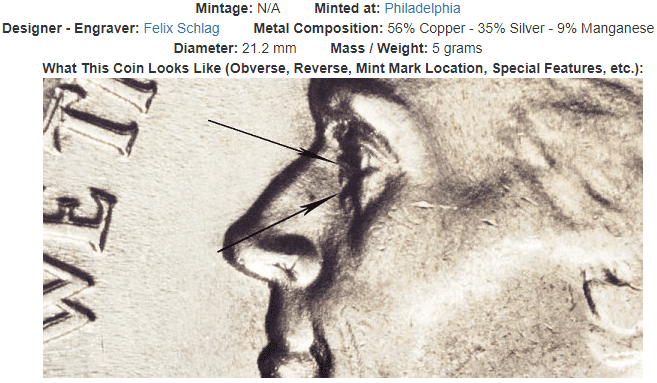
Image source: https://www.usacoinbook.com
1945 Jefferson Nickel: Doubled Die Reverse
Value: Between $10 and $865, depending on condition
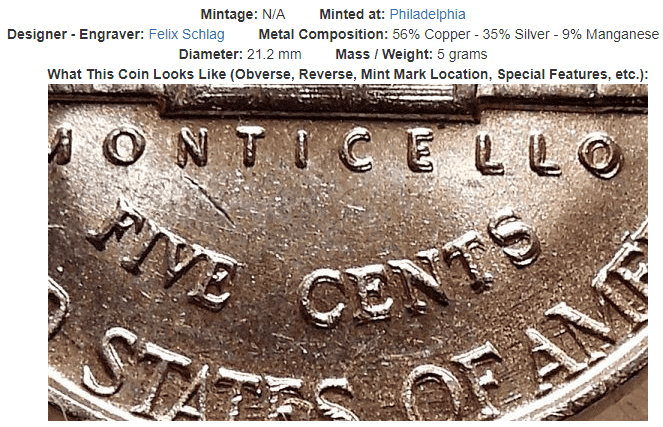
Image source: https://www.usacoinbook.com
1949 D Jefferson Nickel: D Over S
Value: Between $100 and $530, in MS-60 or above
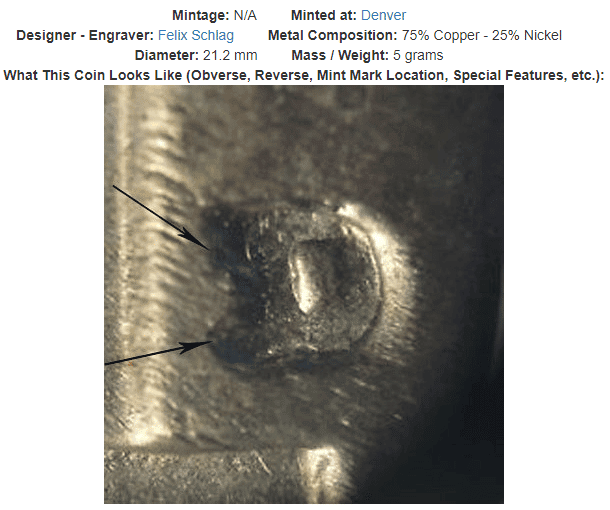
Image source: https://www.usacoinbook.com
1971 S Jefferson Nickel: Proof (No S Mintmark)
Value: $1,079
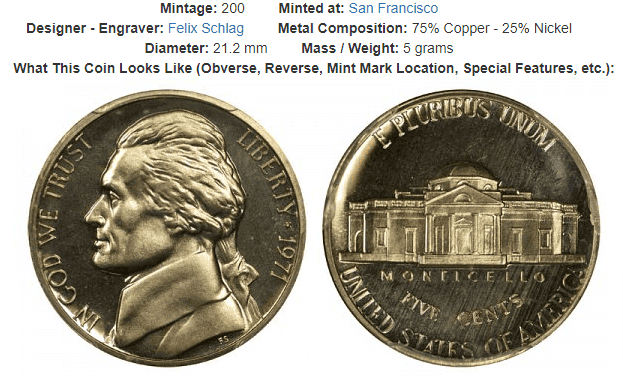
Image source: https://www.usacoinbook.com
In comparison to other American coinage, Jefferson Nickels are among the most inexpensive coins to collect but are also among the most unpopular. Most Jefferson Nickels one might come across, especially the newer releases, are worth less than $1. However, those lucky enough to discover one of the very few rare varieties can earn over $500 for their coin. It is wisest to consult a numismatic professional when attempting to discern the value of your Jefferson Nickel.