View Charts
Why Precious Metals Are Surging Together—and What It Means Now
 2
2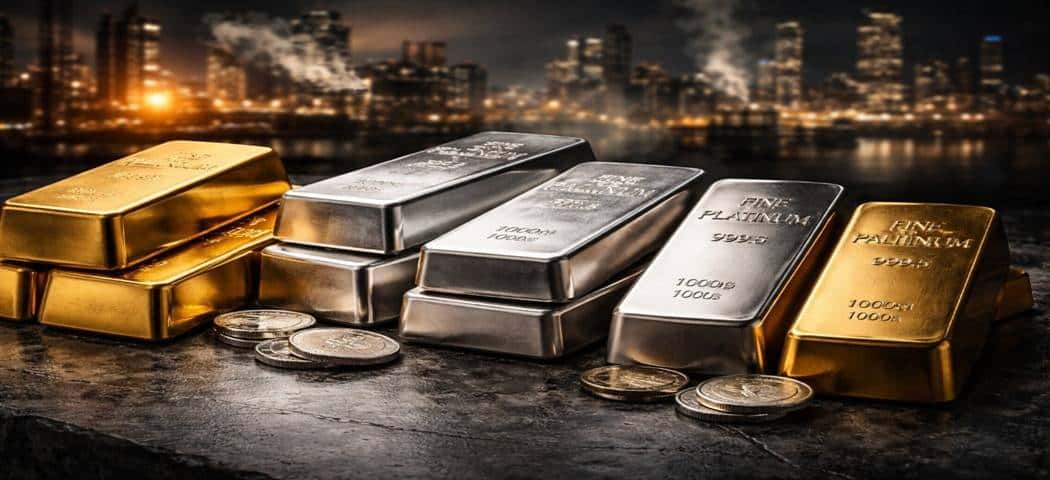
A Historic Rally Across the Precious Metals Complex
Precious metals are experiencing one of the most powerful and synchronized rallies in modern market history. Gold briefly hit $4,500 per ounce, silver climbed beyond $70 per ounce, platinum has reached its highest level in 17 years, and palladium is trading at a three-year high. While each metal has its own supply-and-demand dynamics, the fact that all four are rising simultaneously points to a deeper, macro-driven shift in investor behavior.
For precious metals investors, this is not simply a price story—it is a signal that global markets are reassessing risk, stability, and the long-term role of hard assets.
Gold at Record Highs: A Barometer of Systemic Risk
The price of gold reaching new all-time highs is rarely an isolated event. Historically, gold moves decisively when investors are not just hedging inflation, but questioning broader financial and geopolitical stability.
Why Gold Is Rising Now
Several forces are converging:
-
Elevated geopolitical uncertainty, including ongoing global conflicts and trade fragmentation
-
Federal Reserve rate expectations shifting lower, reducing real yields and boosting non-yielding assets
-
Persistent government debt and fiscal deficits, reviving concerns about currency debasement
-
Strong central bank gold buying, particularly among countries diversifying away from the U.S. dollar
Gold’s move to $4,500 reflects a repricing of long-term risk rather than short-term speculation.
What It Means for Investors
When gold establishes new highs in real terms, it often resets its trading range rather than immediately reversing. For investors, gold’s strength reinforces its role as:
-
A store of value
-
A hedge against monetary instability
-
A foundation of long-term portfolio diversification
Silver At $70: Where Investment Meets Industrial Demand
Silver’s breakout to $70 per ounce may be the most consequential development in the current rally. Unlike gold, silver benefits from both investment demand and industrial consumption, making it uniquely sensitive to global economic trends.
Why Silver Is Accelerating
Silver demand is being driven by:
-
Investor inflows seeking a leveraged alternative to gold
-
Industrial use, particularly in:
-
Solar panels and renewable energy
-
Electric vehicles and charging infrastructure
-
Electronics, semiconductors, and data centers
-
Emerging battery technologies
At the same time, silver supply remains structurally tight. Much of global silver production is a byproduct of base metal mining, limiting the industry’s ability to respond quickly to rising demand.
What It Means for Investors
When silver outperforms gold, it often signals a broad precious metals bull market, not just a safe-haven trade. Rising silver spot prices suggest:
-
Strong physical demand
-
Limited above-ground inventories
-
Increasing importance of silver as a strategic industrial metal
Platinum Breaks Out: A Confirmation Signal
Platinum’s move above $2,200 per ounce—pushing the platinum price to its highest level in 17 years—is a critical confirmation of strength across the precious metals complex.
Why Platinum Is Rising
Key drivers include:
-
Persistent supply constraints, particularly from South Africa
-
Stabilizing automotive demand, with platinum regaining market share from palladium
-
Growing interest in hydrogen and clean-energy technologies
-
Recognition that platinum has been historically undervalued relative to gold
Platinum often lags early in metals rallies and accelerates later, making its breakout especially significant.
What It Means for Investors
Platinum’s strength suggests this rally is broadening, not peaking. For investors, it highlights opportunities beyond gold and silver while reinforcing the industrial foundation of the precious metals market.
Palladium’s Recovery: Risk Appetite Returns
Palladium reaching a three-year high marks a notable turnaround after a prolonged downturn.
Why Palladium Is Rebounding
-
Palladium prices previously fell below sustainable production levels, forcing supply discipline
-
Automotive demand remains resilient, even amid gradual substitution trends
-
Speculative positioning had become overly bearish, setting the stage for a sharp reversal
Palladium is historically the most volatile precious metal, and its recovery often coincides with renewed sector-wide momentum.
What It Means for Investors
When palladium participates in a metals rally, it often reflects broad capital flows into the sector, not isolated hedging. This supports the case for a sustained uptrend across precious metals.
Why All Precious Metals Are Rising Together
The synchronized rise of gold, silver, platinum, and palladium is rare and meaningful. It typically occurs when:
-
Investors are reallocating toward hard assets
-
Confidence in fiat currencies and financial systems is being reassessed
-
Industrial demand reinforces monetary demand
-
Supply growth struggles to keep pace with structural consumption
This environment tends to favor tangible assets with limited supply and intrinsic utility.
What This Means for Precious Metals Investors
For precious metals investors, the current market environment underscores several key themes:
-
The rally is macro-driven, not speculative
-
Industrial demand is now a critical pillar supporting silver and platinum prices
-
Gold remains the anchor asset for long-term stability
-
Price strength across all four metals suggests a regime shift, not a short-term spike
Physical precious metals continue to play an essential role as:
-
A hedge against inflation and currency debasement
-
A diversification tool alongside traditional financial assets
-
A tangible store of value with growing industrial relevance
The Bullion Exchanges Perspective
At Bullion Exchanges, we view this moment as a reflection of changing global priorities. Investors are increasingly valuing assets that offer durability, scarcity, and real-world utility. While price volatility is inevitable, the broader trend points to precious metals reclaiming a central role in portfolios.
Bottom Line: A Repricing, Not a Rally
This is not simply a surge in prices—it is a repricing of precious metals in a world facing economic uncertainty, geopolitical tension, and evolving industrial needs. When gold sets records and silver, platinum, and palladium confirm the move, history suggests precious metals remain relevant far longer than most expect.
For informed investors, the focus now shifts from reacting to headlines to understanding fundamentals—and positioning accordingly.
Related reading you may find interesting:
Could Silver Reach $200 an Ounce in 2026?
Is $8,000 Gold Possible in 2026 After a Historic Bull Run?
2 Comments