View Charts
Is $8,000 Gold Possible in 2026 After a Historic Bull Run?
 0
0
A Once-Unthinkable Gold Target Enters the Debate
For decades, gold price forecasts tended to move in cautious increments. That paradigm shifted dramatically in 2025. After posting one of the strongest annual performances in its modern history and decisively breaking into record territory, gold has forced investors to reconsider the upper limits of its valuation. Against a backdrop of expanding sovereign debt, monetary uncertainty, and accelerating central bank accumulation, a bold question is now gaining traction: can gold reach $8,000 an ounce in 2026?
Gold’s Historic Repricing: 2025 vs. 2026
Gold’s rally in 2025 was not a typical cyclical advance—it represented a structural repricing of the metal’s role in the global financial system.
-
January 1, 2025 spot price: approximately $2,624.50 per troy ounce
-
January 1, 2026 spot price: approximately $4,322.36 per troy ounce
This translates to a 64.7% increase over the calendar year, placing gold among the strongest-performing major assets worldwide. Unlike speculative surges seen in other markets, gold’s rise was steady, persistent, and supported by institutional demand rather than retail momentum alone.
Gold Breaks Records: A New All-Time High
Gold’s upward trajectory culminated on December 26, 2025, when spot prices reached a new all-time high of $4,549.74 per troy ounce. This milestone carried significant implications beyond the headline number.
Breaking into previously uncharted territory eliminated long-standing technical resistance and reshaped investor psychology. Historically, when gold establishes new nominal highs, it often signals a shift from cyclical demand to monetary-driven accumulation, particularly among central banks, sovereign funds, and long-term institutional holders.
Why $8,000 Gold Is No Longer a Fringe Projection
An $8,000 gold price would represent a dramatic move—but not an unprecedented one when viewed through a monetary lens. Several forces could converge to make such a scenario plausible:
Monetary Expansion and Real Yield Suppression
Gold has historically responded most strongly when real interest rates remain negative or suppressed. If central banks pivot toward aggressive easing to manage debt burdens or economic slowdowns, gold could benefit from renewed demand as a non-yielding monetary asset.
Central Bank Accumulation at Scale
Central banks have been consistent net buyers of gold, seeking to reduce reliance on fiat reserves. An acceleration in official sector purchases—particularly among emerging markets—could significantly tighten available supply.
Currency Confidence Erosion
Gold prices often reflect declining confidence in fiat currencies rather than simple inflation metrics. Rising debt-to-GDP ratios, fiscal imbalances, and geopolitical fragmentation could drive further demand for gold as a neutral reserve asset.
Revaluation of Gold’s Monetary Role
At $8,000 per ounce, gold would still represent a fraction of global financial assets. A partial remonetization of gold within the global system—explicit or implicit—could justify substantially higher prices without requiring speculative excess.
Gold vs. Silver, Platinum, and Palladium: A Different Kind of Bull Market
Gold: Monetary Trust Over Industrial Demand
Gold’s bull markets are driven primarily by monetary confidence, currency stability, and systemic risk, not industrial consumption. As the only precious metal held in meaningful quantities by central banks, gold benefits from deep, long-term institutional demand that supports sustained price trends.
Silver: Higher Volatility, Cyclical Outperformance
Silver occupies a dual role as both a monetary metal and an industrial input. Its heavy use in renewable energy and technology makes silver more volatile, often producing sharper percentage gains than gold—but typically later in a bull cycle after gold has already established direction.
Platinum and Palladium: Industrial Metals at the Core
Platinum and palladium are far more dependent on industrial demand, particularly in automotive and emissions-control applications. Their price movements tend to be cyclical, shaped by supply disruptions, regulatory shifts, and substitution risk rather than monetary forces.
Why Gold Absorbs Capital Differently
Gold’s lower relative volatility allows it to absorb large capital inflows without destabilizing price action. This makes gold uniquely positioned to benefit from sustained reallocations out of bonds, fiat currencies, or overvalued equity markets—conditions that often accompany long-duration gold bull markets.
The Structural Advantage
While silver, platinum, and palladium can deliver powerful cyclical rallies, gold’s bull markets reflect a broader reassessment of global monetary trust. When gold leads, it often signals systemic stress rather than sector-specific demand, reinforcing its role as the foundation of the precious metals complex.
What Investors Should Watch in 2026
Investors evaluating the possibility of $8,000 gold should focus on macro-level signals rather than short-term price movements:
-
Central bank balance sheet expansion
-
Real interest rate trends and yield curve behavior
-
Sovereign debt growth and fiscal policy shifts
-
Central bank gold reserve disclosures
-
Geopolitical developments impacting currency confidence
These factors tend to evolve slowly but can drive powerful, long-duration trends in gold prices once aligned.
How Investors May Position for Higher Gold Prices
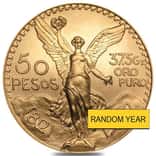
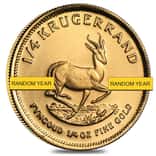
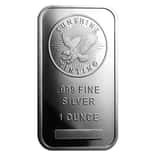
For those seeking exposure to gold’s long-term upside, physical ownership remains a cornerstone strategy. Gold bars, sovereign gold coins, and investment-grade bullion products offer direct participation without counterparty risk.
Many investors also view gold as a foundational asset—one that prioritizes wealth preservation and monetary insurance over short-term speculation. In that context, price targets matter less than gold’s ability to maintain purchasing power across economic cycles.
Is $8,000 Gold Extreme—or Inevitable?
Gold’s 64.7% advance in 2025 and its record-setting all-time high of $4,549.74 marked a turning point in how the market values monetary assets. While $8,000 gold in 2026 remains an aggressive scenario, it reflects the scale of the structural forces now shaping the global financial landscape.
Rather than signaling excess, gold’s rise may represent a recalibration—one that acknowledges mounting debt, persistent monetary intervention, and the enduring need for a neutral store of value. For investors looking beyond short-term cycles, the next chapter for gold may prove even more consequential than its last.
Related reading you may find interesting:
Gold vs. Bitcoin in 2026: Which Safe Haven Will Prevail?