View Charts
Why Are Precious Metals Falling Today? Market Selloff Factors
 0
0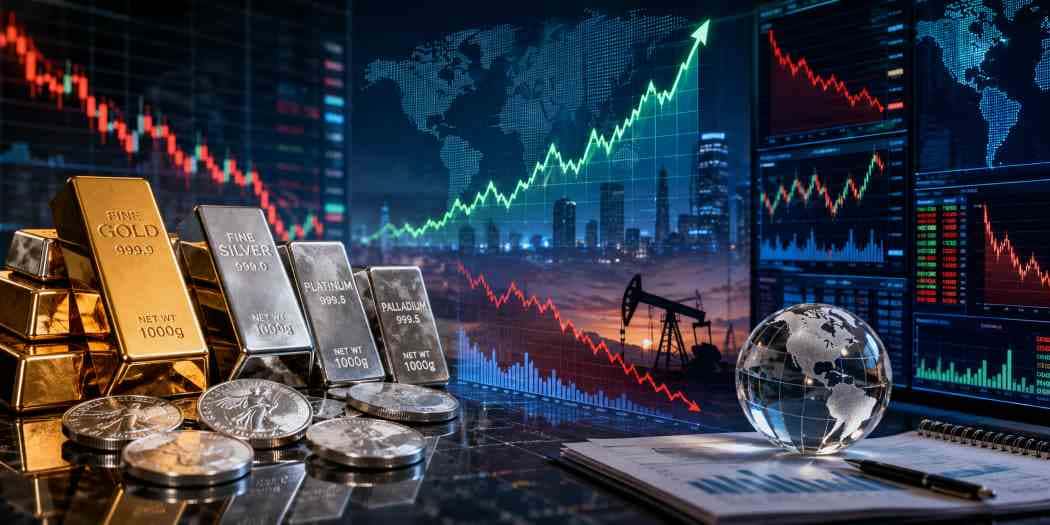
Dollar Strength and Fading Geopolitical Fears Are Reshaping Precious Metals Markets
Gold, silver, platinum, and palladium all moved sharply lower this morning as investors responded to a meaningful shift in the macroeconomic landscape. After several weeks in which geopolitical uncertainty, elevated energy prices, and safe-haven demand helped support precious metals, markets are now confronting a different set of forces. The U.S. dollar has surged to fresh one-year highs, oil prices have retreated, and concerns surrounding Middle East shipping disruptions have eased considerably.
The result is a broad repricing across the precious metals complex. While each metal faces its own unique demand drivers, today's weakness reflects a common theme: investors are reducing defensive positioning as risk premiums unwind and attention shifts toward economic growth, inflation, and monetary policy. Understanding why these factors matter can help explain not only today's pullback but also what may determine the next major move for precious metals spot prices.
A Stronger Dollar Is Creating the Largest Immediate Headwind
Currency markets often exert an outsized influence on precious metals, and that relationship is on full display this week. The U.S. Dollar Index has climbed above 101.6, reaching its highest level in roughly a year and creating significant pressure across commodities priced in dollars.
When the dollar strengthens, gold, silver, platinum, and palladium become more expensive for international buyers using foreign currencies. This naturally reduces purchasing power abroad and can slow physical demand from major consuming regions. While precious metals often benefit from periods of economic uncertainty, they can struggle when rising interest-rate expectations simultaneously support the U.S. currency.
The current dollar rally is being fueled by expectations that the Federal Reserve may maintain restrictive monetary policy for longer than markets previously anticipated. Higher rates increase the appeal of interest-bearing assets such as Treasury securities while reducing the relative attractiveness of non-yielding stores of value. Gold typically feels this effect most directly, but silver, platinum, and palladium are rarely immune when dollar strength becomes a dominant market theme.
What makes today's environment particularly noteworthy is the speed of the move. Rather than a gradual appreciation, investors are confronting a sudden repricing in both currency and rate expectations, forcing portfolio adjustments across multiple asset classes.
The Middle East Risk Premium Is Beginning to Unwind
Only days ago, geopolitical concerns surrounding Iran, energy supplies, and shipping through the Strait of Hormuz were among the most important drivers supporting precious metals prices. Markets feared potential supply disruptions, escalating military tensions, and higher oil prices that could reignite inflation concerns.
Today, those fears have moderated.
Improving shipping activity through the region and signs of diplomatic progress have reduced some of the urgency that previously fueled safe-haven buying. Investors who accumulated defensive positions during heightened uncertainty are now reassessing those trades as the probability of a near-term disruption appears lower than it did earlier this month.
This dynamic is especially important for gold, which often benefits when geopolitical uncertainty increases. Safe-haven demand can emerge quickly when markets perceive elevated risk, but it can disappear just as rapidly when tensions begin to ease. The same mechanism that helped support prices on the way up can accelerate selling when investors conclude the immediate threat has diminished.
The change does not necessarily mean geopolitical risks have disappeared. Rather, markets are assigning a lower probability to worst-case scenarios, reducing the premium that had been embedded in precious metals prices.
Falling Oil Prices Are Changing the Inflation Narrative
The decline in crude oil prices represents another significant shift in investor expectations.
For much of the past several years, energy markets have played an important role in shaping inflation forecasts. Higher oil prices tend to raise transportation, manufacturing, and consumer costs throughout the economy, reinforcing demand for traditional inflation hedges such as gold and silver.
That relationship is now working in reverse.
As crude prices retreat, investors are becoming less concerned about a renewed inflation surge driven by energy costs. Lower inflation expectations can reduce demand for precious metals among buyers who view bullion primarily as a hedge against declining purchasing power.
The impact extends beyond gold. Silver often benefits from inflation concerns while also serving as an industrial metal. Platinum and palladium, meanwhile, can be influenced by changes in energy prices through their relationship with broader manufacturing and industrial activity.
Combined with the stronger dollar, falling oil prices are creating a macroeconomic backdrop that is far less supportive for precious metals than the environment investors faced only a week ago.
Technology Stocks Are Sending Signals Beyond Wall Street
One of the more interesting developments in today's market is the sharp weakness across technology and semiconductor stocks. Companies such as Nvidia, AMD, and Micron have experienced significant selling pressure, raising questions about investor sentiment toward some of the market's most crowded trades.
While there is no confirmed evidence that investors are directly liquidating precious metals to cover equity-market losses, broader portfolio repositioning appears to be occurring.
Periods of elevated volatility often encourage institutions to reduce risk exposure across multiple asset classes simultaneously. Rather than evaluating each position independently, investors frequently focus on overall portfolio risk, leading to selling pressure in assets that may otherwise have little direct connection to one another.
This helps explain why weakness is appearing across several commodity markets at the same time. The selling is not necessarily a reflection of deteriorating long-term fundamentals. Instead, it appears linked to a broader effort by investors to adjust exposure in response to changing market conditions.
Such cross-market behavior can create short-term price movements that seem disconnected from physical supply and demand fundamentals, particularly in futures-driven markets.
Each Metal Is Responding Differently Beneath the Surface
Although precious metals are broadly lower, the magnitude of the declines reveals important differences beneath the surface.
Silver is leading today's selloff, reflecting its unique position between precious and industrial metals. Unlike gold, silver's value is tied not only to investment demand but also to manufacturing activity, renewable energy projects, electronics production, and industrial consumption. When economic expectations soften, silver often experiences greater volatility.
Platinum faces a different challenge. Long-term supply concerns remain intact, particularly given ongoing production issues in major mining regions. Yet near-term industrial demand concerns are currently receiving more attention than supply constraints, limiting investor enthusiasm despite a fundamentally tight market.
Palladium continues to demonstrate why it is often one of the most volatile metals in the sector. Its heavy reliance on automotive demand makes it especially sensitive to shifts in manufacturing sentiment and economic expectations. Even modest changes in outlook can generate outsized price reactions.
Gold remains the most stable member of the group, but it is still facing pressure from the same combination of dollar strength, rising yields, and fading geopolitical demand that is influencing the broader sector.
Why Upcoming Economic Data May Matter More Than Today's Selloff
Markets are already looking beyond today's price action.
Upcoming Personal Consumption Expenditures (PCE) inflation data and GDP reports have the potential to reshape expectations regarding Federal Reserve policy, economic growth, and inflation trends. These releases may ultimately prove more important than any single trading session.
If inflation remains stubbornly elevated, expectations for higher interest rates could strengthen further, creating additional pressure for precious metals. Conversely, weaker-than-expected economic data could revive safe-haven demand and renew concerns about growth, potentially supporting gold and silver.
This uncertainty helps explain why investors are repositioning rather than making aggressive directional bets. Markets are entering a period where incoming data may carry greater significance than recent geopolitical headlines.
The next major move in precious metals may depend less on what happened over the past week and more on what economic reports reveal over the next several days.
Where Precious Metals Could Find Support Next
Despite today's weakness, the broader investment case for precious metals has not disappeared. Central-bank gold purchases remain historically strong, sovereign debt concerns continue to attract attention, and long-term inflation risks have not been fully resolved.
What has changed is the balance of short-term drivers.
Markets are temporarily placing greater weight on dollar strength, easing geopolitical tensions, and shifting monetary policy expectations than on the factors that previously supported higher prices. Such rotations are common in commodity markets, particularly after extended rallies.
Investors should view today's selloff as part of a larger market adjustment rather than a definitive statement about the long-term outlook for precious metals. Whether this pullback evolves into a deeper correction or proves to be a temporary repricing will depend largely on upcoming economic data, Federal Reserve expectations, and the trajectory of the U.S. dollar.
For now, precious metals remain under pressure, but the forces shaping today's decline are dynamic rather than permanent. As markets continue recalibrating expectations, traders and long-term investors alike will be watching closely for signs that the next catalyst is beginning to emerge.
Related reading you may find interesting:
Why the 2026 U.S. Mint Uncirculated Coin Set Matters
Can Gold Rise While Oil Prices Fall?