View Charts
Can Gold Rise While Oil Prices Fall?
 0
0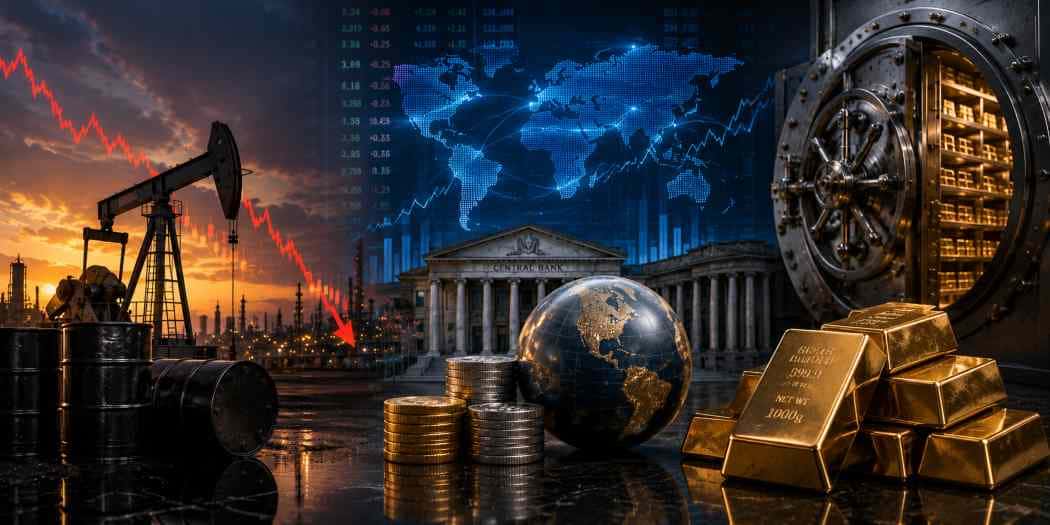
Gold Is Following Oil Lower, but Markets May Be Looking Ahead
Gold and oil are moving in the same direction right now, and at first glance the relationship makes perfect sense. Crude prices have retreated as geopolitical tensions in the Middle East ease and concerns about energy supply disruptions fade. Gold has fallen alongside oil, pressured not only by cooling inflation expectations but also by a U.S. dollar that recently climbed to fresh one-year highs. Add rising real yields and a broad reduction in defensive positioning, and today's weakness across precious metals looks entirely consistent with traditional market logic.
Yet commodity markets rarely remain focused on a single narrative for long. The same decline in oil prices that is weighing on bullion today could eventually become supportive if investors begin interpreting lower energy costs differently. Markets often move through multiple stages as economic expectations evolve. What starts as an inflation story can become a growth story, and that transition can dramatically alter the outlook for gold.
The more important question, then, is not whether gold and oil are falling together today. They clearly are. The real debate is whether oil can continue moving lower while gold eventually regains strength. To answer that, investors need to look beyond inflation and examine the broader forces that increasingly shape modern gold demand.
Classic Market Logic
The current volatility in gold follows a pattern investors have seen many times before. Falling oil prices reduce one of the most visible sources of inflation pressure in the global economy. Transportation costs, manufacturing expenses, and consumer prices all become easier to manage when energy markets cool. As inflation concerns recede, the urgency to own traditional hedges often declines as well.
At the same time, the U.S. dollar has emerged as a major force in the market. A stronger dollar makes gold more expensive for buyers using foreign currencies, often reducing international demand. The combination of lower oil prices and dollar strength has created a particularly challenging environment for bullion over the past several trading sessions.
What makes the current environment noteworthy is that investors are responding to more than just energy prices. Treasury yields remain elevated, Federal Reserve policy remains restrictive, and traders are increasingly focused on upcoming economic data. Together, these factors have reinforced the idea that inflation risks may be moderating while financial conditions remain relatively tight.
For now, the market is rewarding that interpretation. Gold is behaving as a traditional inflation hedge would be expected to behave. But markets have a habit of looking ahead, and the next phase of the story may not resemble the first.
Why Oil and Gold Became Closely Connected
The relationship between gold and oil developed over decades because both assets frequently respond to inflation expectations. Rising energy costs often work their way through the economy, influencing everything from transportation and food prices to industrial production and consumer spending. When oil climbs significantly, inflation concerns typically follow.
Gold historically benefited from these periods because investors viewed it as a reliable store of value when purchasing power came under pressure. During major inflationary episodes, including the 1970s and portions of the commodity boom that followed the turn of the century, oil and gold frequently moved higher together.
The connection became so familiar that many investors began treating it as a fixed rule. Higher oil meant stronger inflation concerns, which meant stronger demand for gold. Lower oil suggested the opposite.
The problem with market rules is that they often work until they don't. The gold market today is influenced by a far wider set of factors than it was decades ago. Inflation remains important, but it now competes with monetary policy, sovereign debt concerns, geopolitical risk, reserve diversification, and institutional demand. That broader mix of influences has made the relationship between gold and oil far less predictable than many investors assume.
The Second Phase Could Look Very Different
The first reaction to falling oil is often bearish for gold. Investors see inflation pressures easing and adjust their expectations accordingly. That is largely what the market is doing today.
The second reaction can be much more complicated.
Not every decline in crude oil reflects improving supply conditions. Sometimes energy prices fall because economic demand is weakening. Manufacturing slows, transportation activity softens, and businesses become less aggressive in their expansion plans. When markets begin interpreting lower oil prices as evidence of slower growth rather than simply lower inflation, the narrative changes.
At that point, investors often start paying closer attention to economic stability than to inflation alone. Concerns about growth, recession risk, corporate earnings, or financial stress can create demand for safe-haven assets even while energy prices remain weak.
This is where gold's role begins to evolve. Instead of functioning primarily as an inflation hedge, bullion starts attracting interest as a defensive asset. The same oil weakness that initially pressured gold can eventually become part of a broader environment that supports it.
That shift does not happen automatically, nor does it happen every time oil falls. But it is one of the most important reasons investors should be cautious about assuming today's relationship will persist indefinitely.
Central Banks Are Following a Different Playbook
One of the biggest changes in the gold market over the past decade has been the growing influence of central bank demand. Governments and monetary authorities around the world have accumulated substantial amounts of bullion, often for reasons that have little to do with short-term inflation expectations.
Central banks are not typically reacting to weekly movements in oil prices. Their decisions are more closely tied to reserve diversification, financial stability, geopolitical considerations, and long-term confidence in global monetary systems. Those priorities do not disappear simply because crude oil moves lower.
This distinction matters because it introduces a powerful source of demand that operates largely outside the traditional oil-inflation framework. While private investors may reduce exposure when inflation concerns ease, central banks often continue accumulating gold for strategic reasons.
The result is a market that can remain fundamentally supported even during periods when conventional inflation-driven demand weakens. Oil prices still matter, but they no longer tell the entire story.
Real Interest Rates May Matter More Than Crude Oil
For all the attention paid to oil prices, real interest rates frequently exert a stronger influence on gold.
Because gold does not generate income, its attractiveness often depends on how it compares to interest-bearing alternatives. When investors can earn attractive real returns from bonds or cash, gold tends to face pressure. When real yields fall, bullion often becomes more competitive.
This relationship creates an interesting possibility if oil continues declining. Lower energy prices may initially reduce inflation expectations, which is negative for gold. But if those same lower prices contribute to slower economic growth or encourage expectations of easier monetary policy, real yields could eventually move lower as well.
That is where the market's focus may shift.
Investors who spend all their time watching oil prices sometimes overlook the fact that gold often responds more directly to interest-rate expectations. A sustained decline in real yields could support bullion even if crude oil remains weak.
In that scenario, the market would no longer be trading gold primarily as an inflation hedge. Instead, it would be valuing gold as protection against slowing growth, policy uncertainty, or declining real returns elsewhere in the financial system.
The Dollar Remains the Wild Card
If there is one factor capable of overriding almost every other influence in the short term, it is the U.S. dollar.
The recent surge in the Dollar Index has created a significant obstacle for gold. Even if oil prices stabilize or geopolitical risks re-emerge, a stronger dollar can continue weighing on precious metals by reducing international purchasing power.
This is particularly important because the dollar and oil often interact in complex ways. A stronger dollar can pressure commodity prices broadly, while weaker global growth expectations can simultaneously reduce energy demand. In such an environment, gold may struggle regardless of what crude oil does.
For the relationship between gold and oil to diverge meaningfully, investors may need to see a moderation in dollar strength. A softer dollar could revive demand from global buyers and help offset some of the inflation-related pressures currently facing bullion.
That is why many professional investors monitor currency markets as closely as energy markets when evaluating gold's outlook.
Gold's Future May Depend Less on Oil Than Investors Think
For now, gold and oil are moving lower together. Inflation expectations are cooling, the dollar remains strong, and markets are rewarding assets that benefit from higher real yields. In the short term, those forces are difficult for bullion to overcome.
The more important question is whether oil continues falling for reasons that remain bearish for gold. If crude declines because inflation pressures keep fading while economic growth remains healthy, bullion may continue facing headwinds. But if lower energy prices begin signaling weaker demand, slowing economic activity, or a future shift in monetary policy, the outlook could change considerably.
That possibility is what makes the current environment so interesting. Gold is not defying oil today, and investors should not pretend otherwise. Yet history suggests that market relationships are rarely permanent. The forces influencing bullion have become broader, more institutional, and more global than the traditional inflation narrative alone can explain.
Whether the gold spot price eventually rises while oil continues falling will depend less on crude itself and more on what the decline ultimately means for growth, interest rates, currencies, and investor confidence. That is the question markets are beginning to ask, and the answer could shape the next major move in precious metals.