View Charts
US Penny Discontinued: Top 25 Pennies Worth Finding
 0
0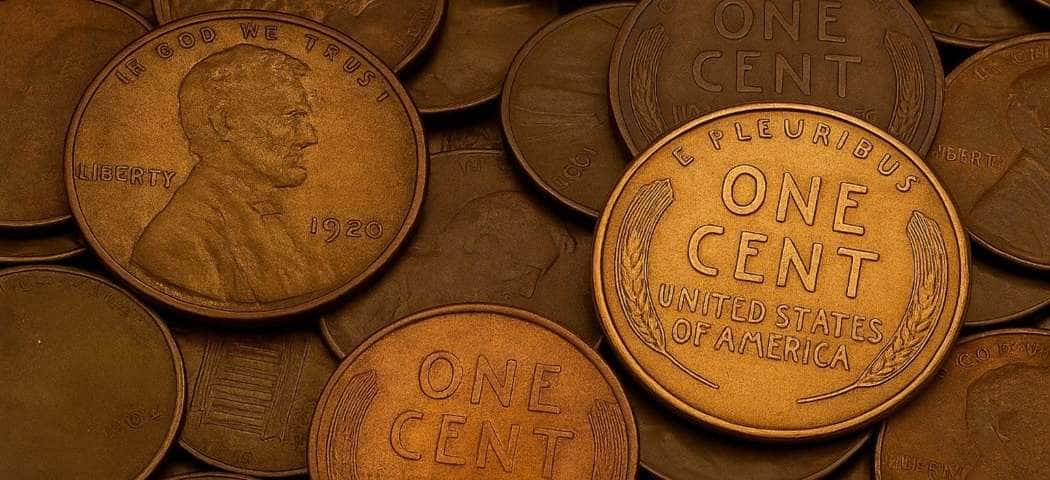
A Farewell to America’s Most Humble Coin
In late May, 2025, the United States Treasury confirmed it will cease production of the penny - marking the end of a coin that has circulated through American hands since the birth of the nation. This decision is driven by economic realities and a shifting cultural attitude toward physical currency. Still, while the penny may be retiring from modern commerce, its legacy as a collectible remains stronger than ever.
At Bullion Exchanges, we recognize the numismatic and historical significance of this small copper coin. Whether you’re a seasoned collector or simply curious about the pennies in your coin jar, read on for a full exploration of the penny's past, its newly announced future, and the top collectible pennies that may be hiding in plain sight.
A Brief History of the U.S. Penny
The U.S. penny has evolved significantly since its inception in 1793. Originally large and made entirely of copper, it gradually shrank in size and changed composition over time.
Major Design Periods:
-
Flowing Hair Large Cent (1793): The first official U.S. penny, notable for its large size and Liberty portrait.
-
Draped Bust and Classic Head Cents (1796–1814): Featured early American artistic representations of Liberty.
-
Matron Head and Braided Hair Cents (1816–1857): Introduced slight design refinements and copper content variations.
-
Flying Eagle Cent (1856–1858): First small cent and transitional design using copper-nickel alloy.
-
Indian Head Cent (1859–1909): Iconic and widely collected, featuring Lady Liberty in a Native American headdress.
-
Lincoln Wheat Cent (1909–1958): Commemorated Abraham Lincoln’s centennial birthday; marked the first U.S. coin to depict a real person.
-
Lincoln Memorial Cent (1959–2008): Introduced the Lincoln Memorial on the reverse for his 150th birthday.
-
Lincoln Bicentennial and Shield Cents (2009–2025): Included four reverse designs celebrating Lincoln’s life, followed by the current Union Shield motif.
Why the U.S. Mint Is Ending Penny Production
After more than 230 years in circulation, the penny is being retired for one central reason: cost.
-
Rising Production Costs: In 2024, it cost the U.S. Mint approximately 3.7 cents to produce a single one-cent coin - more than triple its face value.
-
Decreasing Circulation Use: With digital payments and credit card transactions dominating everyday purchases, the demand for low-denomination coins has sharply declined.
-
Environmental Concerns: The manufacturing and transportation of billions of pennies annually carry a significant environmental footprint.
-
International Precedent: Countries like Canada, Australia, and New Zealand have already eliminated their lowest-denomination coins without major disruption to consumer pricing or commerce.
Why Pennies Remain Highly Collectible
Even though production is ending, collectors view pennies as some of the most historically rich and affordable coins on the market. Their broad range of designs, metals, and mint marks make them a fascinating entry point for numismatics.
Key Reasons They’re Still Valuable:
-
Accessibility: Many rare dates are still found in circulation or inherited collections.
-
Historic Events Reflected: From war years to bicentennial anniversaries, the penny has captured defining moments in U.S. history.
-
Metal Content: Older pennies contain higher copper content, making them attractive not just for collectors but also for metal value enthusiasts.
-
Error Coins: Pennies are famous for their dramatic minting errors - doubled dies, off-centers, and missing letters.
Top 25 Valuable Pennies That Could Be in Your Coin Jar
These are real examples of U.S. pennies that can turn an everyday coin jar into a hidden treasure trove:
-
1909-S VDB Lincoln Wheat Cent – The first year of the Lincoln cent and struck in San Francisco with designer Victor David Brenner's initials; highly sought after.
-
1914-D Lincoln Wheat Cent – A key date with a low mintage from the Denver Mint, making it one of the rarest early Lincoln cents.
-
1922 “No D” Lincoln Wheat Cent – A Denver-only issue where a worn die led to coins missing the mintmark entirely; a major error variety.
-
1931-S Lincoln Wheat Cent – One of the lowest-mintage Lincoln cents of the 20th century, struck during the Great Depression.
-
1955 Doubled Die Obverse – Features dramatic doubling on the date and lettering, making it one of the most famous and valuable error cents.
-
1972 Doubled Die Obverse – Another popular doubled die variety with noticeable doubling on "LIBERTY" and the date.
-
1983 Doubled Die Reverse – Displays strong doubling on the reverse lettering, especially "ONE CENT" and "E PLURIBUS UNUM."
-
1984 Doubled Ear Lincoln Cent – Known for a distinctive doubled ear on Lincoln's portrait, making it a favorite among variety collectors.
-
1992 Close AM Lincoln Memorial Cent – An extremely rare transitional variety where the letters "A" and "M" in "AMERICA" are unusually close.
-
1995 Doubled Die Obverse – Easy to spot doubling on the obverse inscriptions, especially "LIBERTY" and "IN GOD WE TRUST."
-
1998 Wide AM – Features a reverse design intended for proof coins with a noticeable gap between the "A" and "M" in "AMERICA."
-
1999 Wide AM – Like the 1998 version, this variety mistakenly used a proof reverse on circulation strikes, making it a notable find.
-
2000 Wide AM – The last year this rare reverse design error occurred, adding intrigue to a common date.
-
1943 Copper Cent – Accidentally struck on bronze planchets intended for earlier issues instead of wartime steel; ultra-rare and valuable.
-
1944 Steel Cent – A leftover steel planchet from 1943 was used instead of bronze, resulting in a rare transitional error.
-
1970-S Small Date High 7 – A challenging variety to identify, this version features a high "7" in the date and is considered scarce.
-
1960 Small Date Lincoln Cent – Small date version of a transitional year; desirable for those collecting varieties and die changes.
-
1982 Small Date Copper – During a year of metal composition transition, this variety was struck in copper rather than the new zinc planchets.
-
1995-D Doubled Die (Minor) – A more subtle doubling than the Philadelphia version, but still collected as a recognized variety.
-
2004-D Satin Finish Cent – Only found in special mint sets, this finish distinguishes it from regular business strikes.
-
2006 Satin Finish Cent – Like the 2004 version, it features a collector-only finish, adding to its scarcity and appeal.
-
2009 Lincoln Bicentennial Cents (Formative Years error variants) – Known for extra fingers or die cracks, these errors add value to the modern commemorative series.
-
1971-S Proof Doubled Die Obverse – This rare proof error displays strong doubling and is difficult to spot outside of proof sets.
-
2006 “Extra Finger” Lincoln Cent – A die gouge near Lincoln’s hand gives the illusion of an extra finger, making this a quirky collector favorite.
-
1958 Doubled Die Obverse – One of the rarest and most valuable doubled die cents, with only a few confirmed to exist.
This list represents some of the most exciting U.S. pennies you might actually find in your change - or hidden in a forgotten coin jar - making them highly collectible and historically significant.
Note: Values depend heavily on condition and mint mark, and authentication by a grading service such as NGC or PCGS is recommended for any coin believed to be rare or valuable.
From Pocket Change to Collectible Legacy
The penny’s journey from copper token to cultural icon is one of the richest stories in American coinage. While production ends in 2025, its presence will endure in collections, historical exhibits, and perhaps even in the very jar sitting on your kitchen counter.
Whether you're collecting for passion, profit, or both - now is the time to look a little closer at your loose change. You might just discover a golden opportunity hiding in plain sight.
Other articles that may interest you:
Is the US Nickel Next? Top 20 Nickels to Collect Now
Top 50 Most Valuable Wheat Pennies and Lincoln Cents for Collectors
Farewell to the Penny: The End of America’s Iconic One-Cent Coin