View Charts
UK Recession Fuels Surge in Physical Gold Investment, Says British Royal Mint
 0
0
Source: Canva
In the shadow of a looming economic downturn, the United Kingdom is witnessing a revival in the allure of gold as a cornerstone for investment portfolios.
The British Royal Mint, an institution synonymous with the heritage and reliability of bullion trading, reports a marked increase in the demand for physical gold. This shift is a direct response to the recent declaration of a technical recession in the UK, compelling investors to seek stability in the intrinsic value of gold.
The latest data from the Office for National Statistics paints a grim picture of the UK's economic health, with GDP figures contracting by 0.3% in the fourth quarter, hot on the heels of a 0.1% decline in the third.
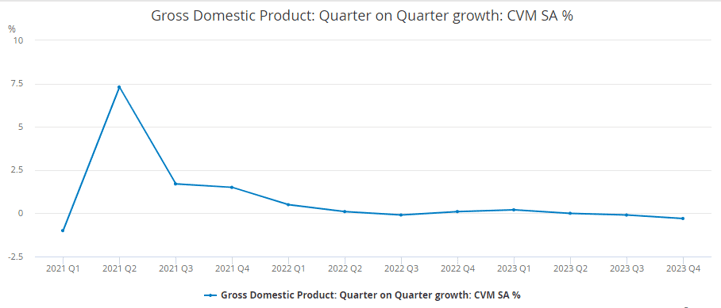
Source: Office for National Statistics
This back-to-back shrinkage signals a technical recession, defined by two consecutive quarters of negative economic growth. Such financial landscapes historically catalyze a flight to safety among investors, with gold often being the beneficiary.
Stuart O’Reilly, Market Insights Analyst at the Royal Mint, sheds light on this phenomenon. "The unsettling news of the UK's economic contraction has prompted a strategic pivot among investors towards more secure assets, with gold emerging as a particularly favored option," he remarked.
The Royal Mint observed a significant uptick in gold transactions, with a 22% increase in daily sales post-recession announcement and a year-on-year surge of 37% in gold purchases.
This burgeoning interest in gold is not merely a knee-jerk reaction to economic headlines but is rooted in deeper financial prudence. The Bank of England's hawkish monetary policy aimed at curbing inflation is juxtaposed against the backdrop of a recession that could potentially prompt a shift to lower interest rates.
Such a scenario, especially if it diverges from the Federal Reserve's continued aggressive monetary stance, could lead to a depreciation of the British pound, thereby elevating the domestic appeal of gold.
"The potential monetary policy divergence between the U.S. and England could have profound effects on exchange rates and, by extension, gold demand," O'Reilly elaborated. "Gold's attractiveness is enhanced in a low-interest-rate environment, as it diminishes the opportunity cost of holding the metal compared to other traditionally safe assets."
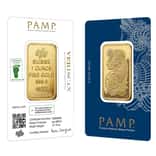
The Royal Mint's sales data corroborates the growing investor inclination towards gold, with Sovereign and Britannia gold bullion coins and bars reigning as the most sought-after investment products.

Source: Canva
This trend underscores an increasing desire among investors to infuse their portfolios with precious metals, leveraging their resilience to mitigate risk in turbulent times.
The steadfast demand for gold is set against a backdrop of robust global prices, steadfastly above the $2,000 an ounce benchmark. The confluence of rising investment demand and aggressive acquisitions by central banks paints a bullish future for gold.
However, the UK's economic woes are not an isolated incident. Japan's recent descent into a technical recession and the persistent specter of a downturn in the U.S. amplify the global ramifications for gold markets.

Source: Canva
Analysts speculate that a U.S. recession could catalyze a significant gold rally, potentially eclipsing previous record highs.
Supporting this outlook, research from the investment firm Schroder highlights gold's performance during economic downturns. Their findings suggest that gold not only consistently outperforms equities in recessionary periods but also delivers an average return of 28%, significantly overshadowing the S&P 500's performance.
The rationale behind gold's resilience in the face of economic adversity lies in its historical role as a store of value. Unlike fiat currencies, which are susceptible to inflation and policy changes, gold's intrinsic value offers a semblance of security.
Its finite nature and tangible asset status render it less vulnerable to the whims of economic cycles, making it an attractive hedge against inflation and currency devaluation.
Moreover, gold's liquidity and global acceptance further enhance its appeal as a safe-haven asset.
It can be easily bought, sold, and traded across international markets, providing investors with flexibility and ease of access. This liquidity, coupled with gold's reputation as a wealth preservation tool, contributes to its enduring popularity in times of economic uncertainty.
As investors navigate the choppy waters of the current economic climate, the shift towards gold investment reflects a broader strategy of risk management and wealth preservation.
The Royal Mint's insights into the surge in gold demand underscore the metal's enduring appeal as a bulwark against financial turbulence.
In conclusion, as the UK and the global economy face the specter of recession, gold's role as a safe-haven asset is once again in the spotlight. Its historical stability, liquidity, and global acceptance position it as a key component of diversified investment portfolios, offering a refuge for those seeking to safeguard their wealth against the uncertainties of the economic landscape.