View Charts
Top 10 Reasons to Buy Copper Bullion: Why Dr. Copper Matters
 0
0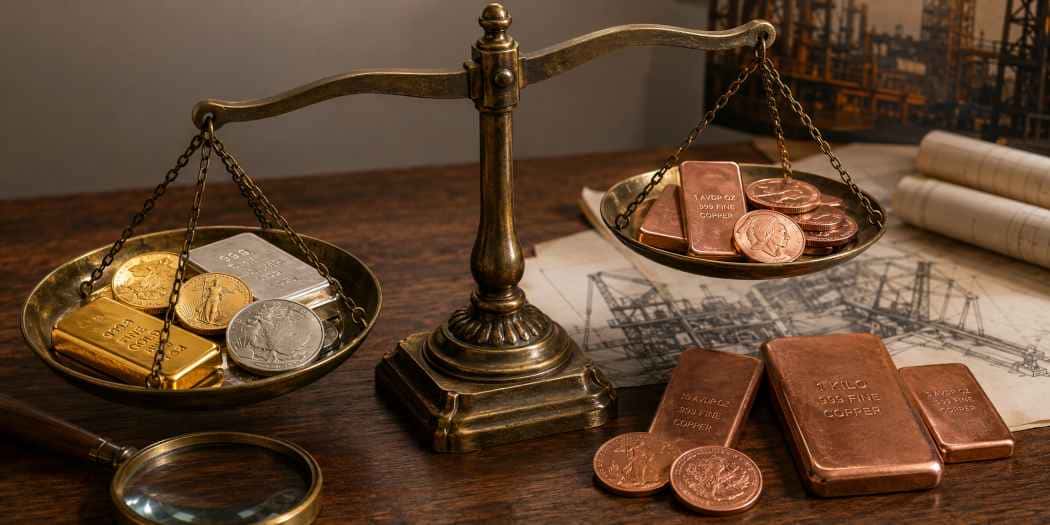
Why Copper Bullion Is Getting More Attention
Gold has long been the benchmark for wealth preservation, while silver appeals to investors seeking a blend of monetary value and industrial demand. Copper occupies a different corner of the metals market. It isn't viewed as a traditional safe-haven asset, yet it has become one of the world's most closely watched commodities because its demand reflects the strength of manufacturing, construction, technology, and infrastructure spending.
That growing importance has sparked renewed interest in physical copper bullion. Once considered primarily a novelty or collector's item, copper bars and rounds are increasingly finding a place alongside gold and silver in many collections. Their affordability, industrial significance, and growing variety make them attractive to both first-time buyers and experienced bullion enthusiasts looking to broaden their holdings.
Unlike precious metals that are driven largely by monetary policy and investor sentiment, copper's story is closely tied to the real economy. Every new power line, electric vehicle, solar installation, and artificial intelligence data center requires significant quantities of copper. As global investment continues flowing into electrification and digital infrastructure, more investors are discovering why the metal has earned a reputation that few commodities can claim.
Why Copper Is Called 'Dr. Copper'
Copper's nickname—'Dr. Copper'—comes from its perceived ability to diagnose the health of the global economy. Economists and market analysts have used the term for decades because copper demand often rises during periods of economic expansion and softens when industrial activity slows.
Few raw materials are used as broadly as copper. It is essential to residential and commercial construction, electrical wiring, automobiles, telecommunications equipment, consumer electronics, renewable energy projects, and industrial machinery. More recently, the rapid expansion of artificial intelligence has added another major source of demand, as modern data centers require extensive copper wiring, transformers, cooling systems, and electrical infrastructure.
No commodity predicts the future with complete accuracy, but copper's widespread industrial use means its market is often among the first to reflect changing business conditions. That connection between copper and economic activity has made it one of the most closely monitored industrial metals in the world—and one reason physical copper bullion continues attracting attention.
10 Reasons to Buy Copper Bullion
1. Copper Offers One of the Most Affordable Ways to Own Physical Bullion
One of copper's greatest advantages is accessibility. A one-ounce copper round typically costs only a small fraction of the price of comparable silver or gold bullion, allowing new collectors to begin building a physical metals collection without making a significant financial commitment. It also gives experienced investors an inexpensive way to explore different mint products and designs.
2. You're Owning One of the World's Most Important Industrial Metals
Modern life depends on copper. Everything from homes and office buildings to electric vehicles, smartphones, renewable energy systems, and telecommunications networks relies on the metal's exceptional electrical conductivity and durability. Few commodities play such a broad role across the global economy, making copper fundamentally different from most collectible bullion products.
3. Long-Term Demand Continues to Grow
Several powerful trends continue supporting long-term copper consumption. Governments around the world are investing heavily in electrical grid modernization, renewable energy, electric vehicle infrastructure, and battery storage. At the same time, artificial intelligence data centers are creating an entirely new source of copper demand as companies expand computing capacity to support rapidly growing AI applications.
4. Physical Copper Lets You Own a Tangible Piece of the Global Economy
Most investors encounter copper through commodity prices or economic news. Physical copper bullion offers a different experience by allowing buyers to own the metal itself rather than simply following copper price movements. For many collectors, that tangible connection to one of the world's most important industrial resources is part of the appeal.
5. Copper Adds Variety to a Bullion Collection
Every metal serves a different purpose within a diversified collection. Gold is often associated with wealth preservation, silver bridges monetary and industrial demand, while platinum and palladium occupy specialized industrial niches. Copper complements those metals by providing exposure to global manufacturing, infrastructure, and technological development rather than competing directly with traditional precious metals.
6. Copper Bullion Is Available in a Wide Range of Sizes
Unlike most government-issued bullion coins, copper products are produced almost exclusively by private mints, giving buyers a broad selection of sizes and formats. The most common choice is the 1-ounce copper round, but investors can also purchase 5-ounce and 10-ounce rounds, along with 1-ounce, 5-ounce, 10-ounce, 1-pound, and kilogram copper bars. Larger cast bars are also available for collectors who appreciate substantial display pieces. Whether you're looking for an affordable first purchase or a larger addition to your collection, copper bullion offers more variety than many buyers expect.
7. Private Mints Produce Remarkably Creative Designs
Copper has become a favorite canvas for private mints because it allows intricate artwork to be offered at an accessible price. Buyers can choose from patriotic themes, historic figures, wildlife, military tributes, fantasy artwork, holidays, and classic Americana, with many designs rivaling the detail found on silver rounds. For collectors who enjoy building themed sets or displaying attractive bullion pieces, copper combines artistic appeal with affordability in a way few other metals can match.
8. It's an Excellent Metal for Learning About Bullion
Many seasoned collectors recommend copper to those who are just beginning their bullion journey. Because the investment is relatively modest, buyers can become familiar with minting techniques, finishes, weights, premiums, and different product styles before committing larger amounts to gold or silver. Copper also provides an opportunity to learn how bullion products are manufactured and marketed, making it an ideal educational stepping stone for anyone developing a broader understanding of physical metals investing.
9. Copper Gives Investors Exposure to a Different Market Cycle
Copper doesn't compete with gold—it complements it. Gold often performs best when investors seek stability during periods of financial uncertainty, while copper typically benefits from expanding industrial production and infrastructure investment. Holding both metals provides exposure to different economic forces, allowing collectors and investors to diversify beyond a single market theme. Rather than replacing precious metals, copper broadens the conversation by adding an asset tied directly to economic growth and industrial development.
10. Copper's Importance Is Likely to Increase Over Time
No one can predict future commodity prices, but copper's role in the modern economy continues to expand. Electric vehicles require significantly more copper than conventional automobiles, renewable energy systems depend heavily on the metal, and aging electrical grids throughout the world are undergoing extensive upgrades. Artificial intelligence infrastructure has added yet another source of demand, as new data centers require enormous quantities of copper wiring, transformers, cooling equipment, and power distribution systems. Those long-term trends help explain why copper remains one of the world's most closely watched industrial metals.
How to Buy Copper Bullion: Bars, Rounds, and Understanding AVDP Weight
Once buyers decide to add copper to their collection, the next question is usually which product to choose. The answer largely depends on personal preference rather than investment performance, as both bars and rounds contain the same underlying metal.
Copper rounds are often selected for their artistic designs and collectible appeal. Many private mints produce annual releases, patriotic themes, historic reproductions, and limited-edition artwork that makes rounds enjoyable to display as well as collect. Bars, by contrast, emphasize simplicity and efficient stacking, making them popular among buyers interested in accumulating larger quantities of copper.
One important distinction separates copper from traditional precious metals. Most retail copper bullion is measured in avoirdupois (AVDP) ounces rather than troy ounces. An avoirdupois ounce weighs 28.35 grams, while a troy ounce—the standard used for gold, silver, platinum, and palladium—weighs 31.10 grams. Although some specialty copper products are struck in troy ounces, the vast majority of copper bars and rounds use the avoirdupois system because copper has historically been traded as an industrial commodity by the pound rather than as a precious metal.
Reading the product specifications before purchasing ensures buyers know exactly how much copper they are receiving and allows accurate comparisons between different products and manufacturers.
Copper's Future Looks Bright, Regardless of Market Cycles
Copper has never been valued solely for its rarity or its role as a monetary metal. Its importance comes from something far more practical: modern civilization depends on it. From the electricity powering homes and businesses to the technologies driving artificial intelligence, electrified transportation, renewable energy, and next-generation communications, copper remains woven into nearly every aspect of economic development.
That is precisely why 'Dr. Copper' continues to command attention. The metal reflects far more than commodity prices—it mirrors industrial activity, infrastructure investment, and technological progress on a global scale. While periods of economic slowing can temporarily reduce demand, the long-term need for copper has continued to grow as societies become increasingly electrified and connected.
For collectors, copper bullion offers an affordable and visually appealing addition to a metals collection. For investors, it provides exposure to one of the world's most strategically important industrial resources. Whether purchased as a single one-ounce round, a larger cast bar, or part of a diversified bullion portfolio, copper represents more than an attractive collectible. It offers ownership of a metal whose significance extends well beyond today's headlines and into the future of the global economy.
While gold often reflects investor confidence in financial markets, copper frequently reflects confidence in the real economy, making the two metals complementary rather than competing assets.
Related reading you may find interesting:
5 Signs Silver May Be Undervalued